
Specifications
- Country of origin
- Ukraine
- Weight
- 2,9 kg
- Product type
- Armor plate
- Size
- L
- Certification
- DSTU
- Protection class
- 4
Article: 000000071
Almost gone

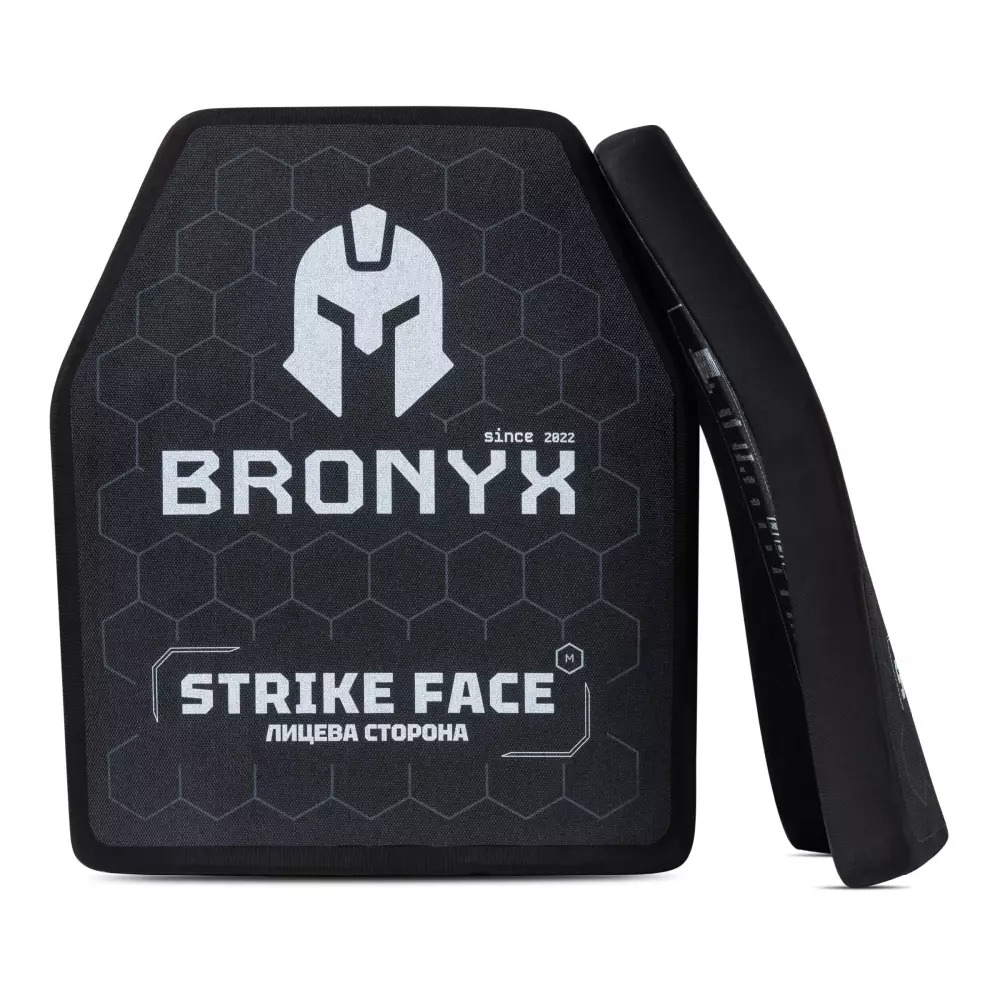
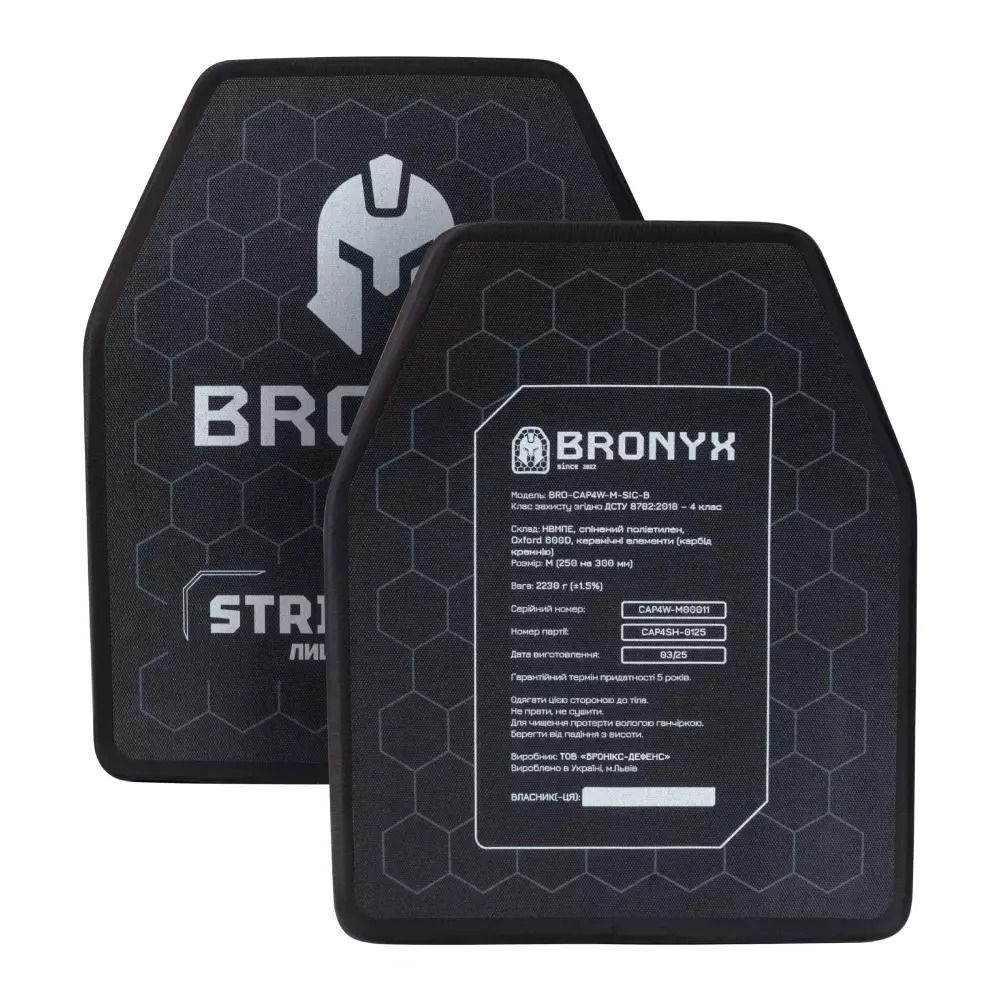
The Level 4 protective plate is designed for installation in compatible carriers and provides torso protection against the threat types specified in its technical documentation. The size L model measures 26 × 33 cm and is recommended for a chest circumference of 111-118 cm. One plate weighs 2.9 kg and has a thickness of 25 mm. Its protective construction combines a silicon carbide SiC ceramic layer, an ultra-high-molecular-weight polyethylene backing, and polyethylene foam cushioning layers. An anatomical curve across two planes positions the plate closer to the torso. The Shooter’s Cut shape provides additional space for arm movement and equipment handling.
The model has protection level 4 according to DSTU 8782:2018. Its stated specifications include resistance to 5.45 × 39 mm PP and 7.62 × 54 mm LPS test projectiles at defined velocities. When selecting a protective component, refer to its markings, accompanying documents, and certification test conditions.
Stated test types and parameters:
The protection level applies to the test conditions defined by the standard. Actual performance depends on the impact type, velocity, distance, angle, plate condition, and previous damage. After a severe impact, fall, or direct strike, the protective component should be removed from service and submitted for professional inspection.
According to the stated specifications, the Bronyx plate is designed to resist 5.45 × 39 mm PP 7N10 and 7.62 × 54 mm LPS 57-N-323s test projectiles. These parameters correspond to the stated level 4 under the Ukrainian DSTU 8782:2018 standard.
A separate test velocity and backface deformation depth are specified for each impact type. This measurement describes the maximum inward deformation of the rear surface after impact under the defined test conditions.
Stated maximum backface deformation:
These results should be assessed together with the testing method and certification documents. They apply to a specific model, configuration, and controlled test conditions. The owner should inspect the outer cover regularly and observe the service life specified by the manufacturer.
The protective properties are provided by materials performing different functions. Silicon carbide ceramic receives the initial load and contributes to the disruption of the impacting element. The UHMWPE backing retains fragments and distributes residual energy across a larger area.
The plate consists of the following layers:
Polyethylene foam performs a cushioning function and helps protect the internal materials from mechanical impact. The outer Oxford layer protects the construction from dirt, abrasion, and contact with the internal surfaces of the carrier. Damage to the cover requires inspection because moisture and impacts may affect the ceramic layer.
The protective plate measures 26 × 33 cm. Size L is recommended for users with a chest circumference of 111-118 cm. This parameter provides an initial indication of fit, while final positioning depends on the carrier construction and shoulder strap adjustment.
Before ordering, check:
The compartment should hold the plate firmly and prevent displacement during movement. An oversized pocket may allow the protective component to drop or shift while running or bending. After installation, test the fit while standing, sitting, and lying down.
Shooter’s Cut refers to the trimmed upper corners of the protective plate. This geometry provides more space around the shoulders and helps preserve arm mobility. The shape suits users who work with equipment attached to the front panel of the carrier.
The upper cutouts simplify forward arm movement, changes in torso position, and movement at the shoulder joint. The coverage area depends on the plate size and shape. Selection should account for the balance between protected area, weight, and mobility.
The model has curvature across two planes, following the main contours of the chest. The curved surface distributes pressure more evenly and reduces how far the plate projects from the torso. This affects carrier fit during extended wear.
The plate must be installed with the correct side facing the wearer. Manufacturer markings should remain legible after placement inside the compartment. When the front and rear surfaces are marked, their orientation must not be reversed.
One size L plate weighs 2.9 kg. A set of two plates weighs approximately 5.8 kg, excluding the carrier, side protection, pouches, and other equipment. When assembling a set, consider the total load on the shoulders and torso.
Main physical parameters:
The 25 mm thickness must be considered when checking compatibility with the carrier compartment. After installing a pair of plates, readjust the cummerbunds and shoulder straps. Soft shoulder pads may reduce localized pressure during extended wear.
The upper edge of the front plate should cover the upper chest area according to protective equipment positioning guidelines. The rear plate should be placed at a corresponding height so both components remain correctly positioned during movement. The lower pocket flap must secure the protective component completely.
After installation:
Adjustment should be completed with all protective components and the main equipment set installed. The plate should remain stable, while the carrier should allow unrestricted breathing and arm movement. Check the fit again after changing pouches or adding side protection.
Ceramic protective plates require careful handling during transportation and storage. A hard fall may damage the internal layer even when the outer cover appears intact. During transportation, use a compatible carrier or protective packaging that limits impacts.
During inspection, check:
Store the plate in a dry place under the temperature conditions specified by the manufacturer. Avoid placing heavy objects on it or allowing prolonged contact with water. A professional inspection is required after a fall, severe impact, or detection of damage.
The model specifications cover its protection level, size, materials, and stated test results. Before purchasing, compare them with the carrier parameters and required protective configuration.
Main specifications:
The model combines an SiC ceramic layer, UHMWPE backing, and anatomical two-plane curvature. Size L fits compatible carriers with compartments for 26 × 33 cm plates. Before use, check the markings and accompanying documents for the specific product.
TacMed offers the size L level 4 protective plate for compatible carriers. The product page provides the current price, specifications, and ordering terms. Customers can confirm compatibility with a particular carrier model before purchasing. Delivery is available to Kyiv, Lviv, Odesa, Kharkiv, Dnipro, Zaporizhzhia, Vinnytsia, Poltava, Cherkasy, Zhytomyr, Chernihiv, Rivne, Lutsk, Ternopil, Ivano-Frankivsk, Uzhhorod, Chernivtsi, Khmelnytskyi, Kropyvnytskyi, Mykolaiv, Kherson, and other cities across Ukraine. The catalog also includes compatible carriers, medical pouches, ready-made IFAK kits, and other required equipment components.