Medical Shears for First Aid Kits and Medical Pouches
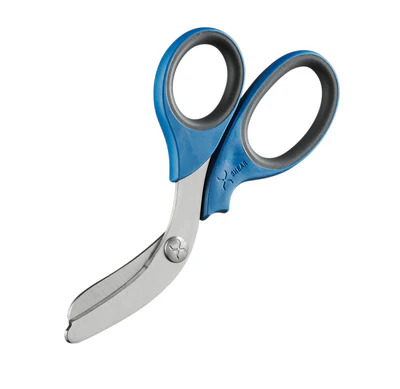
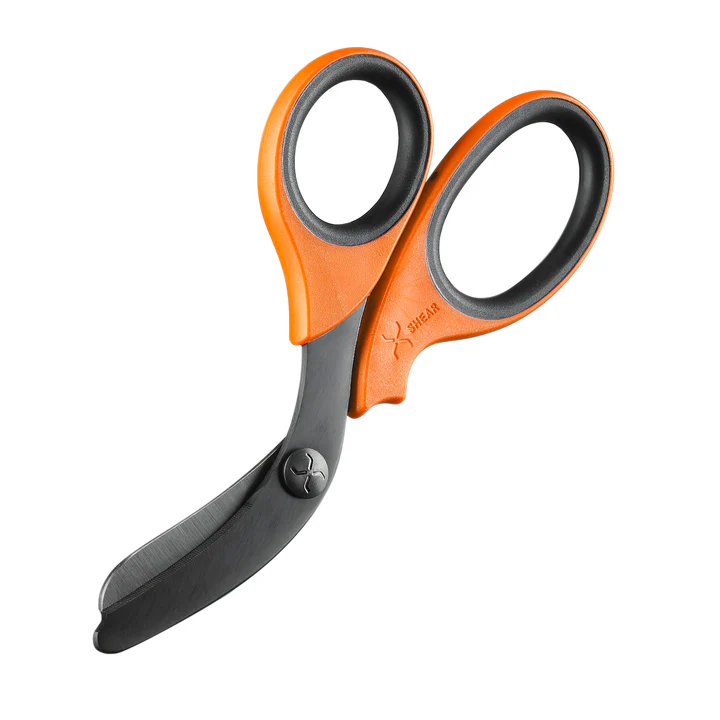
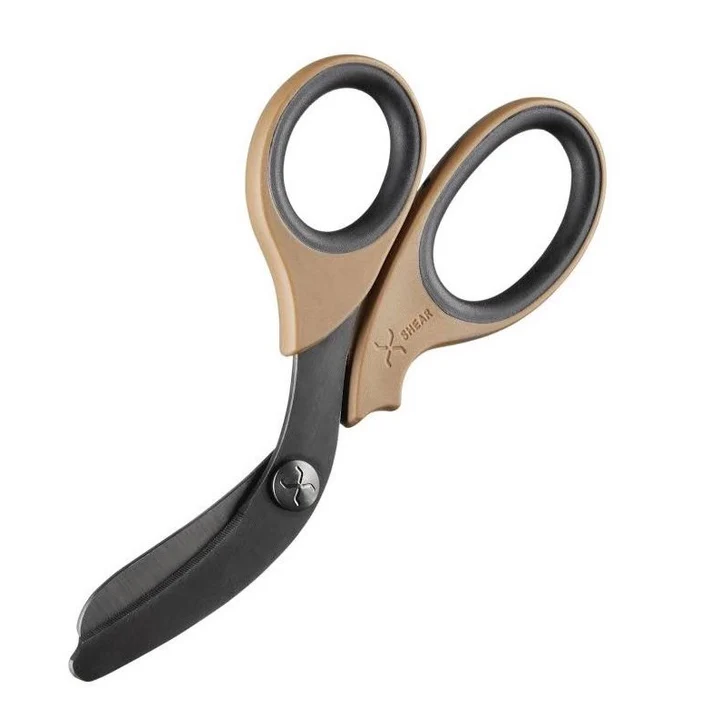
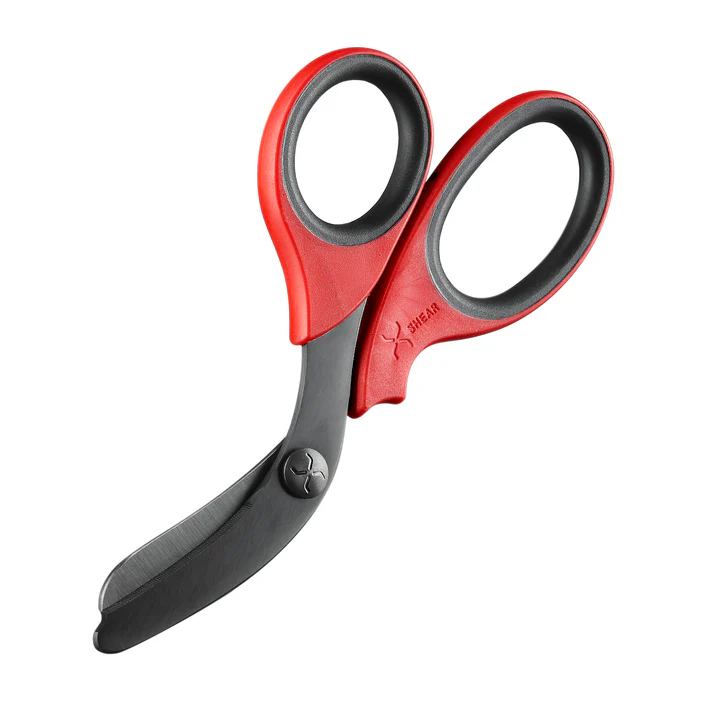
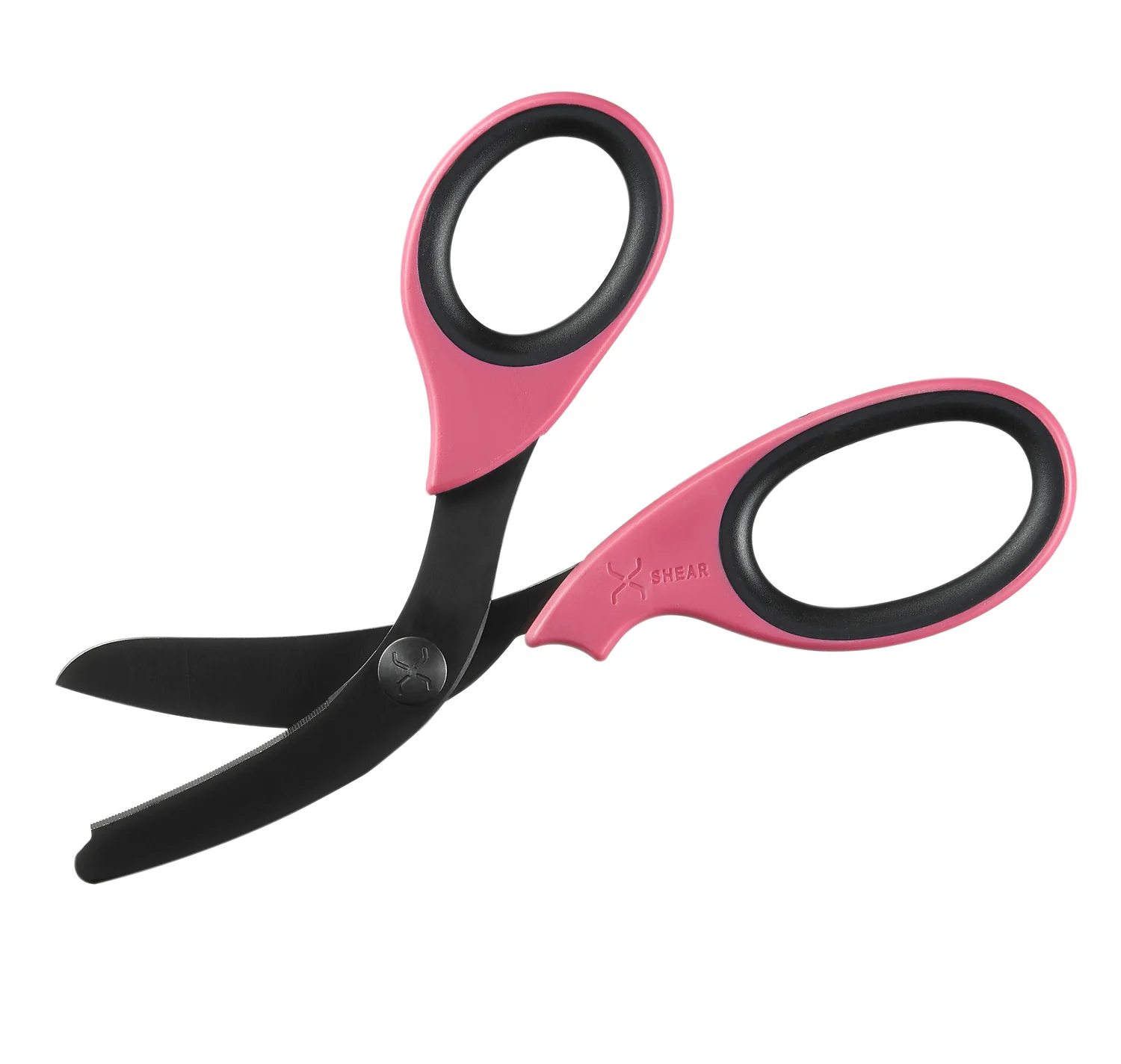
Medical shears are used when providing first aid and quick access to an affected area is needed. They cut clothing, bandages, adhesive dressings, soft equipment components, and other materials that obstruct examination or necessary procedures. The rounded section of the lower blade slides under fabric and reduces the risk of accidentally damaging the skin.
Medical shears are part of the equipment used by emergency response teams, rescuers, field medics, service members, and trained civilians. They are added to individual first aid kits, IFAKs, vehicle kits, medical bags, and evacuation backpacks.
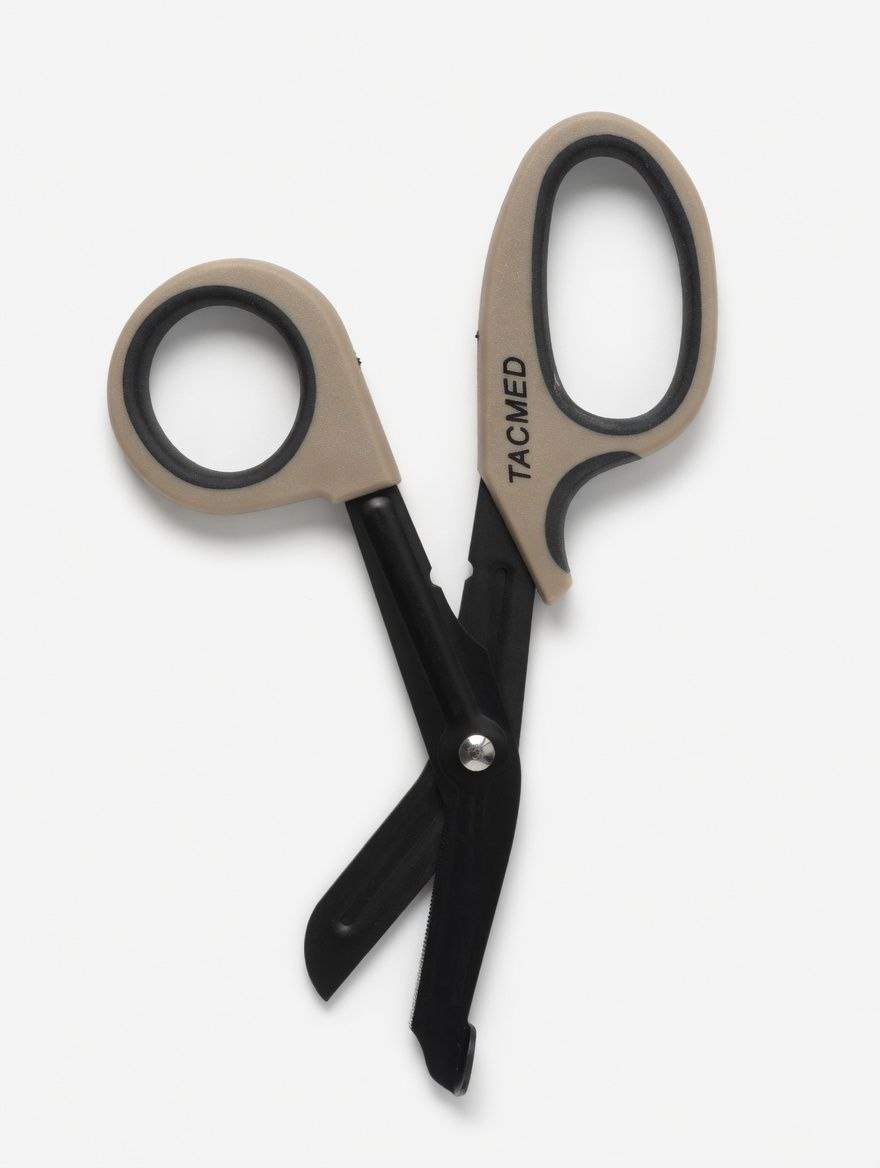
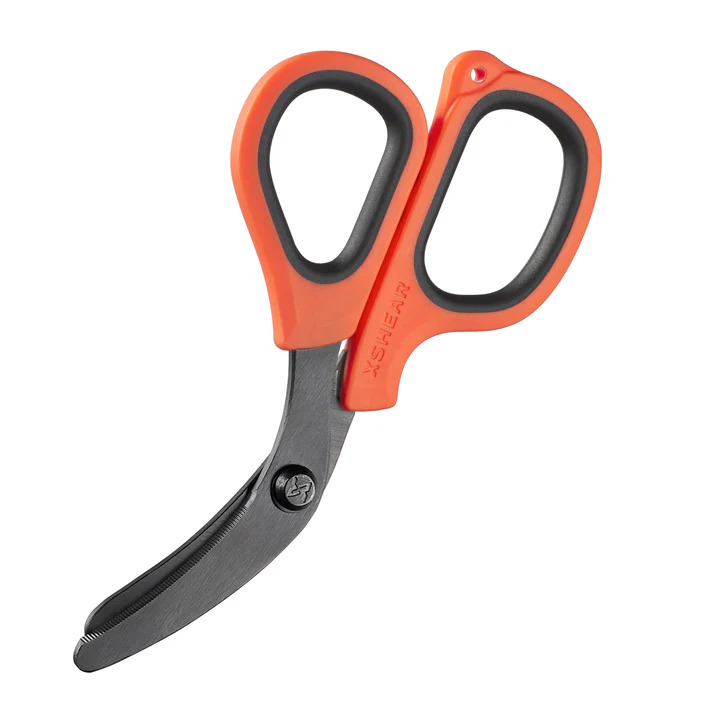
TacMed’s catalogue features full-size and compact models, shears with a carabiner, separate holders, and sets with bleeding-control products. The range includes TACMED, XShear, and North American Rescue products, models in different colours, and options for open carry on gear.
What are medical shears used for?
During an initial assessment, clothing may cover a wound, make it harder to locate the source of bleeding, or obstruct dressing application. Trying to pull off a tight jacket, trousers, or footwear can cause additional movement in the affected area. Cutting the fabric often makes it possible to assess the person’s condition sooner and proceed with the steps in the first aid protocol.
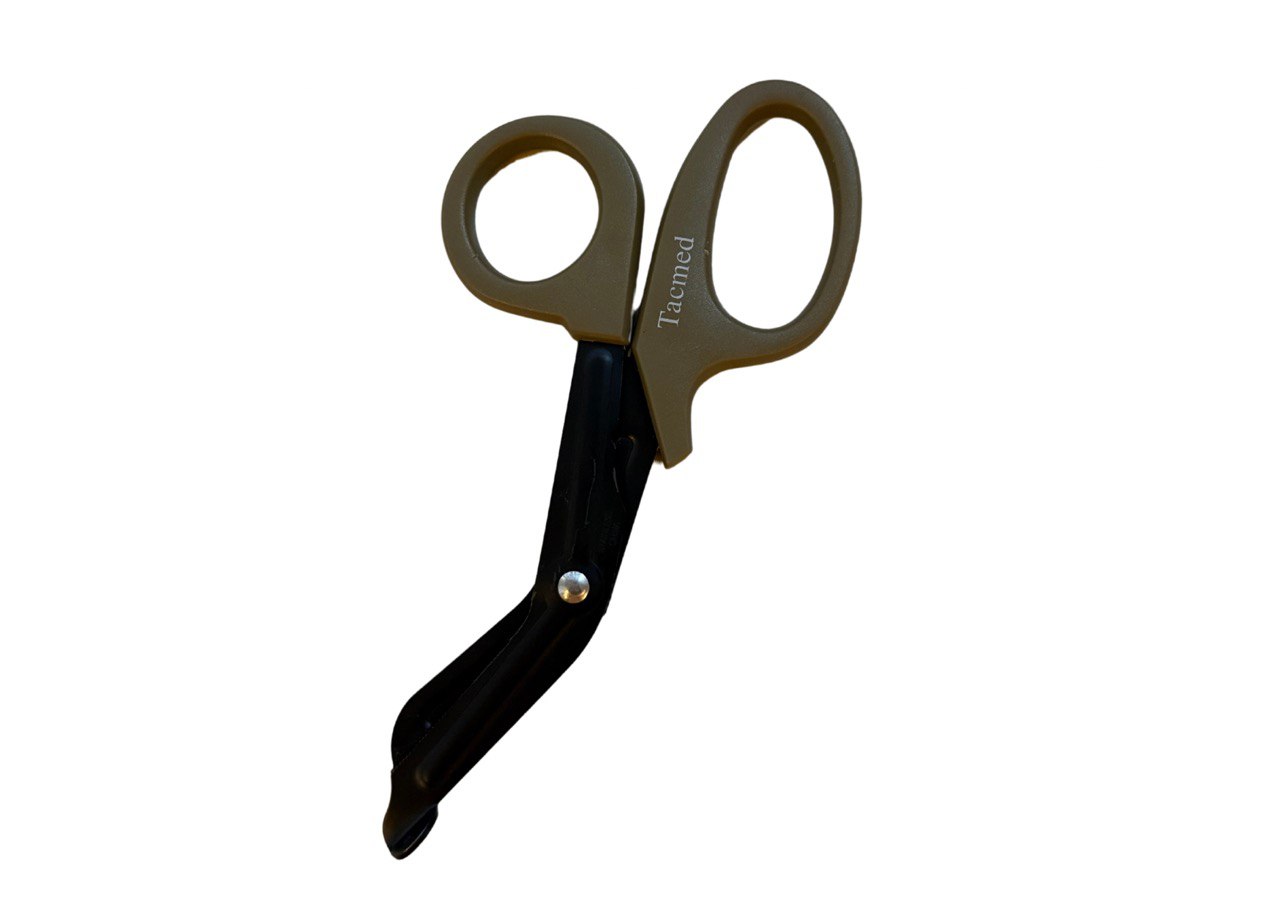
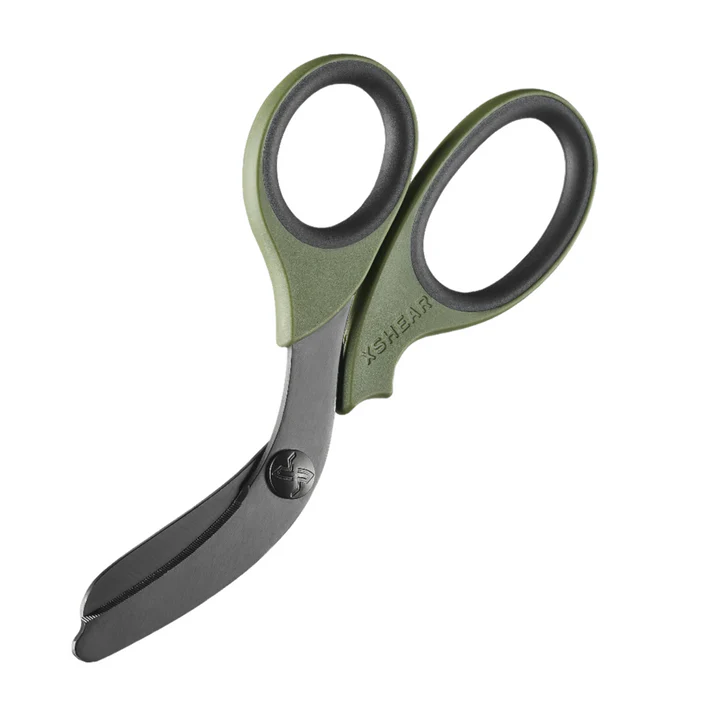
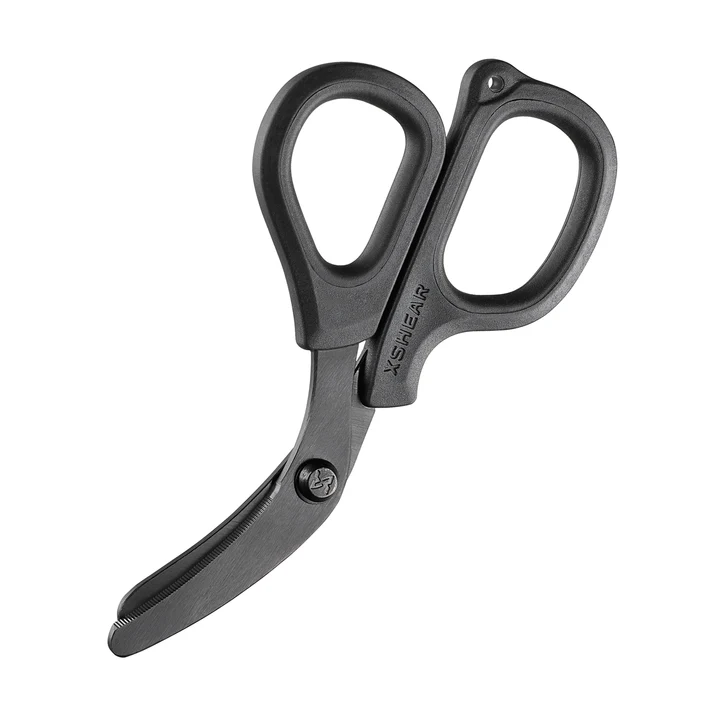
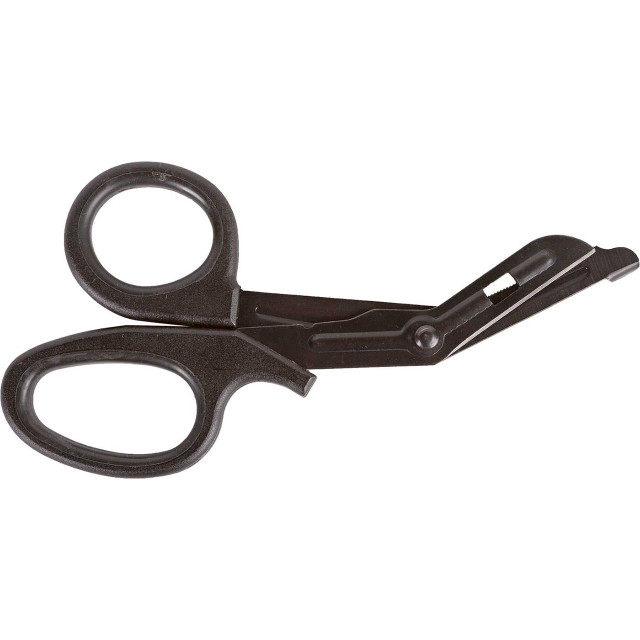
Medical shears are designed for use close to a person. The lower blade usually has a widened, rounded tip, and the handle sits at an angle to the cutting edge. This shape helps guide the tool along the person’s surface and control the blade’s position.
Medical shears may be used to:
- Cut T-shirts, shirts, trousers, jackets, and other clothing;
- Access a bleeding site or another affected area;
- Remove bandages, elastic wraps, and adhesive dressings;
- Prepare dressing materials in the required size;
- Cut soft straps, webbing, and textile gear components;
- Work with gauze, nonwoven materials, and some medical packaging;
- Quickly examine an affected area during evacuation;
- Cut clothing in a vehicle, household, or workplace emergency.
The rounded tip reduces the chance of the sharp part of the blade accidentally touching the skin, but it does not eliminate the risk of injury. The user must control the tool’s position, cutting direction, and distance from the wound. Take extra care around the neck, face, fingers, groin, and areas where fabric fits tightly against the person.
Cut clothing only as much as needed for examination and assistance. At the same time, protect the person from cold, precipitation, and wind. After the examination, cover exposed areas with available materials that help retain warmth.
Medical shears: construction and design
The tool’s performance depends on blade shape, steel, pivot, handles, and assembly quality. Thin household scissors may bend when used on dense material, while a sharp, straight tip is harder to guide safely under clothing. The medical design helps address both issues.
Blades
Steel is commonly used for the cutting section. Some models have a black or other protective coating. Blade surfaces should be even, without corrosion, deep scratches, or deformation.
A serrated or micro-serrated edge grips slippery fabric more effectively while cutting. The material shifts less between the blades, reducing the number of repeated movements. Cut quality also depends on sharpening and how closely the two halves of the tool fit together.
Rounded tip
The widened section of the lower blade acts as a guide. It helps slide the shears under fabric with less risk of scratching the skin. The surface should be smooth, with no sharp edges or burrs.
Pivot
The pivot keeps the blades in working alignment and determines how smoothly they move. Excessive play makes it harder to cut thin materials, while a joint that is too tight tires the hand more quickly. For regular professional use, choose a durable mechanism that maintains proper blade alignment after repeated cycles.
Handles
The handle openings should fit the user’s fingers, including when wearing nitrile or field-use gloves. A textured surface improves control with a wet hand. A contrasting colour makes the tool easier to find in a bag, on the ground, or among gear.
Full-size and compact shears
A full-size model provides a longer cutting stroke and more force at the blades. This format suits a medical bag, evacuation backpack, or the kit of a professional who regularly works with dense clothing. The larger handles may also be more comfortable when wearing gloves.
Compact shears take up less space in an IFAK, belt pouch, or small civilian kit. For example, TACMED Mini shears are 16 cm long, with steel blades and a rounded working tip. The manufacturer describes the model as suitable for cutting clothing, gear, and dressing materials.
A shorter model needs less storage space but cuts less with each movement. A full-size tool may be needed for a thick winter jacket, layered uniform, or dense footwear. Choose according to the materials you are most likely to need to cut.
TACMED, XShear, and NAR medical shears
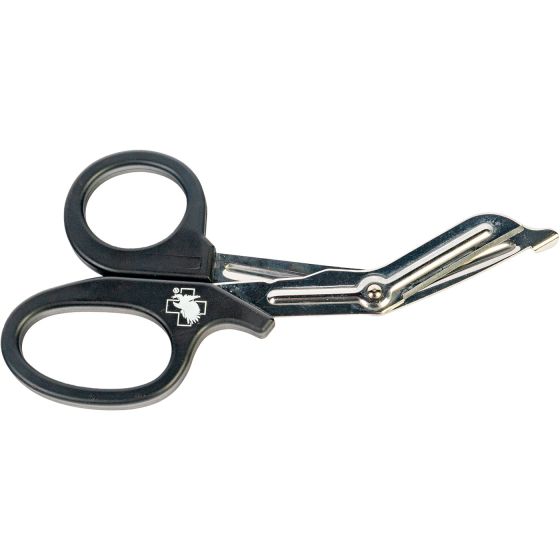
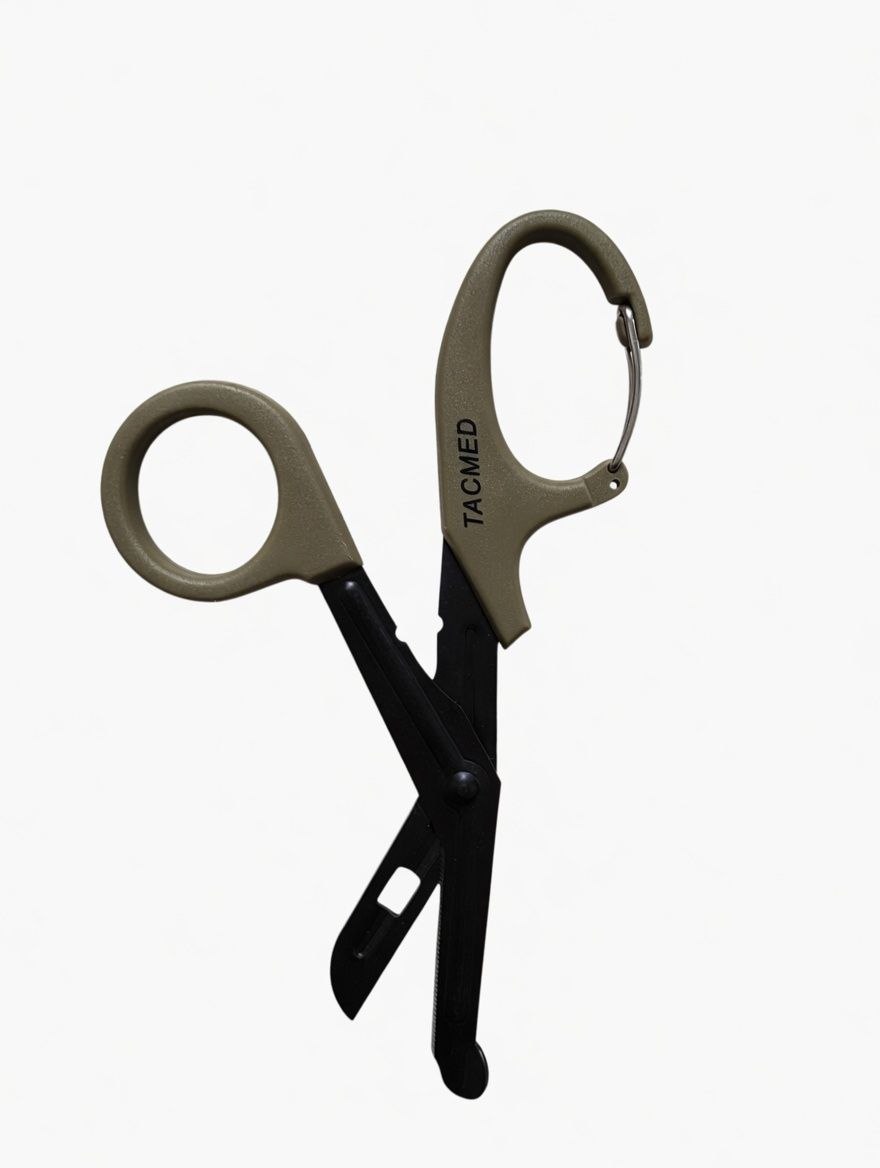
The category offers models for different use frequencies, kit formats, and budgets. TACMED options include basic shears, a compact Mini model, and a model with a carabiner. Standard TACMED shears are made of steel and have a black handle.
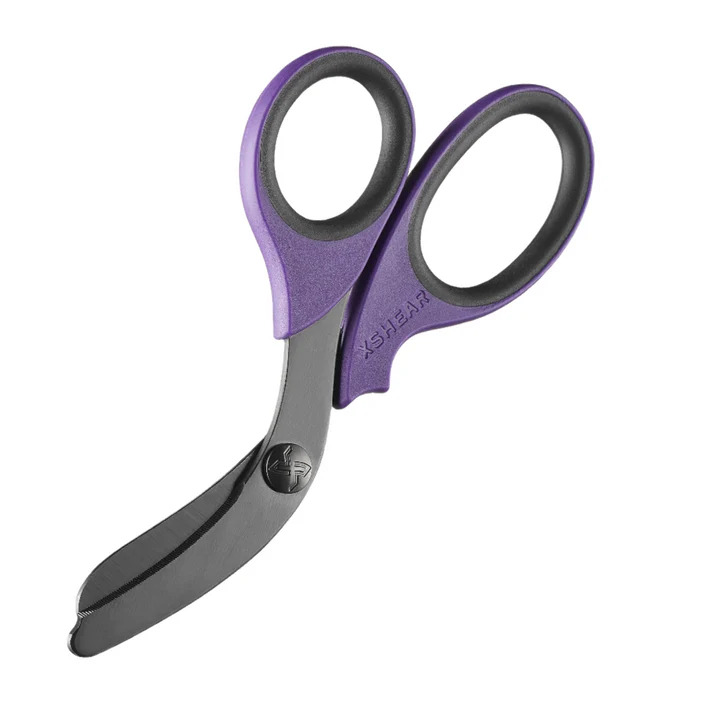
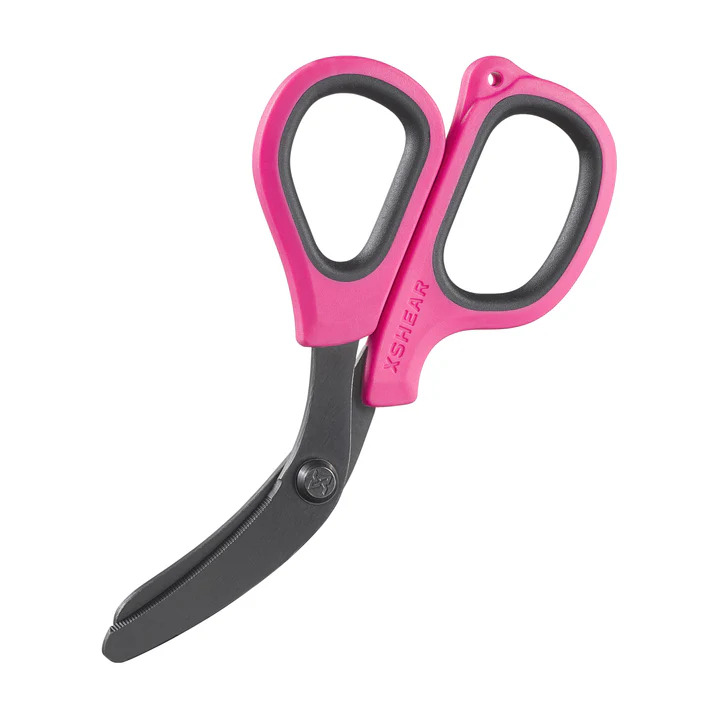
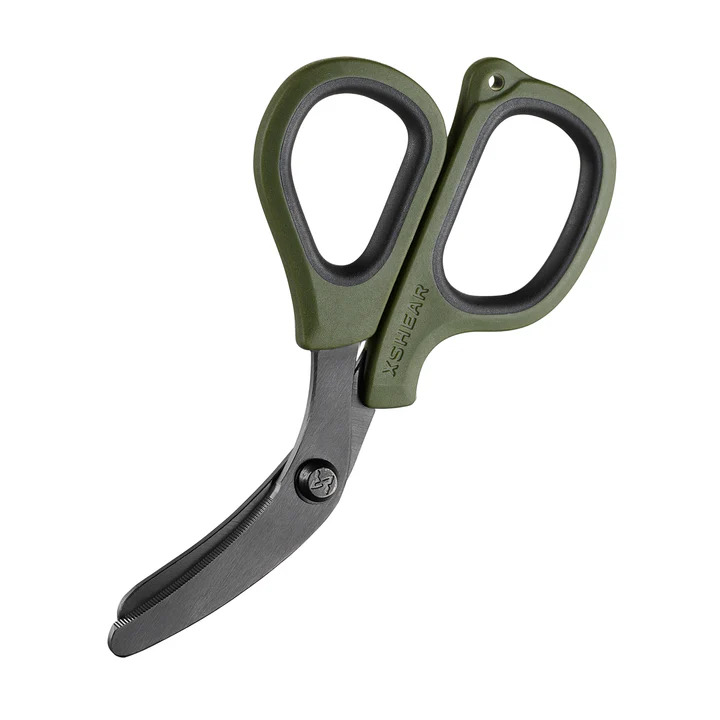
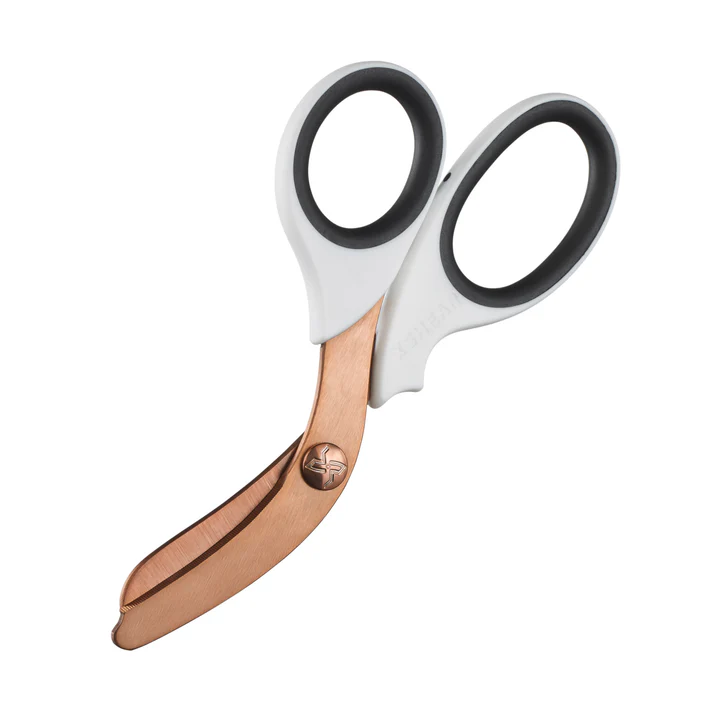
XShear models are designed for professional and intensive use. The catalogue includes full-size and compact Mini Trauma Shears, as well as holders for attaching them to gear. Colour options include black, green, white, blue, red, pink, orange, and others. The XShear OD Green product listing specifies a steel construction and US manufacture.
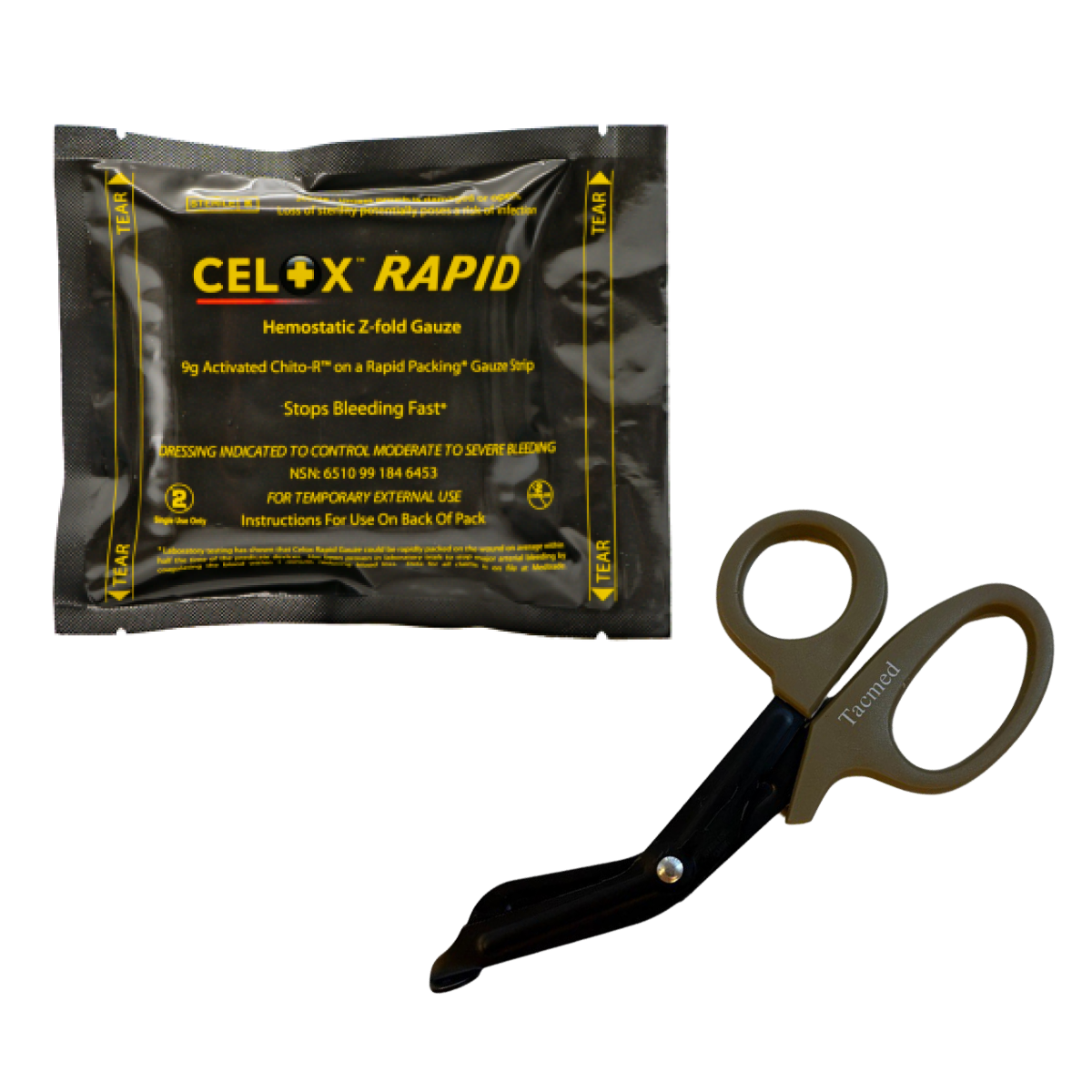
North American Rescue shears suit individual and professional medical kits. The TacMed listing for the available model specifies a weight of 43 g, a black finish, and US manufacture. When comparing models, check the specifications on each product page, as details may vary between series.
How to choose medical shears
There is no single size that suits every first aid kit. Compactness matters more for a minimal IFAK, while a medical professional may need a tool with larger handles and longer blades. Working conditions also affect requirements for colour, coating, and attachment method.
Before buying, check the dimensions of the kit compartment or gear holder. The tool should come out in one controlled movement. At the same time, its attachment should hold the shears in place while running, crawling, getting into a vehicle, or working in a confined space.
Consider these technical features:
- Identify the main use case. A civilian first aid kit can use a model that reliably cuts everyday clothing and dressing materials. Rescuers and medical professionals need a durable tool for regular use on different fabrics.
- Choose the length. Compact shears fit more easily in a small pouch. Full-size models provide a longer cut and transfer more force to dense material.
- Check the rounded safety tip. The lower guide should have a smooth, rounded surface. Burrs or sharp edges near the tip are unacceptable.
- Assess the cutting edge. A serrated surface helps grip fabric between the blades. The blades should meet evenly along the full working length.
- Check the pivot action. The shears should open smoothly and require controlled force. Play between the two halves reduces cutting accuracy.
- Try the handles. Fingers should fit through the openings freely and apply enough force. Ideally, test the shears while wearing the gloves you will use when providing assistance.
- Match the tool to the materials. Thin clothing, bandages, and adhesive dressings require less cutting capacity. Dense uniforms, denim, insulation, and layered gear require more.
- Choose how to carry them. Shears can be stored inside a first aid kit, in an outer webbing loop, in a dedicated holder, or on a retention attachment. The setup should allow quick access and prevent loss.
- Consider visibility. A bright handle is easier to find in a medical bag or after being dropped on the ground. Black or green models coordinate more closely with field gear.
- Check care requirements. Reusable tools need cleaning according to their materials and the manufacturer’s instructions. The pivot and blade surfaces should allow visible contamination to be removed.
After choosing a model, test the shears on clean training material with a density similar to real clothing. This helps assess the action, fabric grip, and handle comfort. Do not use a working tool for household tasks that may dull or damage the blades.
Memorize where the shears are stored and practise retrieving them during training. For matching kits used by a team, it is helpful to keep them in the same place. This makes the tool easier to find when another team member is providing assistance.
How to attach shears to gear
Storing the tool inside a first aid kit protects it from dirt, precipitation, and accidental loss. One drawback may be the extra time needed to open the pouch. External placement speeds up access but requires secure retention.
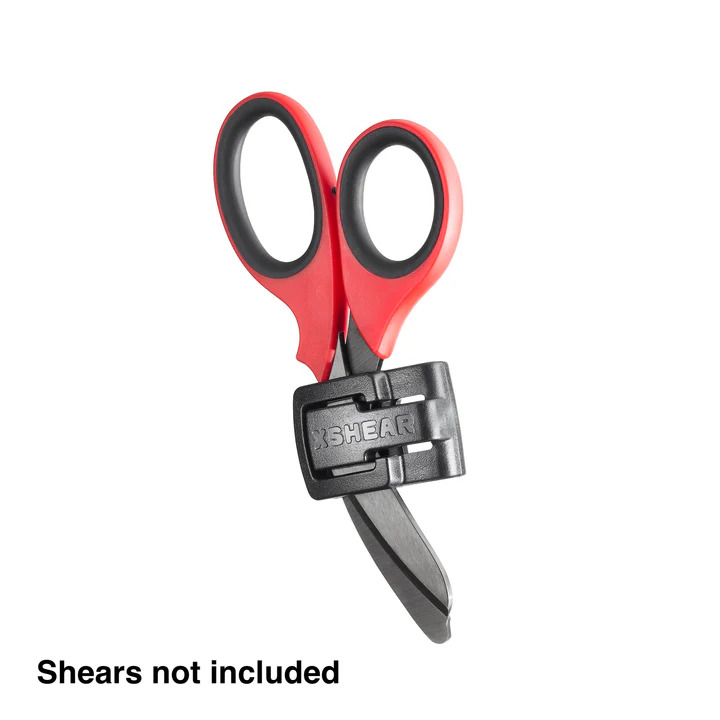
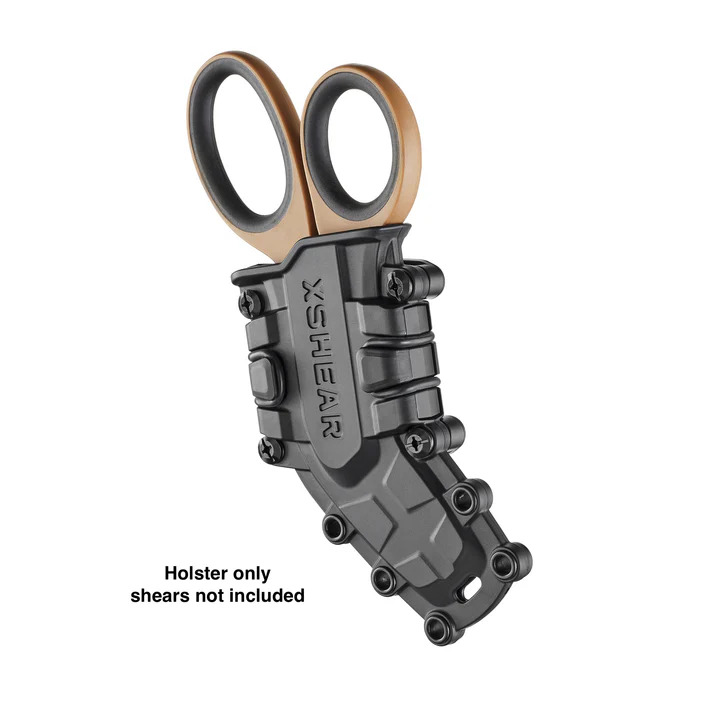
Common carry options include textile loops, pockets, elastic webbing, carabiners, and moulded holders. TacMed’s category includes separate XShear holders, including a field-use model and a micro format. The catalogue also features TACMED shears with an integrated carabiner.
A carabiner makes it easier to attach the shears to a loop on a first aid kit or gear. A moulded holder controls the tool’s position more closely and can provide consistent access. Before use, check that the holder is compatible with the specific shear model.
The handle rings should not catch on webbing, cables, or other objects. Position an external attachment so the tool remains accessible with either hand. After moving around, check that the shears are still in place.
Care and inspection
Medical shears come into contact with clothing, dust, moisture, and biological contaminants. After use, inspect and clean the tool according to the manufacturer’s instructions and your organisation’s protocol. The cleaning method should suit the blade, handle, and pivot materials.
Store the shears dry. Moisture around the pivot can cause corrosion or make the two halves move poorly. Harsh chemicals may damage the coating and polymer components.
During a scheduled first aid kit inspection:
- Check the blades for corrosion, chips, bends, and contamination;
- Check that the rounded tip is smooth;
- Assess pivot play and movement;
- Test the shears on clean control material;
- Check the plastic handles for damage;
- Clean the tool according to the manufacturer’s procedure;
- Dry the shears completely before returning them to the pouch;
- Check the holder, carabiner, or retention cord;
- Make sure the tool is accessible when opening the kit;
- Replace the shears if damage affects control or cut quality.
After cleaning, the blades should close without sticking. If the shears crush or push fabric aside, or require excessive force, service or replace the tool. Inspect professional models at the intervals specified by internal procedures.
Do not remove stubborn contamination using a method that may damage the surface or leave a hazardous chemical residue. Disinfection requirements depend on the setting. Medical facilities and services should follow their approved infection-control procedures.
Medical shears in a first aid kit
Shears provide access to an affected area, so place them near priority supplies. In an individual kit, they may be stored alongside tourniquets, hemostatic materials, bandages, and compression wraps from the severe bleeding section. Use each component according to the person’s condition and the applicable first aid protocol.
Add several pairs of gloves to protect the hands. Arrange dressing materials, reinforced tape, a marker, and a casualty card in a logical order. The kit modules can be organised according to the MARCH protocol.
Match the shear size to the format of the medical pouch, medical bag, or vehicle organiser. The blades should not press against sterile packaging or puncture it during transport. For external carry, choose a compatible holder.
Common mistakes when choosing and using shears
A common mistake is choosing shears based only on colour or price. Blade alignment, tip shape, and handle comfort directly affect tool control. For regular professional use, construction durability matters more than it does for a reserve civilian kit.
Shears that are too large may not fit well in a compact IFAK. A model that is too short may require more movements to cut dense clothing. Before buying, compare the product dimensions with the available space in the pouch.
Another mistake is failing to practise. Users should know how to retrieve the tool, orient the rounded tip correctly, and control the fabric. Practise on separate material while wearing gloves and following safety rules.
Buy medical shears at TacMed
The TacMed online store offers medical shears for service, civilian, vehicle, and professional first aid kits. The catalogue includes TACMED, XShear, and North American Rescue models, compact shears, colour options, models with a carabiner, and separate holders.
Filters help browse products by brand, colour, type, and availability. Check the current price, specifications, set contents, and status of a specific item on its product page. Visit the components section to complete a first aid kit.
Medical shears can be ordered for delivery to Kyiv, Lviv, Odesa, Kharkiv, Dnipro, Zaporizhzhia, Vinnytsia, Poltava, Cherkasy, Zhytomyr, Chernihiv, Rivne, Lutsk, Ternopil, Ivano-Frankivsk, Uzhhorod, Chernivtsi, Khmelnytskyi, Kropyvnytskyi, Mykolaiv, Sumy, Kherson, and other locations in Ukraine.
Frequently asked questions
How do medical shears differ from ordinary scissors?
A medical model has a rounded lower tip and a shape designed to guide the blade under clothing. Household scissors often have sharp, straight tips and may perform less effectively on dense, layered materials.
What materials can medical shears cut?
This depends on the specific model. They are generally used for clothing, bandages, adhesive dressings, gauze, elastic wraps, and soft textile components. Check the product specifications to confirm whether the shears can handle dense straps and gear.
What size shears should I choose for an IFAK?
A compact model suits a small pouch and saves space. Before buying, check the compartment’s internal length, the attachment method, and whether the tool can be removed quickly while wearing gloves.
Are TACMED Mini shears suitable for a civilian first aid kit?
The 16 cm model is designed for cutting clothing, gear, and dressing materials. Its compact format suits civilian first aid kits, IFAKs, and small medical pouches.
Why do shears have a serrated edge?
Small teeth help grip slippery or dense material between the blades. This makes fabric less likely to slip during a cutting movement.
Can shears be carried outside a first aid kit?
Yes, if you use a secure holder, loop, or retention attachment. Check the position while moving, and protect the blades and pivot from excessive contamination.
How do shears differ from a strap cutter?
Shears have two moving blades and a wider range of uses for clothing and dressing materials. A strap cutter usually has a protected blade designed for belts, webbing, and textile gear.
Are medical shears useful in a vehicle first aid kit?
They can be useful for cutting clothing, bandages, and soft straps while providing first aid. Secure the tool in the vehicle kit or organiser.
How can I tell when the shears need replacing?
Reasons include corrosion, deformation, cracked handles, significant pivot play, damage to the rounded tip, and reduced cutting performance. Do not keep a tool in a working first aid kit if it crushes fabric or sticks.
How often should medical shears be checked?
Inspect them during every scheduled first aid kit review and after use. Check them again if they become wet, are dropped, heavily contaminated, or subjected to mechanical stress.