Breathing bags
BVMs are used to ventilate a patient manually when spontaneous breathing is absent or ineffective. The abbreviation BVM comes from Bag Valve Mask. Other names include “bag-valve-mask resuscitator,” “manual resuscitator,” and “Ambu bag.” This equipment is carried by emergency medical teams, service medics, rescue workers, and other trained professionals.
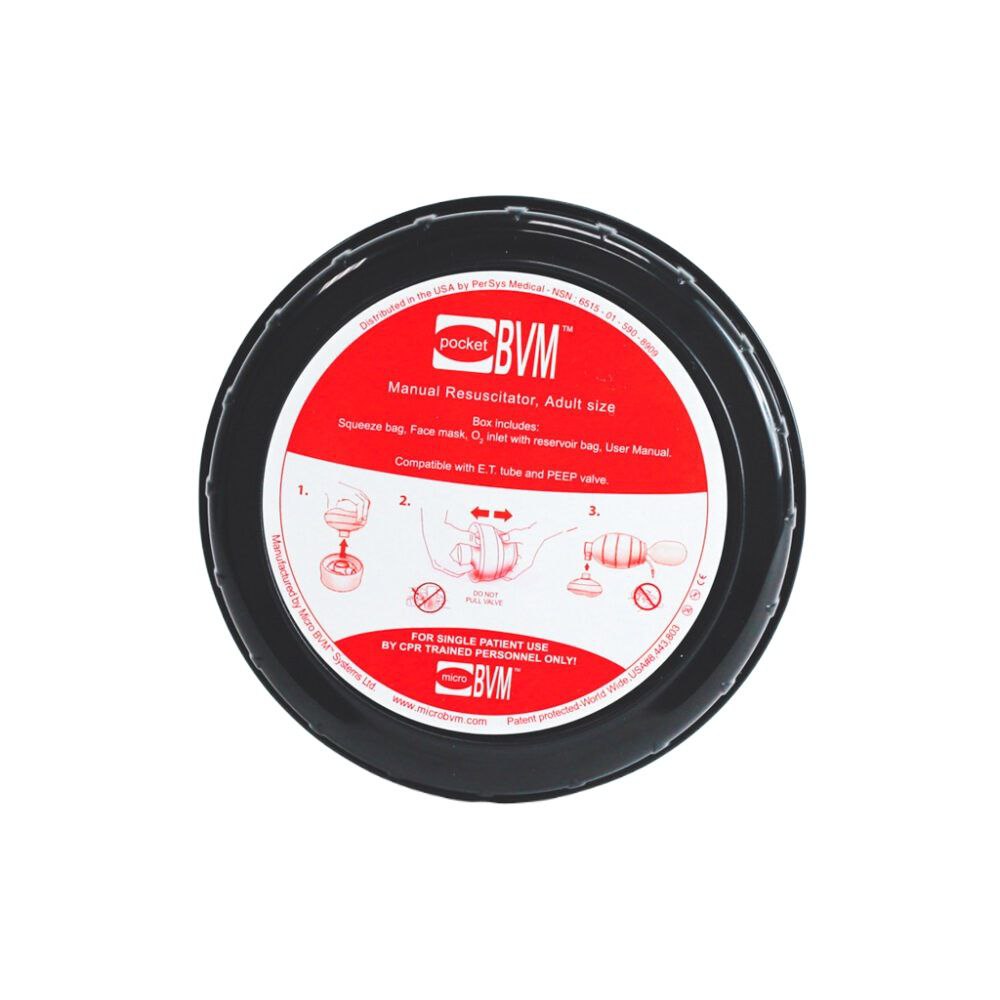
The TacMed catalog features a compact PerSys Medical BVM for adults and a bacterial and viral breathing filter. Pocket BVM comes in a protective case and takes up less space than a traditional manual resuscitator when unfolded. This format suits a medical backpack, evacuation kit, ambulance, or field medic’s gear.
A manual resuscitator delivers air or an oxygen-air mixture to a patient’s lungs. When squeezed, the bag delivers an inhalation through the valve and mask. When released, it returns to its original shape. The valve system directs airflow and releases exhaled air.
BVMs may be used during cardiopulmonary resuscitation, when breathing stops, in cases of severe respiratory failure, and in other situations covered by the current care protocol. In field medicine, this equipment supports breathing after responders assess airway patency and chest condition. Carrying a bag in a kit is useful only when the user knows how to open the airway, create a tight mask seal, and assess the result of ventilation.
Manual ventilation requires training and regular practice. The American Heart Association notes that two trained rescuers provide the most effective bag-mask ventilation: one opens the airway and holds the mask in place with both hands, while the other squeezes the bag. Adequate air delivery is checked by watching for visible chest rise. Excessive ventilation rate or volume can cause air to enter the stomach, regurgitation, aspiration, and impaired circulation.
The design of a manual resuscitator depends on the model and the included accessories. Before ordering, check the product page or manufacturer’s instructions for the contents. Pay particular attention to whether the set includes a mask, oxygen reservoir, oxygen tubing, and compatible connectors. For single-use models, also check restrictions on reuse.
A typical manual ventilation system may include:
Each component affects whether the equipment is ready for use. A transparent mask makes it easier to observe the mouth area and any secretions. Use the reservoir when delivering oxygen from a regulated source, according to the manufacturer’s instructions. Valves should move freely, and the bag should quickly return to its original shape after compression.
The compact PerSys Medical Pocket BVM listed in the TacMed catalog is a portable adult system. According to the manufacturer, it is intended for one patient and use by trained personnel. Before use, fully unfold it, connect the components correctly, and perform a functional check.
Even a functioning breathing bag cannot provide adequate ventilation if the airway is obstructed or air leaks significantly around the mask. Select a mask that fits the face: it should cover the nose and mouth, avoid pressure on the eyes, and allow a tight seal against the skin. A beard, bleeding, moisture, facial anatomy, and incorrect head position can make it harder to achieve a seal.
During training, rescuers practice opening the airway, holding the lower jaw, and using different mask-hold techniques. When possible, two trained professionals divide the tasks between them. This allows one person to hold the mask with both hands and the other to control bag compression more precisely.
Nasopharyngeal and oropharyngeal airways may be used to help maintain airway patency. The choice of airway, its size, and the insertion method depend on the patient’s condition, contraindications, and the user’s training. Supraglottic devices and endotracheal tubes are used by qualified professionals.
A self-inflating BVM can draw in ambient air. If the design has an oxygen inlet and reservoir, a regulated oxygen source can be connected to the system. The actual oxygen concentration depends on the model, flow rate, system seal, compression rate, and reservoir inflation. Operating parameters must follow the equipment instructions and medical protocol.
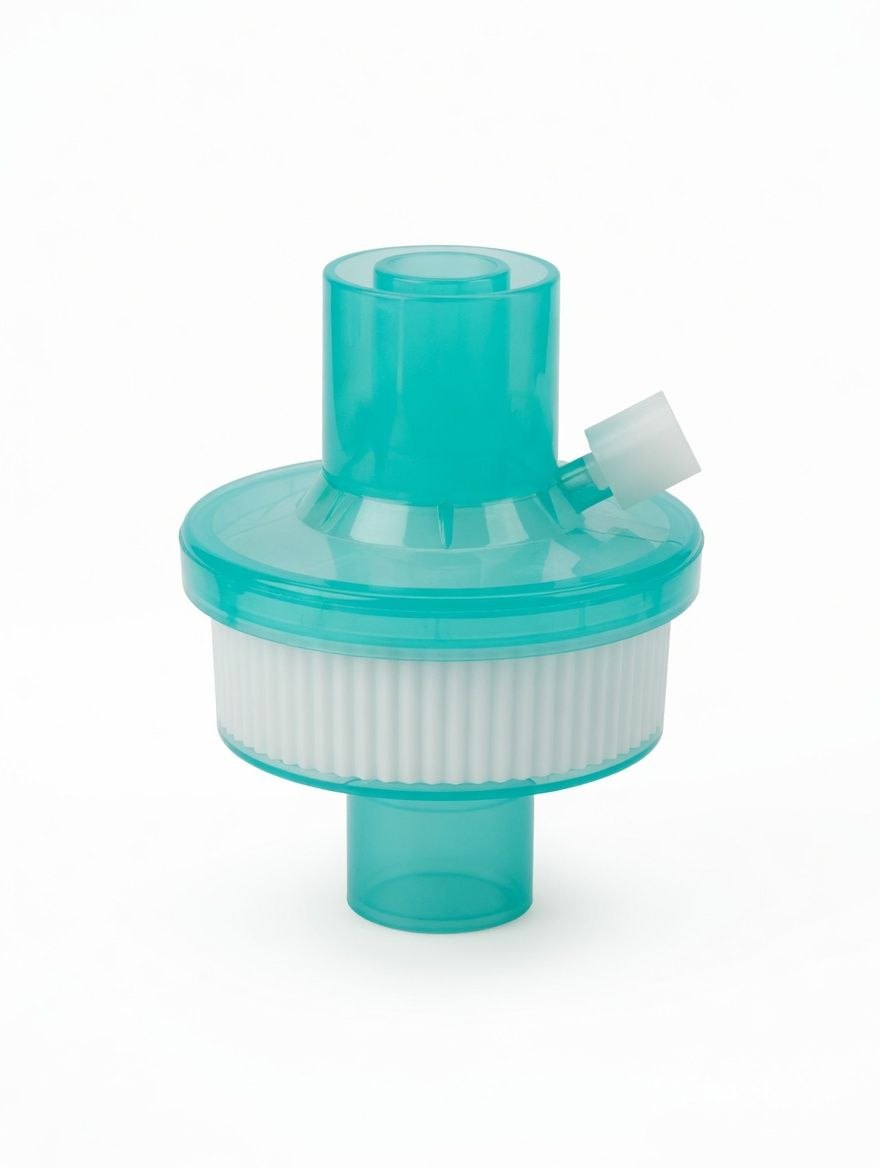
A bacterial and viral filter is installed in a compatible breathing circuit to reduce the risk of contamination. The HMEF filter available from TacMed also provides passive heat and moisture exchange. It has 22 mm and 15 mm connectors, a transparent housing, and a Luer Lock port for compatible monitoring equipment. This model is intended for adults and single use.
A filter adds resistance to airflow and increases the internal volume of the system. These parameters are especially relevant for children, patients with low tidal volumes, and setups with several connected components. Check that the filter is compatible with the BVM and other circuit components before adding it to a working kit.
Start by identifying the scenario for which the equipment is being assembled. For a field medic, case protection, dimensions, and accessibility in a backpack matter. An emergency medical team should also assess compatibility with oxygen equipment, airways, filters, and monitoring devices. A training center should consider product durability and whether the system can be assembled safely during practice.
Before buying a breathing bag, check these specifications:
Finalize the set according to the specific protocol and the team’s training level. For equipment intended for an evacuation team, consider transport duration and access to replacement components. A stationary aid station may benefit from several mask sizes and compatible filters. Use the manufacturer’s instructions for patient size, operating volume, and oxygen parameters.
The price of a breathing bag depends on its design, included accessories, materials, brand, and packaging. Comparing models by appearance alone is not enough. Compare their intended use, dimensions, connectors, and restrictions on reuse. Check the product page for current price and availability before placing an order.
A packaged manual resuscitator needs regular inspection alongside other medical equipment. Check it after delivery, during scheduled first aid kit inspections, and after transport in demanding conditions. For models in a hard case, also check the case and lid fastening. Follow the manufacturer’s instructions for functional testing.
During the kit inspection, check:
Record the inspection result on the medical kit checklist. If a defect is found, replace the product before the start of a shift or deployment. Assess components with damaged packaging according to the manufacturer’s requirements and the organization’s procedures. Store a spare BVM separately from training equipment.
After training use, do not return the system to a patient kit unless the manufacturer specifies that it can be reused. Reusable models must be processed only according to the approved instructions. Dispose of single-use products after use in accordance with medical waste procedures. Unauthorized valve replacement or connector modification can impair system function.
One common mistake is buying an adult BVM for a kit that must also serve children. A single mask size cannot provide a tight seal on every face. Select a suitable resuscitator and mask for each patient group.
Another problem is an incomplete set. An oxygen reservoir does not guarantee that oxygen tubing is included. Also check whether the oxygen inlet is compatible with the equipment the team actually uses.
Storing a BVM at the bottom of an overfilled backpack makes it slower to access and increases the risk of damage. Place it in a designated module with a compatible mask, filter, and airways. Team members should know where each component is stored.
The most serious mistake is relying on the equipment without practical training. Using a bag requires simultaneous control of airway position, mask seal, bag compression, and chest response. JTS training materials include separate practice in solo and team BVM ventilation as part of the TCCC course.
Treat the BVM as one part of a breathing support system. Airway management may also require airways, a suction device, several mask sizes, and personal protective equipment. Assemble the kit according to the user’s qualifications and approved protocols.
For chest trauma, assess separately whether chest seals are needed. Positive pressure during manual ventilation can affect the clinical picture of chest trauma, so the patient requires repeated assessment. Decompression needles are intended for invasive procedures when indicated and for users with appropriate training.
After the initial measures, continue monitoring the patient, arrange evacuation, and prevent heat loss. The BVM can be carried in a medical backpack alongside monitoring supplies, hypothermia prevention equipment, and other components of the MARCH protocol.
The TacMed online store offers a BVM for manual ventilation and a compatible bacterial and viral filter. The current category includes the compact PerSys Medical Pocket BVM in a protective case. The product page lists the manufacturer, country of origin, current availability, price, payment options, and delivery methods.
Before ordering, compare the product contents with the equipment list for your first aid kit, medical bag, or evacuation backpack. You can also choose airways, chest seals, filters, and other breathing support supplies to go with the BVM. Orders can be delivered to Kyiv, Kharkiv, Dnipro, Odesa, Lviv, and other locations across Ukraine.
FAQ
What does BVM mean?
BVM stands for Bag Valve Mask. The name refers to a manual system consisting of a ventilation bag, valve, and mask.
When is a breathing bag used?
A BVM is used for manual ventilation when breathing is absent or ineffective, according to the medical protocol. It is used by trained rescuers and medical professionals.
Can someone use a BVM without training?
Effective ventilation requires practical training. The user must know how to open the airway, hold the mask with a tight seal, squeeze the bag correctly, and monitor chest rise.
Does a breathing bag work without an oxygen cylinder?
Self-inflating models can draw in ambient air. Connection to a regulated oxygen source requires a compatible inlet and reservoir and must follow the manufacturer’s instructions.
Why is it better for two people to provide BVM ventilation?
Two trained professionals can divide the tasks: one opens the airway and holds the mask with both hands, while the other squeezes the bag. This approach helps reduce air leakage and monitor chest rise.
What is a bacterial and viral filter used for?
The filter reduces the risk of microorganisms passing between the patient and breathing equipment. HMEF models also help retain heat and moisture in the inhaled gas.
Can one BVM be used for adults and children?
Choose the resuscitator and mask according to the patient’s age and weight. An adult system does not replace pediatric or neonatal equipment.
Can a single-use BVM be reused?
A single-use model is intended for one patient. Reusing it with another person conflicts with the product’s intended use and may create a contamination risk.
How should a breathing bag be stored?
Store the BVM in its protective packaging or case within the temperature range specified by the manufacturer. During routine inspections, check that all parts are present and inspect the valves, mask, bag, and expiration date.
Where can I buy a BVM in Ukraine?
You can order a breathing bag and breathing filter from the TacMed online store. Current prices, availability, and specifications are listed on the product pages.