
(A)Airway





Maintaining airway patency is stage A, Airway, of the MARCH algorithm. After controlling severe bleeding, assess whether air can reach the lungs freely, whether the person can speak, and whether there are signs of obstruction. Reduced consciousness, the tongue falling back, bleeding, vomit, swelling, foreign objects, or trauma to the face and neck can obstruct the airway. Reassess regularly, as airway patency may worsen while waiting for evacuation.
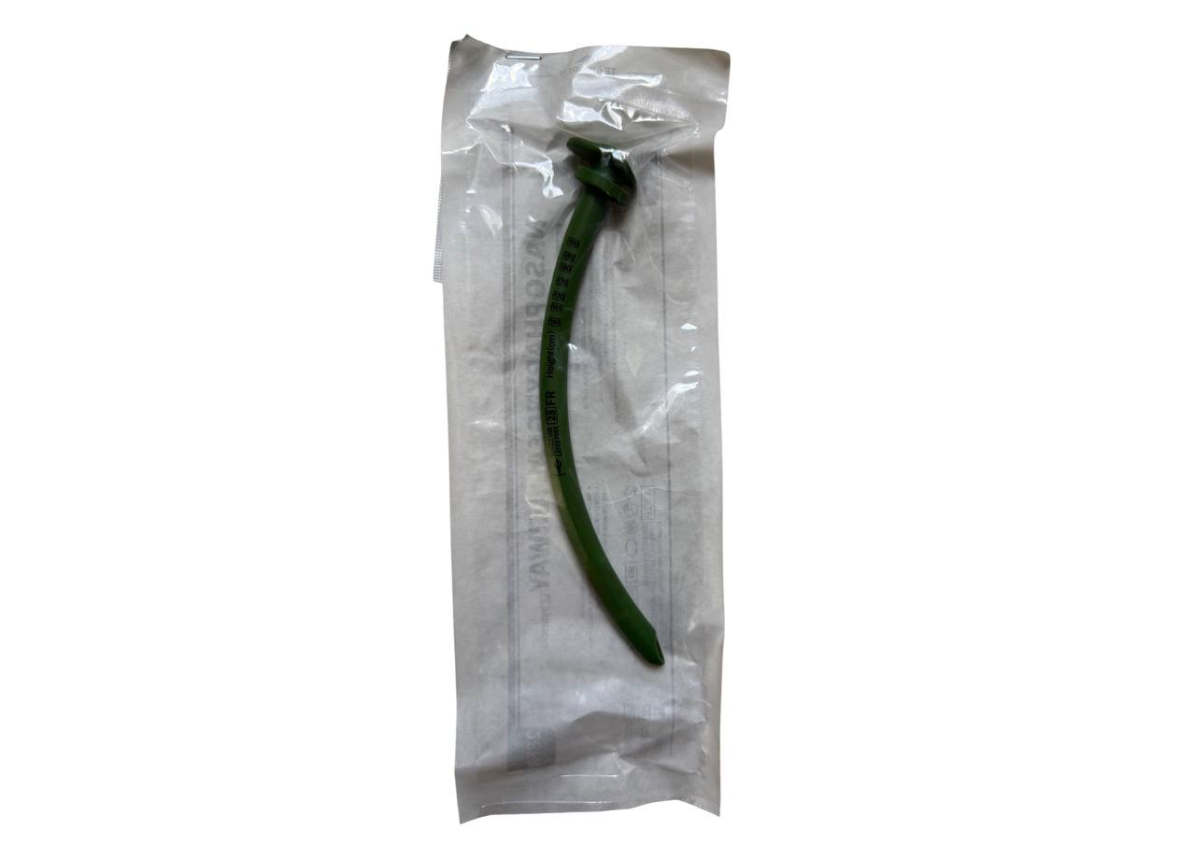
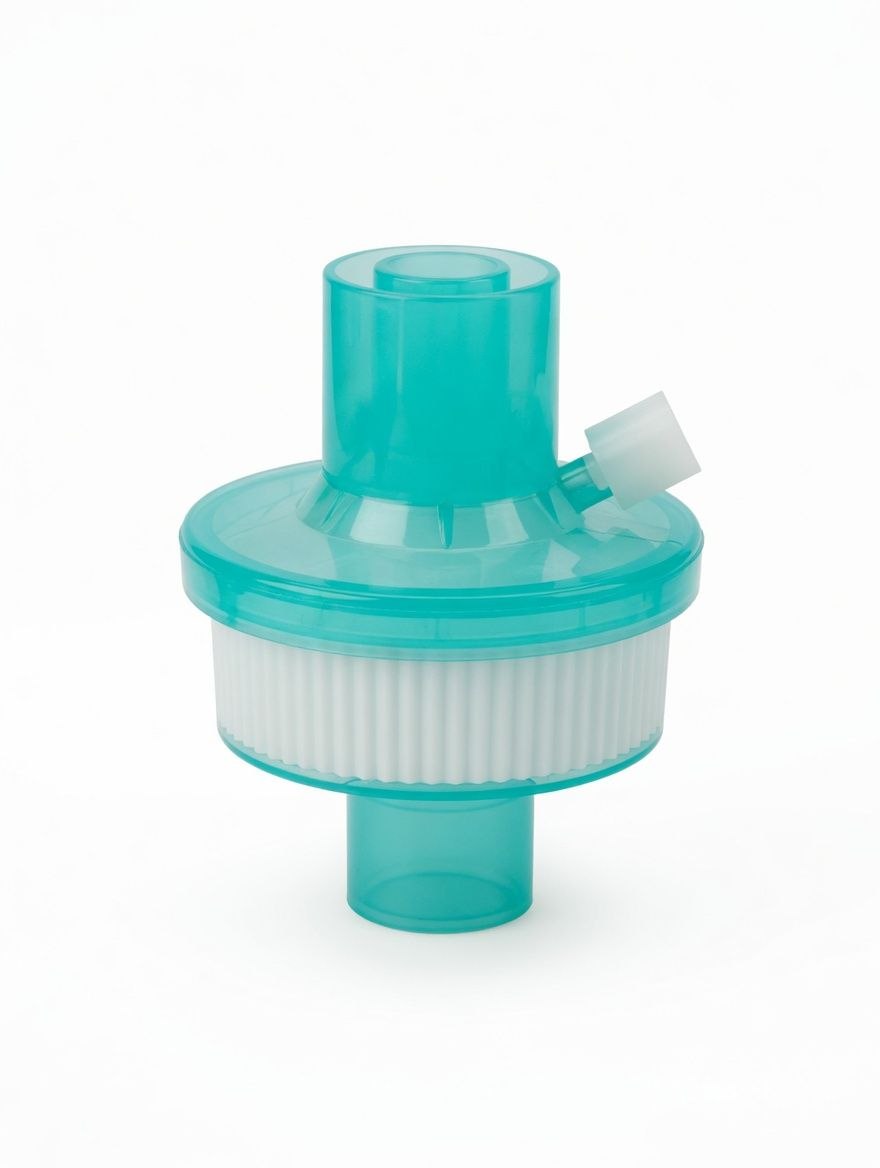
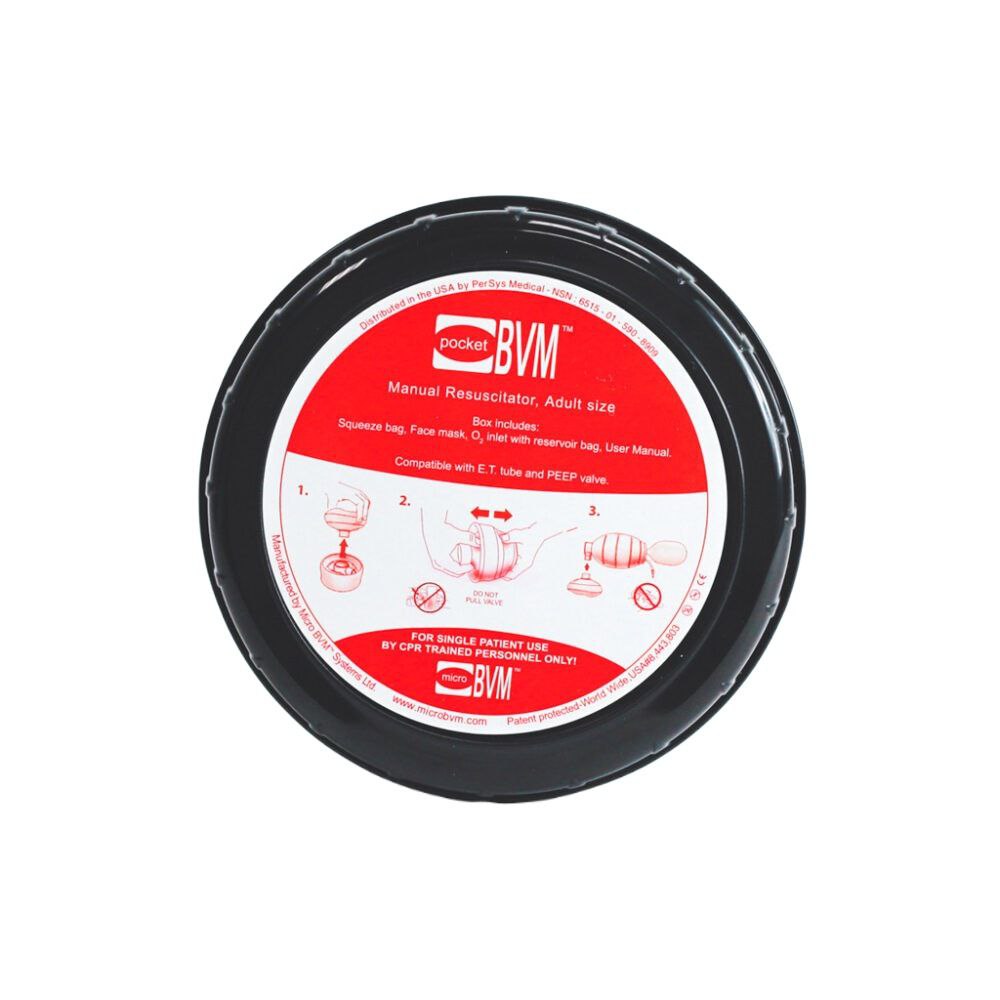
The TacMed online store offers Rusch and TACMED nasopharyngeal airways, i-gel supraglottic airways, KING LTS-D laryngeal tubes, a BVM manual resuscitator, an antibacterial and antiviral filter, and a CricKit. The range covers basic airway adjuncts and equipment for professionals trained in advanced airway management.
The letter A stands for Airway. At this stage, assess the person’s level of consciousness, ability to answer questions, visible obstructions in the mouth, and breathing sounds. Wheezing, gurgling, snoring, difficulty inhaling, or an absence of normal airflow may indicate a problem that requires action within the responder’s training.
The ability to speak clearly indicates that the airway is open at the time of the check. Continue monitoring, especially in cases of facial trauma, burns, altered consciousness, or prolonged evacuation. The person’s position, cervical spine stability, and any other trauma affect which actions are appropriate.
Joint Trauma System training materials for TCCC include opening the airway, placing the person in a stable side position, inserting a nasopharyngeal airway, and ventilating with a BVM as separate skills to practice. Use medical devices according to the user’s training, the manufacturer’s instructions, and the current protocol.
The category includes devices with different operating principles and levels of complexity. A nasopharyngeal airway creates a channel for airflow through the nasal passage. Supraglottic devices sit deeper and require professional insertion technique. A BVM is used for manual ventilation, while CricKit is designed for trained medical personnel to create invasive airway access.
The catalog includes the following product groups:
The clinical situation and user’s skills determine which group is suitable. An individual first aid kit for a service member is usually limited to supplies covered in their training. A medical backpack may contain several airway sizes, a BVM, filters, and backup devices. After any intervention, reassess airway patency, breathing, and the person’s overall condition.
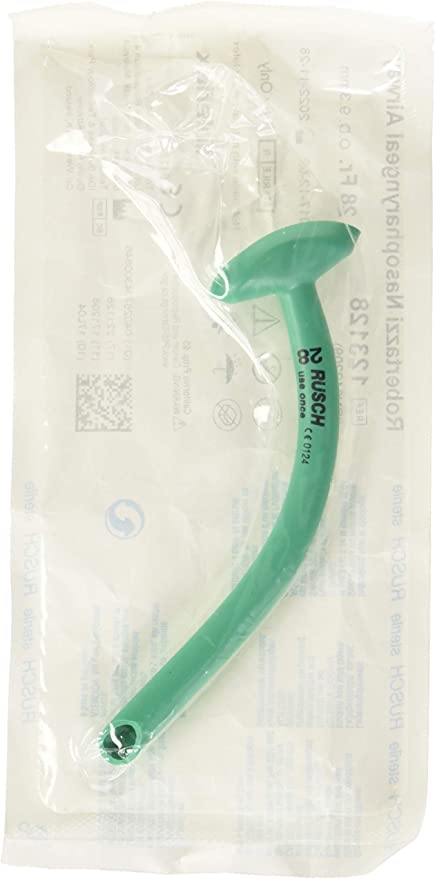
A nasopharyngeal airway, or NPA, is a flexible, curved tube with a widened outer end. It forms a channel through the nasal passage to the pharynx and helps reduce the risk of soft tissue obstructing the upper airway. An NPA does not supply oxygen or provide ventilation on its own.
TacMed offers Rusch models in sizes 28, 30, 32, 34, and 36 Fr, as well as a TACMED 28 Fr nasopharyngeal airway supplied with lubricant. The catalog lists the following lengths for some models: Rusch 28 Fr is 117 mm long, Rusch 30 Fr is approximately 118 mm, and Rusch 32 Fr is 140 mm.
The Fr designation indicates the tube’s outer diameter. One French equals one-third of a millimeter, so 30 Fr corresponds to an outer diameter of approximately 10 mm. Diameter is only one parameter: an airway that is too short may not work as intended, while excessive length increases the risk of incorrect placement.
Choose the size using anatomical landmarks and the manufacturer’s recommendations covered in training. Use water-soluble lubricant for insertion if the instructions call for it. Forcing the device against significant resistance may injure the mucosa and cause bleeding.
Before adding an NPA to a kit, consider possible contraindications, including the nature of facial and skull-base trauma. The responder should make the final decision within their scope of practice and the current protocol. After insertion, check the device’s position, airway patency, and breathing.
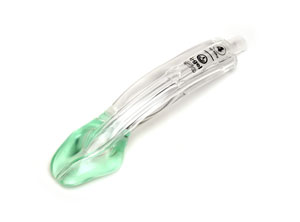
The i-gel is a supraglottic airway device. Its distal section has an anatomical shape and sits around the laryngeal opening. The design does not require inflation of a traditional cuff, reducing the number of preparation steps.
The TacMed catalog includes size 4 i-gel devices for patients weighing 50–90 kg and size 5 for patients over 90 kg. Before use, confirm the size on the packaging and in the official instructions. A medical bag may need several sizes if it is intended for use with adults of different builds.
Inserting a supraglottic airway requires practical training. After insertion, assess ventilation, chest movement, circuit seal, and other available indicators. If ventilation is ineffective, a trained professional checks the device position and uses the backup method specified in the protocol.
Store the i-gel in its original packaging to protect its shape. Deformation, damaged packaging, or an expired product are reasons to replace it. Dispose of single-use models after use in accordance with medical waste procedures.
The KING LTS-D is a supraglottic device with channels and cuffs designed to isolate the airway during ventilation. TacMed offers sizes 4 and 5. Choose the size according to height or other measurements specified by the manufacturer for the particular model.
Before use, check the device, cuffs, pilot balloon, valve, and packaging for damage. The set also requires a compatible cuff syringe, lubricant, fastening supplies, and equipment for monitoring ventilation. Store all components together as one functional module.
The laryngeal tube is intended for medical professionals trained to select the size, insert the device, inflate the cuffs, check its position, and respond to complications. Carrying the device in a backpack does not replace practical training. Refresh these skills regularly on appropriate mannequins.
A BVM, or Bag-Valve-Mask, is used for manual ventilation through a face mask or a compatible airway device in place. The self-inflating bag refills after compression, while the valve directs airflow to the patient. Depending on the configuration, the set may include a reservoir, oxygen tubing, masks in different sizes, and other components.
Effective ventilation depends on a close mask seal, an open airway, and the correct rate and volume of compression. Having two trained responders can make it easier to hold the mask in place and monitor ventilation: one secures the mask and supports the head position while the other compresses the bag. In field conditions, the number of available responders and the type of trauma may affect the approach.
Install an antibacterial and antiviral filter between the patient and compatible equipment according to its instructions. Check the connector type, airflow resistance, dead space, and compatibility with the BVM or supraglottic device. Adult and pediatric filters may have different specifications.
Dispose of single-use masks, filters, and other contaminated components after use. Clean reusable parts according to the manufacturer’s instructions. Before returning a kit to service, check the valves, bag seal, and contents.
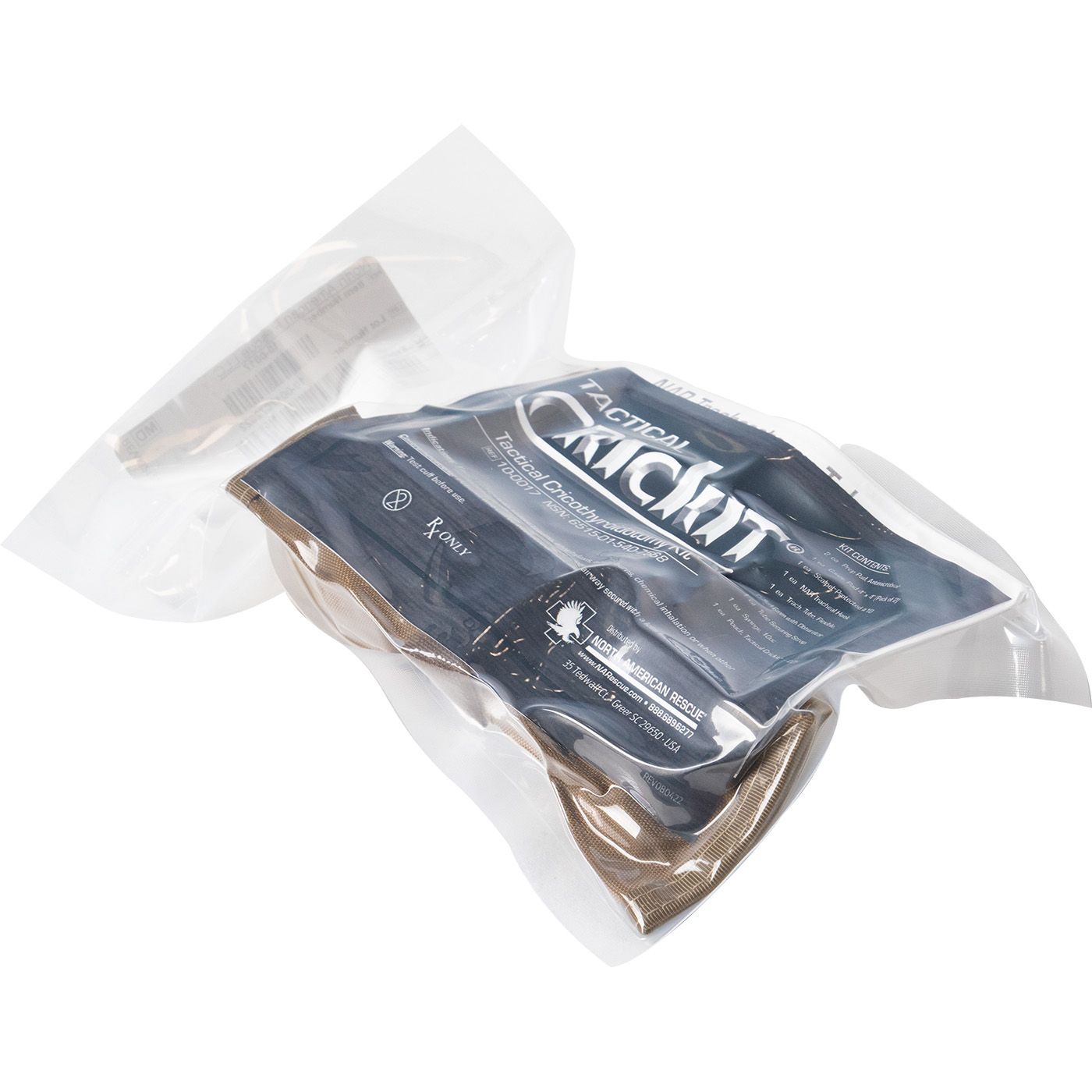
Cricothyrotomy creates surgical airway access to the trachea through the cricothyroid membrane. Protocols specify when to use the procedure, including cases where other available airway methods do not achieve the required result or cannot be used. CricKit contains specialized components for the procedure.
Check the kit contents against the product card and manufacturer’s list. When assembling a medical backpack, also check for antiseptic supplies, fastening materials, ventilation components, and equipment for confirming tube placement. Arrange the kit so each component is accessible in sequence.
Cricothyrotomy requires medical qualifications and a practiced skill. This invasive procedure carries risks, including bleeding, damage to anatomical structures, incorrect tube placement, and impaired ventilation. Practice on specialized models under an instructor’s supervision.
The kit should match the user’s training and the type of care they provide. An individual first aid kit usually contains a limited set specified by a unit standard or training program. A medic’s backpack may include a range of sizes and backup airway options. Before ordering, check that devices, connectors, and supporting components are compatible.
Consider the following when choosing:
After choosing the supplies, check the whole module as one system. The BVM should connect to the mask, filter, and available supraglottic devices. Store lubricant, syringe, and retainer next to the airway device they are used with. Label sizes so they can be identified quickly in low light.
For a medical backpack, prepare a list of all components, quantities, and expiry dates. Inventory the equipment after training or use. Replace single-use products that are open, damaged, or contaminated.
One common mistake is choosing an airway by model name alone. Size determines whether the device can be placed correctly, so consider diameter, length, body weight, or height, depending on the product. A medical bag intended for several patients needs the corresponding size range.
Incomplete kits are another problem. A supraglottic airway without lubricant, a KING LTS-D without a cuff syringe, or a BVM without a compatible mask and filter may not be ready for quick use. Check all components against the intended use scenario.
Incorrect storage can deform a device or damage its packaging. Do not bend airways tightly or compress them under heavy equipment. Keep sharp tools separate from sterile packs.
Including complex invasive equipment without appropriate training creates additional risk. Each user should know the limits of their skills and the current protocol. Regular training helps maintain assessment, insertion, and device-effectiveness checks.
Keep sterile airways in their original packaging until use. A pouch or organizer should protect them from dust, moisture, sharp objects, and prolonged compression. Keep the size markings visible.
Inspect the BVM according to the manufacturer’s instructions. Check the bag, mask, valves, reservoir, tubing, and connectors. Materials may deform during prolonged storage, so test the device’s function regularly.
Filters have a limited shelf life and are intended for single use. Damaged packaging no longer provides the storage conditions specified by the manufacturer. Record inspection dates in the medical kit inventory if needed.
The TacMed online store offers Rusch and TACMED nasopharyngeal airways, i-gel supraglottic airways, KING LTS-D laryngeal tubes, BVMs, breathing filters, and CricKit sets. Catalog filters let you choose by brand, product type, country of manufacture, and current availability.
Choose supplies for a first aid kit, medical bag, or evacuation backpack. When assembling a kit, also check for gloves, reinforced tape, fastening supplies, and equipment for the next R, Respiration, stage.
Orders are delivered to Kyiv, Lviv, Odesa, Kharkiv, Dnipro, Zaporizhzhia, Vinnytsia, Poltava, Cherkasy, Zhytomyr, Chernihiv, Rivne, Lutsk, Ternopil, Ivano-Frankivsk, Uzhhorod, Chernivtsi, Khmelnytskyi, Kropyvnytskyi, Mykolaiv, Sumy, Kherson, and other cities across Ukraine. Product cards list specifications, sizes, contents, prices, and availability.
FAQ
What does stage A of the MARCH algorithm mean?
The letter A stands for Airway. At this stage, assess and maintain the person’s airway patency, then continue checking their condition regularly.
What is a nasopharyngeal airway used for?
An NPA helps maintain a channel for airflow through the nasal passage to the pharynx. It does not provide ventilation or oxygen. Its use requires training, correct sizing, and consideration of the type of trauma.
What does the Fr size mean?
French, or Fr, indicates the tube’s outer diameter. One Fr equals approximately 0.33 mm. Check the airway’s length separately, as tubes with the same diameter may have different lengths.
How does an i-gel differ from a nasopharyngeal airway?
The i-gel is a supraglottic device inserted deeper to create a more controlled airway. An NPA passes through a nasal passage to help maintain upper airway patency. Each device has different indications and training requirements.
How is the i-gel size selected?
Select the size according to body weight and the manufacturer’s chart. In the TacMed catalog, size 4 is for 50–90 kg and size 5 is for patients weighing over 90 kg.
What is a BVM used for?
A manual resuscitator is used to ventilate a person through a face mask or compatible airway device. Effective use requires an open airway, a close mask seal, and practiced technique.
Who is the CricKit intended for?
CricKit is designed for trained medical professionals qualified and authorized to perform cricothyrotomy. The procedure is carried out for specified indications and in accordance with the protocol.
How should airways be stored?
Keep devices in their original packaging, protected from punctures, moisture, dirt, and deformation. During inspection, check the expiry date, sterile barrier, and legibility of the size marking.
