How to properly assemble a first aid kit: a complete guide from basic sets to professional solutions
Content
- What is a modern first aid kit?
- Types of first aid kits: which one to choose
- Tactical first aid kit: what it is and why its principles are used by everyone
- Home first aid kit: what should be included and how to assemble it properly
- Basic logic of assembling a first aid kit: what determines the contents
- The foundation of any first aid kit: bleeding control
- Airway and breathing support tools
- Additional critically important components of a first aid kit
- Example of a properly assembled first aid kit
- How to pack a first aid kit correctly?
- Where and how to carry a first aid kit?
- The most common mistakes when assembling a first aid kit
- How to learn to use a first aid kit?
- How often should a first aid kit be checked and updated?
- First aid kits for different scenarios: ready solutions
- Conclusion
- FAQ
A first aid kit is a basic safety element that, in a critical moment, can influence the outcome of events. Many people have a kit at home or in a car, but its contents are often formed randomly or based on outdated recommendations. As a result, at the right moment, some items are not used, while key elements are simply missing. A modern approach to pre-medical care clear logic: a first aid kit must correspond to the scenarios in which it will be used. It is formed as a system where each element has a specific function. This approach is used in tactical medicine and is gradually becoming a standard for civilian use. In this guide, we will examine what should be in a first aid kit, how to adapt its contents to different conditions, and which mistakes occur most often.
What is a modern first aid kit?
Not so long ago, a first aid kit was formed based on the principle of “just to have something at hand.” It mainly contained bandages, antiseptics, plasters, and basic medications. This approach partially covers everyday needs — cuts, minor injuries, or light discomfort. However, it practically does not take into account situations where minutes matter: serious injuries, massive bleeding, chest injuries, or critical conditions after road accidents.
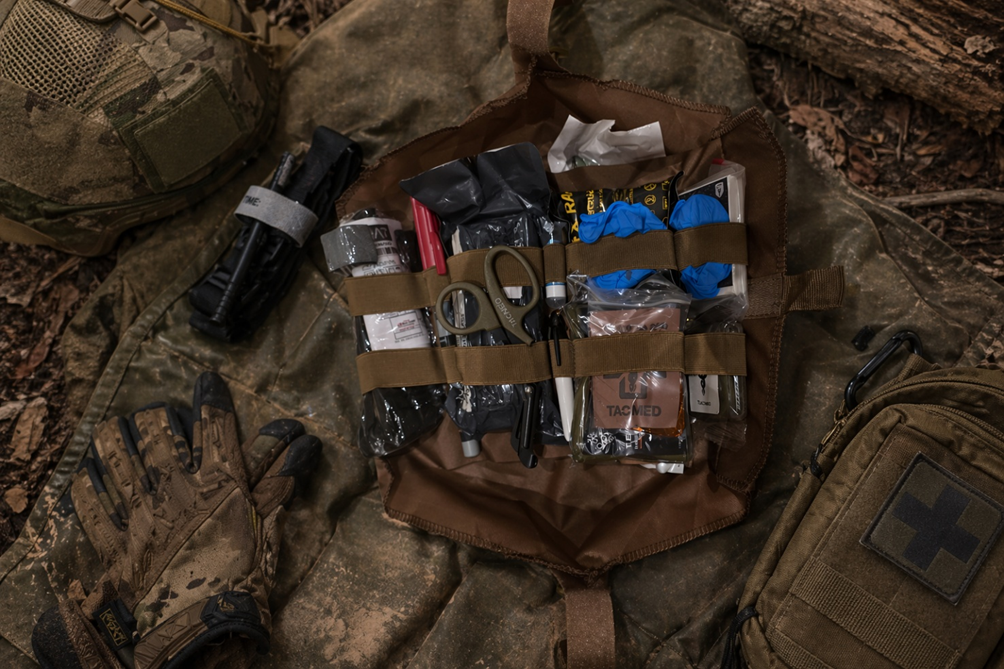
A modern first aid kit is assembled differently. It is based on the principles of tactical medicine, in particular the TCCC (Tactical Combat Casualty Care) approach. This approach clearly defines what poses the greatest threat to life and in what sequence actions should be taken. The focus is on bleeding control, ensuring breathing, and stabilizing the condition before medical professionals arrive. This logic allows focusing on key risks without overloading the kit with unnecessary elements.
To understand the difference between approaches, it is worth considering how the logic of assembly changes. A traditional kit focuses on universality, while a modern one focuses on effectiveness in critical scenarios. The main differences between them:
- In older kits, the emphasis was on medications and basic materials; in modern ones — on rapid response tools (tourniquets, hemostatics, bandages).
- Previously, the kit was assembled “just in case”; now it is formed for specific risks and scenarios.
- Previously, the important thing was simply having a kit; today, its functionality and logic of use are important.
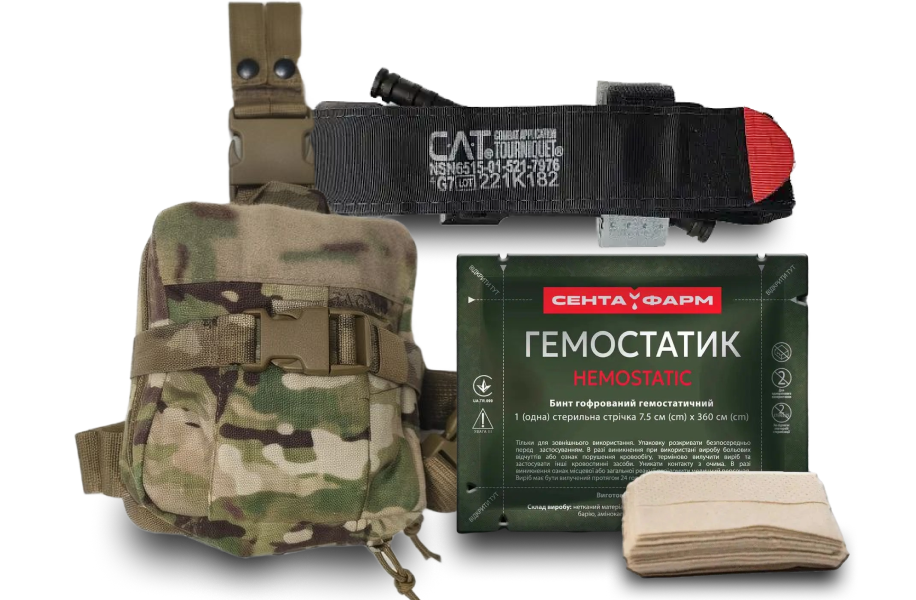
This evolution is clearly visible in the TacMed assortment. The basis consists of categories that correspond to the MARCH algorithm: tourniquets for rapid bleeding control, hemostatic agents such as Celox or QuikClot, compression bandages, occlusive seals for chest injuries. Ready-made kits and pouches are also presented, already designed in terms of access and placement logic. This approach shows what a kit assembled according to modern standards looks like. It is compact, structured, and focused on actions in the first minutes after injury. These minutes often determine further outcomes, so proper assembly is critically important.
Types of first aid kits: which one to choose
Before deciding how to assemble a kit, it is important to determine its purpose. Different conditions require different contents, so a kit for home, car, or active use will differ.
The most common types are:
- Individual first aid kit (IFAK) — a compact set for one person with a focus on critical conditions.
- Car kit — adapted to road accident risks and requiring upgrading with modern components.
- Tactical kit — for use in high-risk conditions with quick access to all elements.
- Home kit — focused on everyday situations and often supplemented with modern components.
- Specialized kits — for travel, work, or specific professions.
Each of these types has its own logic. For example, an IFAK includes only critically important items, while a home kit may be more extensive.
It is important to consider the type because it determines how effective the kit will be in a real situation. If the contents do not match the conditions of use, even high-quality items may turn out to be unnecessary or inaccessible at the right moment. A properly selected type allows focusing on key risks and avoiding overload with unnecessary elements. This approach simplifies use and increases response speed, which is especially important in critical situations.
Tactical first aid kit: what it is and why its principles are used by everyone
In the conditions of Ukraine, the topic of a tactical first aid kit goes beyond narrow professional use and becomes part of basic safety. Experience has shown that critical injuries can occur even in everyday life. That is why it is important to separately consider how a tactical kit works and why its principles are now widely used.
The first aid kit has become the foundation of modern tactical medicine. Its structure was formed based on practical experience, where speed and effectiveness are crucial. Today, many civilian kits repeat this logic.
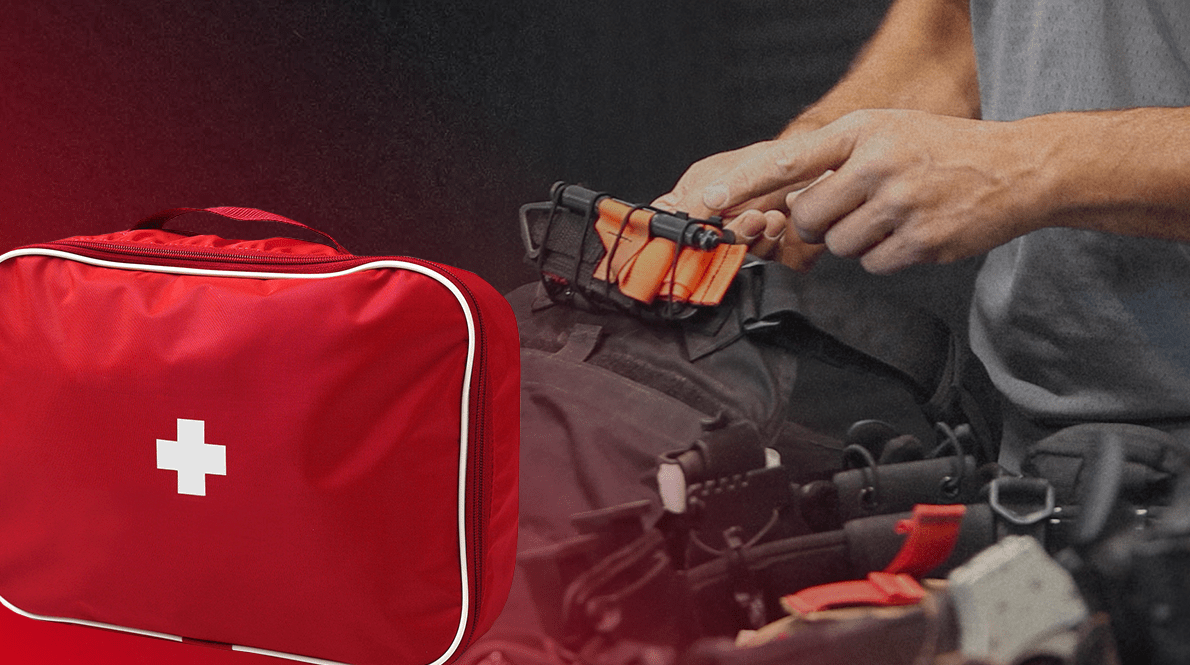
A military first aid kit is based on the MARCH algorithm. This means priority is given to tools that allow quickly eliminating life threats. Such kits use proven solutions, for example CAT-type tourniquets or their analogues.
The kit also includes hemostatic agents, bandages with fixation elements, occlusive seals for chest injuries. Each component has a clear purpose and is used according to the algorithm. This approach is gradually transferring to civilian use because it significantly increases effectiveness before professionals arrive.
❌ Medications in IFAK: Do not put tablets in a quick-access pouch (they will get wet or be lost).
Home first aid kit: what should be included and how to assemble it properly
A home first aid kit is a basic level of safety that is used most often. It covers most everyday situations: cuts, burns, minor injuries, and can also become the first tool of assistance before medical professionals arrive. At the same time, a modern approach assumes that even a home kit should include elements that allow action in more serious cases, not only with minor damage.
When assembling a home kit, it is important to find a balance between universality and functionality. It should not be overloaded but must cover basic risks that may arise in everyday life. In this context, solutions from tactical medicine are increasingly used, which have already proven their effectiveness.
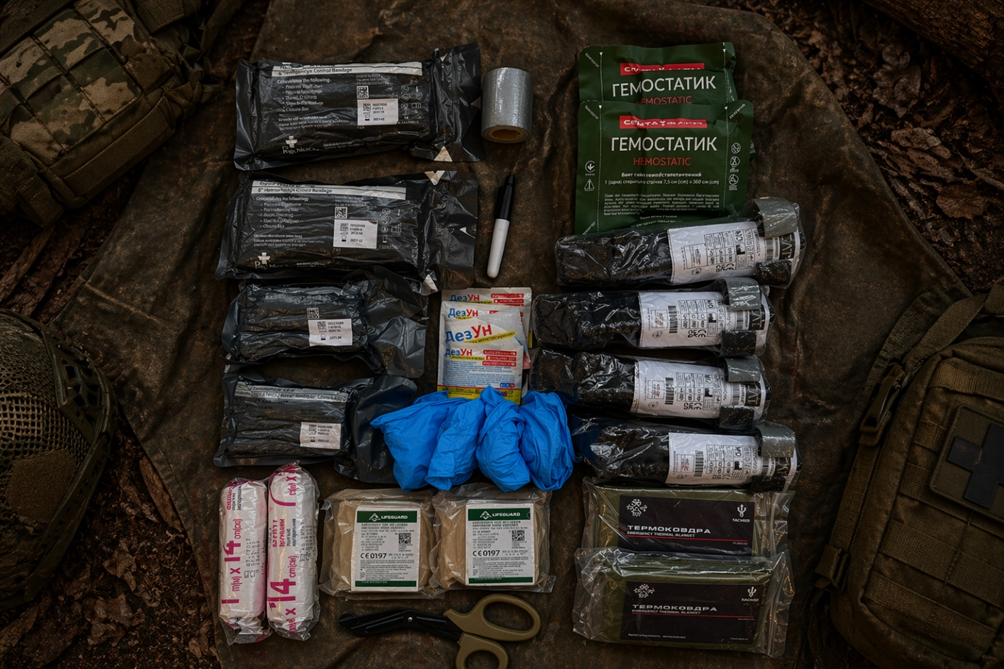
The composition of a home first aid kit should include the following items:
- Bleeding control items — bandages, a basic compression bandage. Even in home conditions, these elements can be critically important.
- Dressing materials — sterile wipes, bandages, plasters of different formats for treating cuts and minor injuries.
- Antiseptics — products for wound care and infection prevention.
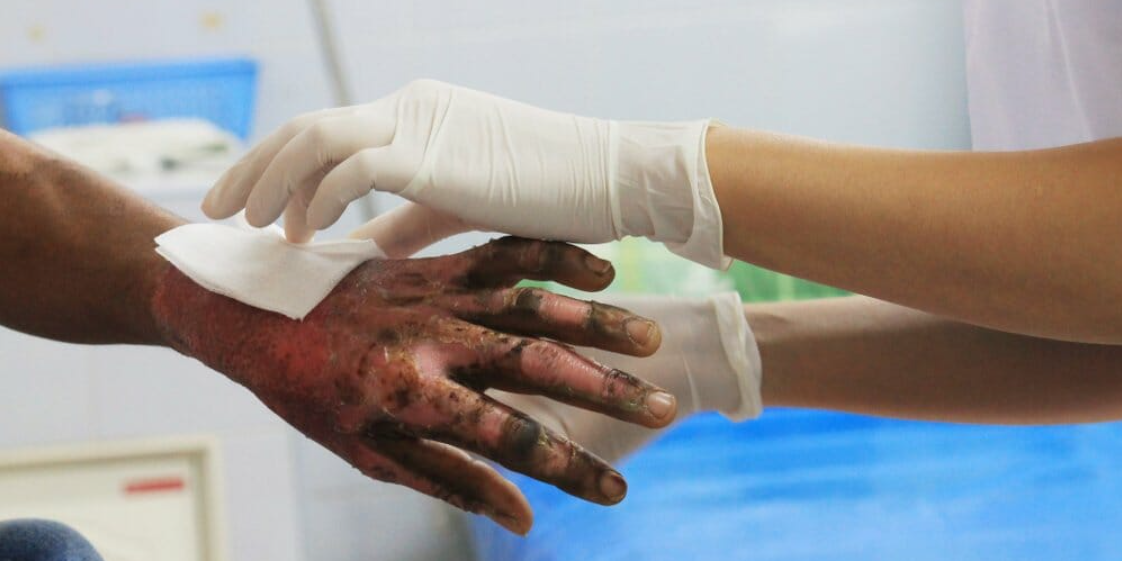
- Burn care products — special wipes or gels that help quickly reduce skin damage.
- Auxiliary elements — gloves, scissors, a thermal blanket for stabilization in case of hypothermia.
- Basic medications — pain relievers, antipyretics, and other drugs for everyday situations.
In the TacMed catalog, you can find separate components to complete a home kit, including tourniquets, bandages, and ready-made solutions assembled according to modern standards. This makes it possible to increase the level of safety even in ordinary conditions and make the kit more functional.
It is important to remember that a home kit is not a static set. Its contents should be periodically reviewed, adapted to the number of people in the household and possible risks. This approach allows keeping the kit ready and using it as efficiently as possible in any situation.
Basic logic of assembling a first aid kit: what determines the contents
To properly equip a kit, it is important to start with analyzing the conditions in which it will be used. It is the context that determines which items are really needed and which will remain unnecessary. In pre-medical care practice, there are no universal solutions: the kit is formed based on specific risks, scenarios, and the user’s level of training.
This approach is confirmed by medical statistics. According to tactical medicine data (TCCC), up to 80–90% of risks in injuries are associated with uncontrolled bleeding. Another significant part is breathing problems and airway obstruction. This means that the contents of the kit should primarily cover these critical conditions, not secondary symptoms.
Before assembling a kit, it is worth evaluating several key factors that directly affect its contents and effectiveness:
- usage scenarios (home, car, travel, work in risky conditions);
- number of people the kit is intended for;
- user training level;
- time to receive professional medical assistance;
- type of most likely injuries or situations.
Each of these points changes the logic of assembly. For example, if the kit is used in a car, the likelihood of injuries in road accidents increases, so tourniquets, bandages, and quick-access tools become important. If it is about travel or remote locations, the importance of an expanded set and materials increases. In tactical kits, the focus shifts even more toward bleeding control and working according to the MARCH algorithm.
Separately, it is important to consider the time until professionals arrive. Emergency medicine studies show that the first 5–10 minutes after injury are critical. During this period, properly selected tools from the kit can significantly influence the condition of the injured person. This once again confirms that a kit must be not only equipped, but ready for immediate use.
Thus, the question “what should be in a first aid kit” is always considered through the prism of a specific situation. A грамотний approach allows avoiding chaos, focusing on truly important elements, and forming a kit that will work in real conditions.
The foundation of any first aid kit: bleeding control
Bleeding control is the foundation of any first aid kit. In most critical injuries, it is rapid blood loss that determines the condition of the injured person and affects further outcomes. The experience of tactical medicine shows that timely use of the right tools can significantly increase the chances of stabilization before professionals arrive. That is why, when assembling a kit, this block must always be a priority.
The basic set for bleeding control includes several types of tools, each performing its own function and used in specific situations:
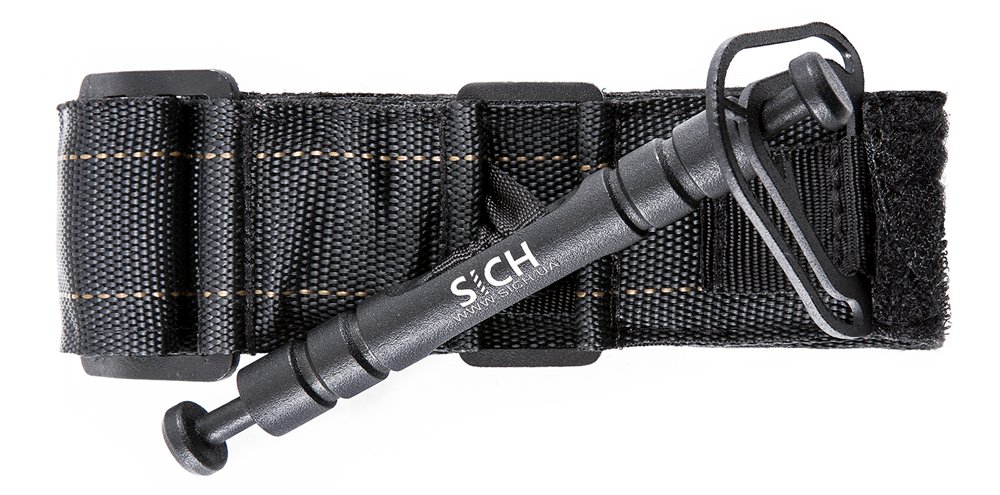
- Tourniquet — a special device for completely stopping severe bleeding from limbs by compressing vessels. Used in critical cases when other methods do not give a quick result.
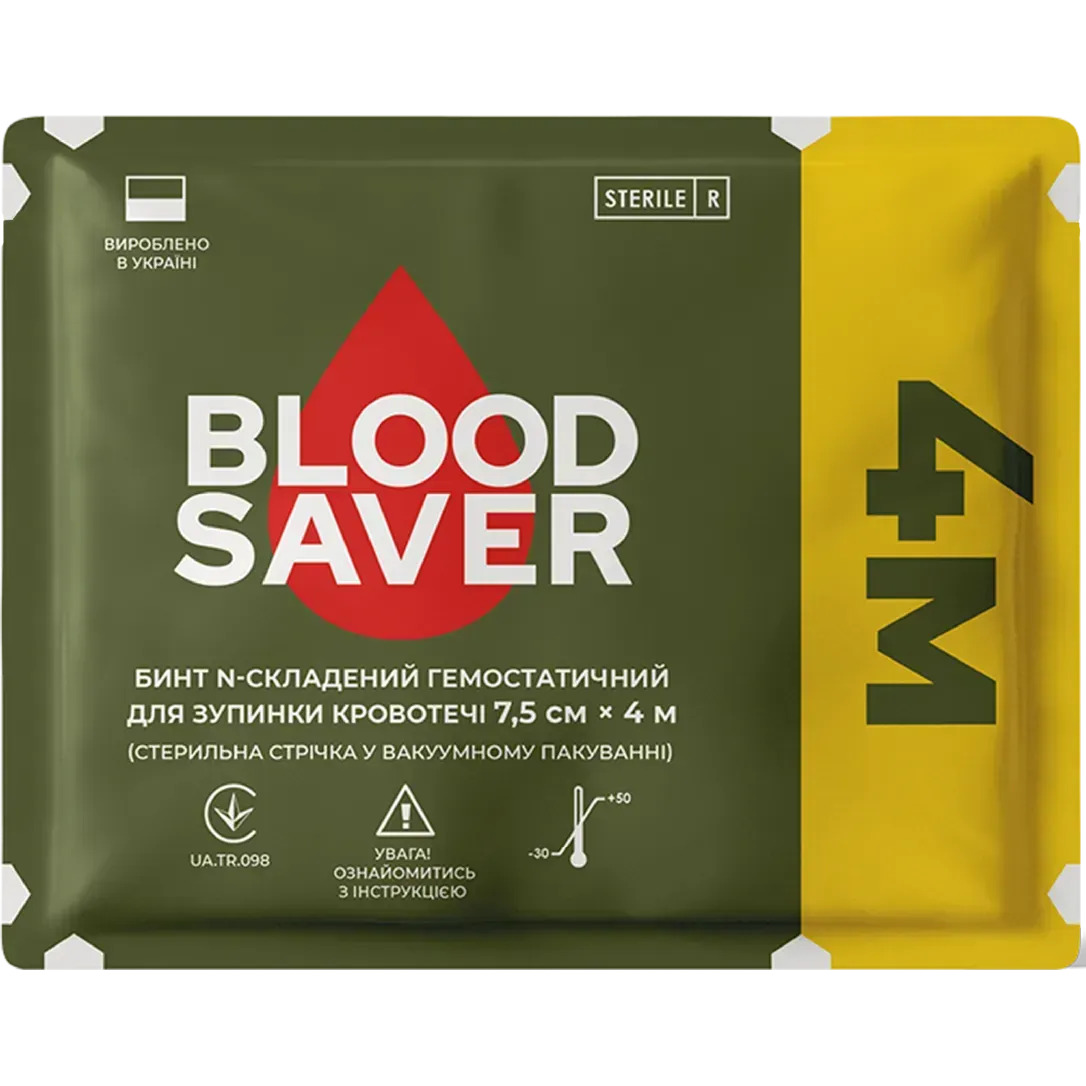
- Hemostatic agents — materials with active components (Celox, QuikClot) that accelerate clotting and are used for deep or complex injuries where a tourniquet cannot be applied.
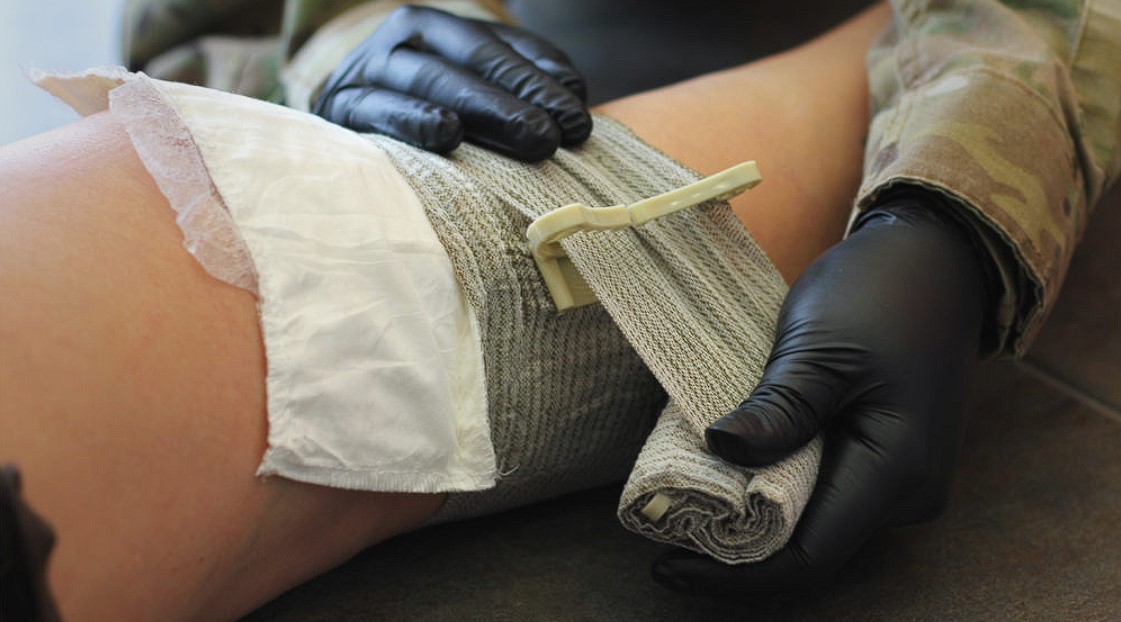
- Compression bandage — a dressing with a built-in pressure mechanism that allows fixing the injured area and creating the necessary level of compression to stop bleeding.
- Fixation bandages — auxiliary materials for securing dressings, bandages, or hemostatics, ensuring stability and protection.
These elements work together and complement each other. The tourniquet provides immediate control in the most dangerous cases, the hemostatic agent helps in complex injuries, and bandages allow fixing the result and maintaining a stable condition. This sequence corresponds to modern approaches to pre-medical care. If a kit does not contain these components, it does not cover basic risks associated with injuries.
❌ Tourniquet in packaging: Never keep a tourniquet in factory wrapping — in a critical moment you will not be able to tear it open quickly.
Airway and breathing support tools
After bleeding control, the next critical stage is ensuring proper breathing. In many traumatic situations, impaired breathing quickly worsens the condition of the injured person. This is especially relevant in chest injuries, loss of consciousness, or conditions that affect lung ventilation. That is why a modern first aid kit must take these risks into account and include appropriate tools.
According to emergency medicine data, breathing impairment is one of the main causes of complications after injuries. In the first minutes, it is important either to restore airway patency or to support ventilation. In more complex cases, tools for deeper intervention are required.
The basic solutions for this block include the following items:
- Airway (nasopharyngeal or oropharyngeal) — a device that helps maintain airway patency in cases when a person cannot independently control breathing.
- Occlusive seal — a sealed dressing for closing open chest injuries, preventing air from entering and complications from developing.
- Decompression needle — a special tool for reducing pressure in the chest in cases of tension pneumothorax. Used in critical situations to restore breathing.
- Ventilation bag — a device for manual lung ventilation that allows maintaining breathing in a person when it is absent or insufficient.
In professional solutions presented in TacMed, such tools are used as part of extended kits or specialized sets. They require basic skills and understanding of action algorithms, so they are more often used by trained users. These tools are not included in the minimum set but are important for extended kits or work in high-risk conditions. If the goal is to assemble a kit that covers the widest possible range of critical conditions, this block should be considered separately.
Additional critically important components of a first aid kit
In addition to the main elements, a first aid kit should include auxiliary tools that ensure convenience and efficiency of use. They are often underestimated, although they directly affect the speed of actions.
These components include:
- protective gloves;
- trauma scissors;
- marker for recording time;
- thermal blanket;
- burn care products.
In the TacMed catalog, these elements are presented as separate items or included in ready-made kits. Their presence allows working more systematically and safely.
Example of a properly assembled first aid kit
To better understand what a first aid kit looks like, it is worth considering levels of configuration. They help adapt the set to different tasks.
There are three main levels of configuration:
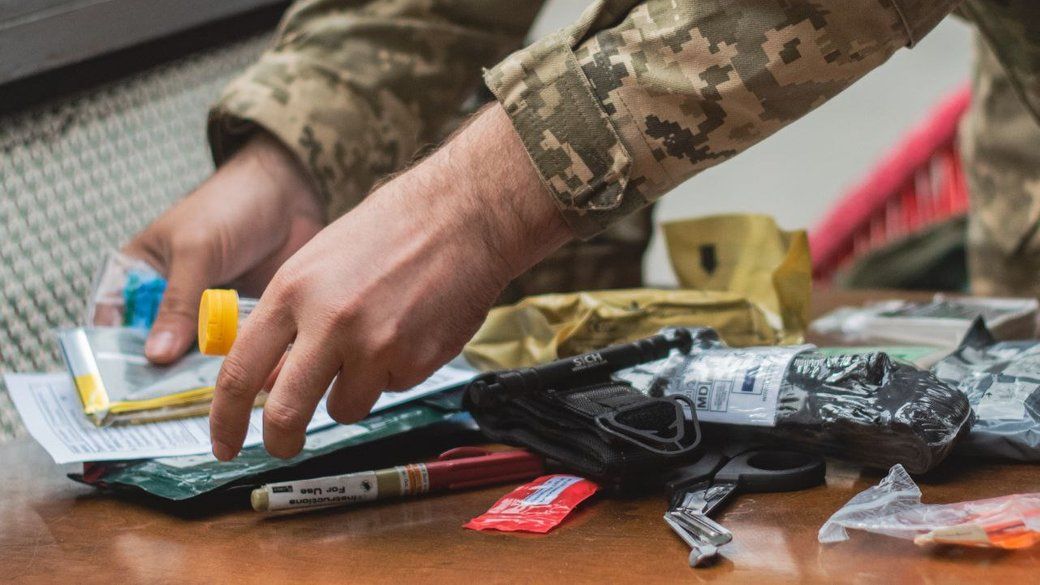
- Minimal level — includes basic bleeding control tools: a tourniquet, bandage, simple dressing. This format is often used as an IFAK for everyday carry.
- Optimal level — supplemented with hemostatic agents (for example, Celox), compression bandages, gloves, and basic stabilization tools. This is a universal option for a car or an active lifestyle.
- Advanced level — includes a full set: several tourniquets, hemostatics, occlusive seals, a thermal blanket, and additional dressing materials. This option is suitable for complex conditions or high-risk environments.
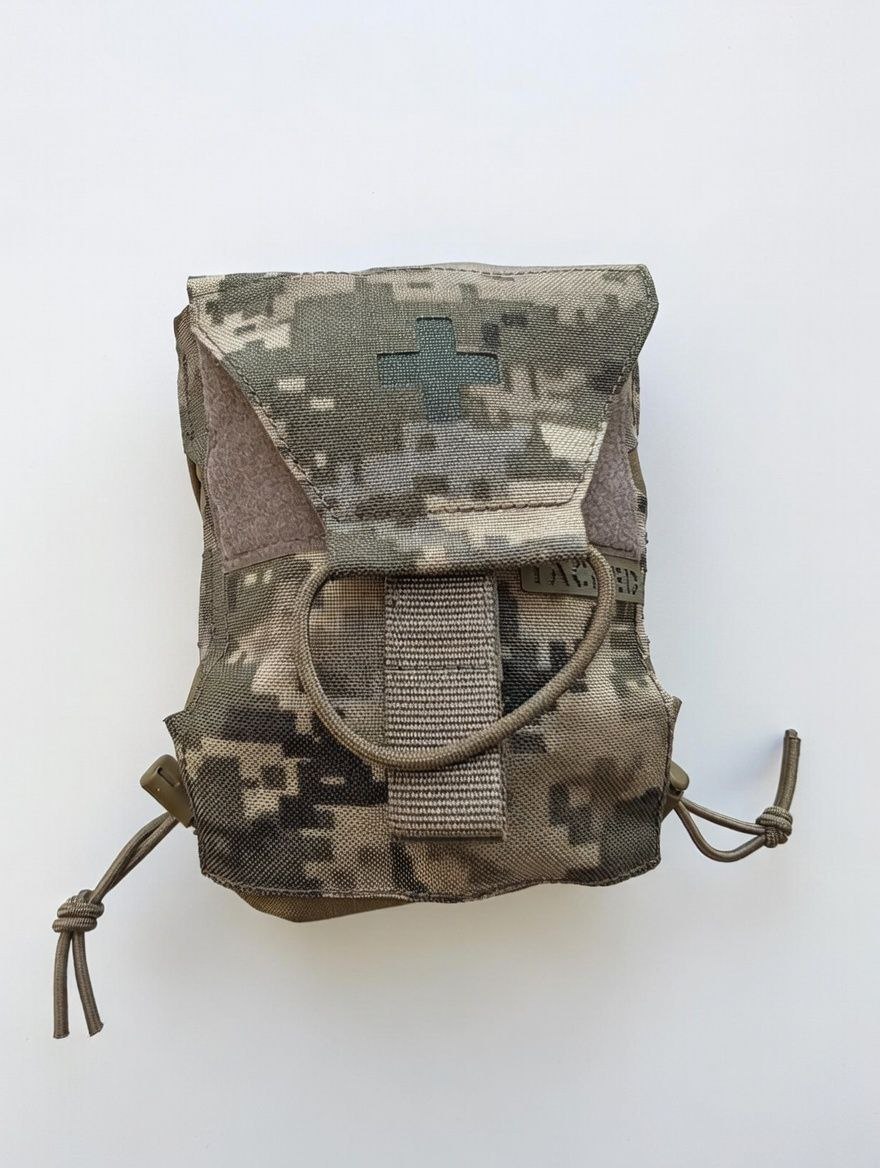
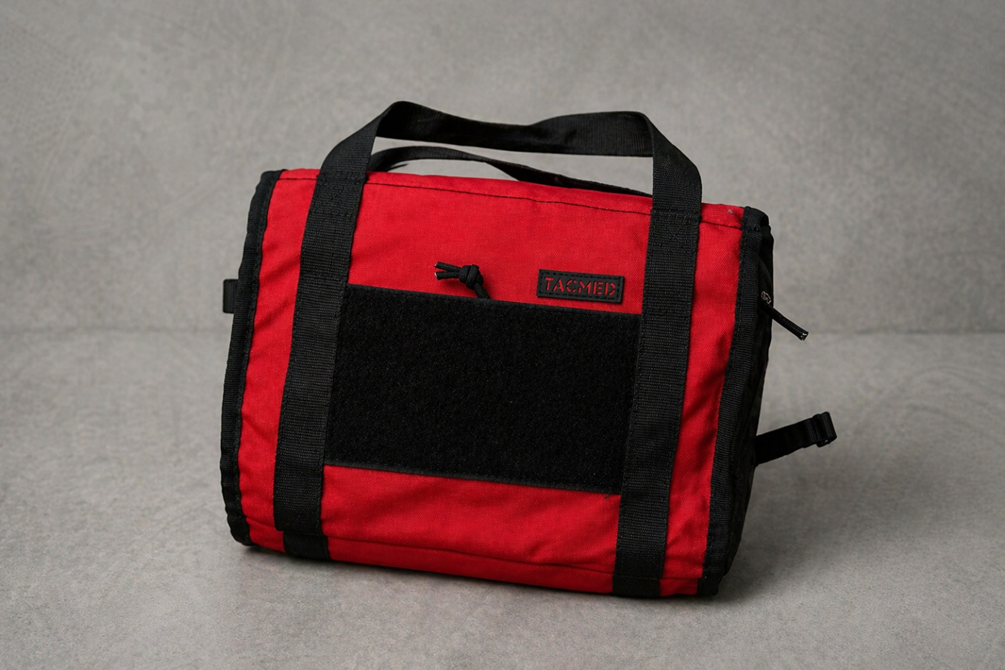
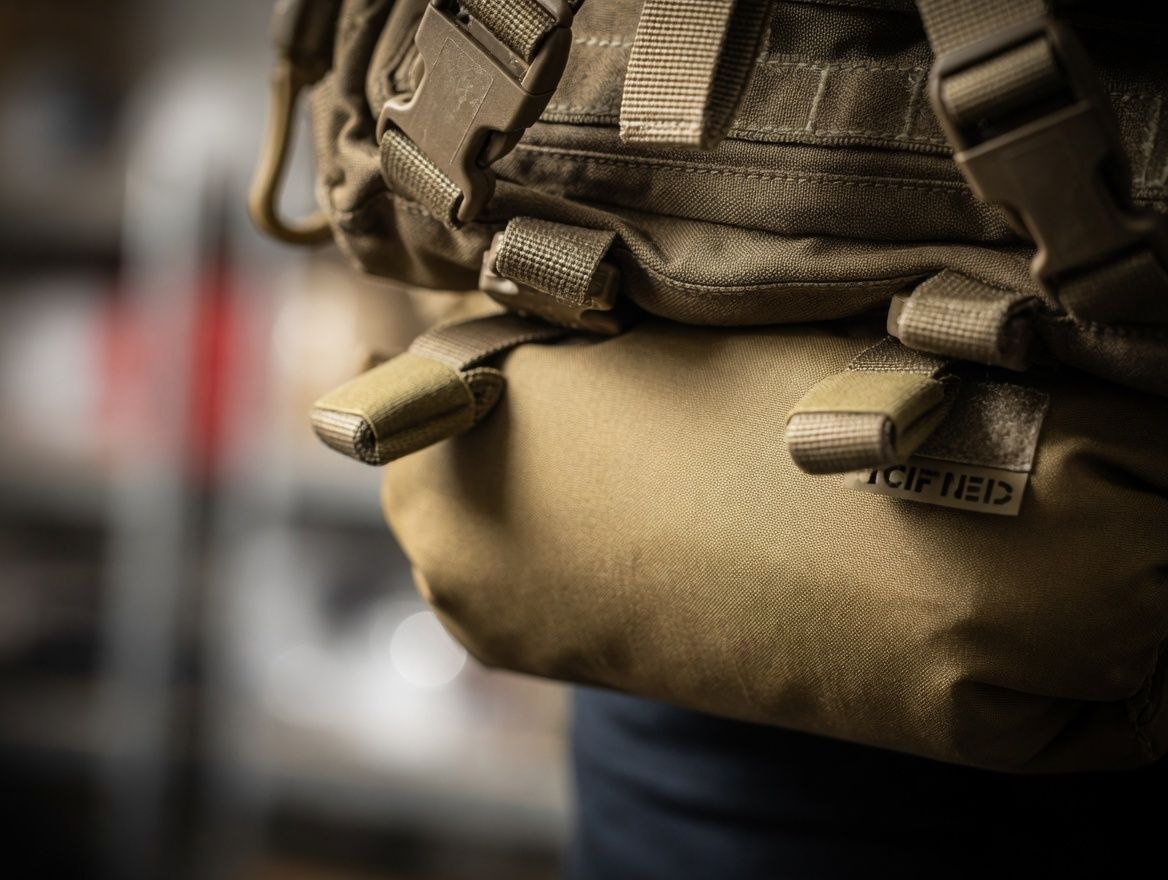
In the TacMed catalog, these levels are clearly reflected in the form of ready-made solutions. For example, compact pouches for IFAK allow assembling a minimal set for constant carrying, while car kits or extended sets include more elements and cover a wider range of situations. It is also worth paying attention to modular pouches, which allow flexible changes in contents depending on the task. This approach helps avoid chaotic assembly and create a kit that actually works in real conditions. It focuses on functionality rather than quantity and ensures readiness for different scenarios without unnecessary overload.
How to pack a first aid kit correctly?
The organization of a first aid kit determines the speed of access to items. In a critical situation, this is extremely important, so it is necessary to correctly distribute all elements.
Basic packing principles:
- separation by function;
- quick access to the tourniquet;
- fixed placement of each element;
- no overload.
In many TacMed pouches, the placement logic is already designed. This simplifies use and allows acting without unnecessary delays.
Where and how to carry a first aid kit?
The placement of a first aid kit directly affects how quickly it can be used. In a critical situation, seconds matter, so even a properly assembled kit may lose effectiveness if access to it is complicated. Therefore, when assembling a kit, it is important to think about its placement in advance.
It is recommended to place a kit:
- at home — in an accessible place known to everyone;
- in a car — not in the trunk, but closer to the driver or passengers;
- in a backpack — in the top compartment or a separate pouch;
- on equipment — in a quick-access area reachable with one hand.
This approach reduces reaction time and allows acting without delay. It is also important to maintain consistency: the kit should always be in the same place so that no time is wasted searching in a stressful situation.
The most common mistakes when assembling a first aid kit
Mistakes in assembling a kit occur often, especially when it is done without understanding the logic. They can reduce the effectiveness of even high-quality tools.
The most common problems:
- absence of a tourniquet;
- excess of unnecessary medications;
- saving on key elements;
- lack of skills in use.
These mistakes are easy to correct if the approach is systematic and based on modern standards.
How to learn to use a first aid kit?
Even a properly assembled kit does not provide results without basic skills. In a stressful situation, it is important to act quickly and confidently.
The most effective way is to take pre-medical care courses. They provide an understanding of algorithms and allow practicing skills.
It is also important to periodically review the kit contents and repeat basic actions. This helps maintain readiness and reduces the risk of mistakes.
How often should a first aid kit be checked and updated?
A first aid kit requires regular monitoring, since some items have a limited shelf life, and their effectiveness directly affects the outcome in critical situations. Over time, usage conditions also change: travel formats, risks, number of people. This means that the kit is not static and requires periodic review.
In practice, it is recommended to check a kit every few months or after each use. This allows timely identification of missing or damaged items and avoids situations where something is unusable when needed. Particular attention should be paid to sterile components and bleeding control tools.
During inspection, it is important to:
- check expiration dates;
- inspect packaging of bandages and sterile materials;
- ensure the tourniquet is functional and undamaged;
- verify the presence of all elements after use;
- assess whether the contents match current conditions.
Regular updates help maintain the kit in working condition and ensure readiness for different situations.
First aid kits for different scenarios: ready solutions
The contents of a first aid kit depend on the conditions in which it is used. One universal option does not cover all scenarios, so it is important to adapt the set.
The most common options:
- home kit;
- car kit;
- travel kit;
- tactical kit for active use.
Solutions for each of these scenarios are available, allowing assembly without unnecessary trial and error.
Conclusion
A first aid kit is a tool that forms basic safety in everyday life. Its effectiveness depends on proper selection of elements and understanding of usage logic. A modern approach is based on tactical medicine practice and focuses on key risks. That is why it is important not just to buy a kit, but to assemble it correctly.
A properly assembled kit provides confidence that in a critical moment you will have everything necessary to act.
FAQ
What should be in a first aid kit?
The basic composition includes bleeding control tools (tourniquet, hemostatic agent, bandage) and auxiliary elements for stabilization — gloves, bandages, scissors. These components allow action in the first minutes after injury.
What is an IFAK?
An Individual First Aid Kit is a compact kit designed for one person and quick use in emergency situations.
Is a tourniquet necessary in a civilian kit?
Yes, it is part of the basic set of a modern first aid kit and allows rapid control of severe bleeding.
How to assemble a tactical first aid kit?
It is recommended to follow the MARCH algorithm: first bleeding control, then breathing and stabilization.
How much does a first aid kit cost?
The cost depends on the level of configuration. Minimal kits are more affordable, while advanced kits include more professional tools.
Can you buy a ready-made kit?
Yes, ready-made kits are convenient, especially without experience, but it is important to review and adapt them.
How often should a kit be checked?
Every 2–3 months or after each use.
Almost gone