Supplies for Controlling Severe Bleeding
Severe bleeding poses an immediate threat to life and requires the source of blood loss to be identified quickly. In the MARCH sequence, its control is marked by the letter M, Massive Hemorrhage, and comes first. Tourniquets, hemostatic and standard gauze for packing, compression bandages, and other bleeding-control products are used for this purpose. TCCC training materials cover three main bleeding-control skills: applying a tourniquet, packing a wound, and securing a pressure dressing.
The TacMed catalog includes products for controlling severe bleeding from North American Rescue, Celox, QuikClot, PerSys Medical, SAM Medical, Safeguard Medical, Sich, TACMED, Tacmedsolution, Blood Saver, and other manufacturers. The range includes CAT Gen7, SOFTT-W Gen 5, SAM XT, TMT, and SICH tourniquets, hemostatic gauze, trauma dressings, sterile dressing packs, and ready-made kits.
How to Recognize Severe Bleeding
Significant external blood loss may accompany amputations, deep limb wounds, injuries to the groin or armpit area, and other severe trauma. During the initial assessment, look for blood flowing rapidly from a wound, pooling on a surface, or soaking through clothing or a dressing. Other signs of deteriorating circulation may include altered consciousness, pronounced weakness, pale skin, and cool skin.
In field conditions, clothing or equipment may conceal the source of bleeding. Conduct a quick check of accessible areas and examine the limbs, neck, armpits, and groin. Control any bleeding you find using a method suited to its location and your training.
A tourniquet is designed for life-threatening bleeding from a limb. For deep wounds in areas where a limb tourniquet cannot be positioned correctly, pack the wound with hemostatic or standard gauze and then apply direct pressure. A compression bandage holds the material in place and maintains pressure while the person is prepared for evacuation.
What Bleeding-Control Products Are Available in the Category?
Individual products serve different purposes, so a first aid kit should contain more than one tourniquet or bandage. Choose supplies according to the location and severity of the bleeding, access to the wound, and the user’s skills. Select components as a coordinated set. After using any product, check whether the bleeding has stopped.
The main product groups include:
- Used to control life-threatening bleeding from an upper or lower limb. The catalog includes models with windlass, buckle, and other mechanisms for applying circumferential pressure.
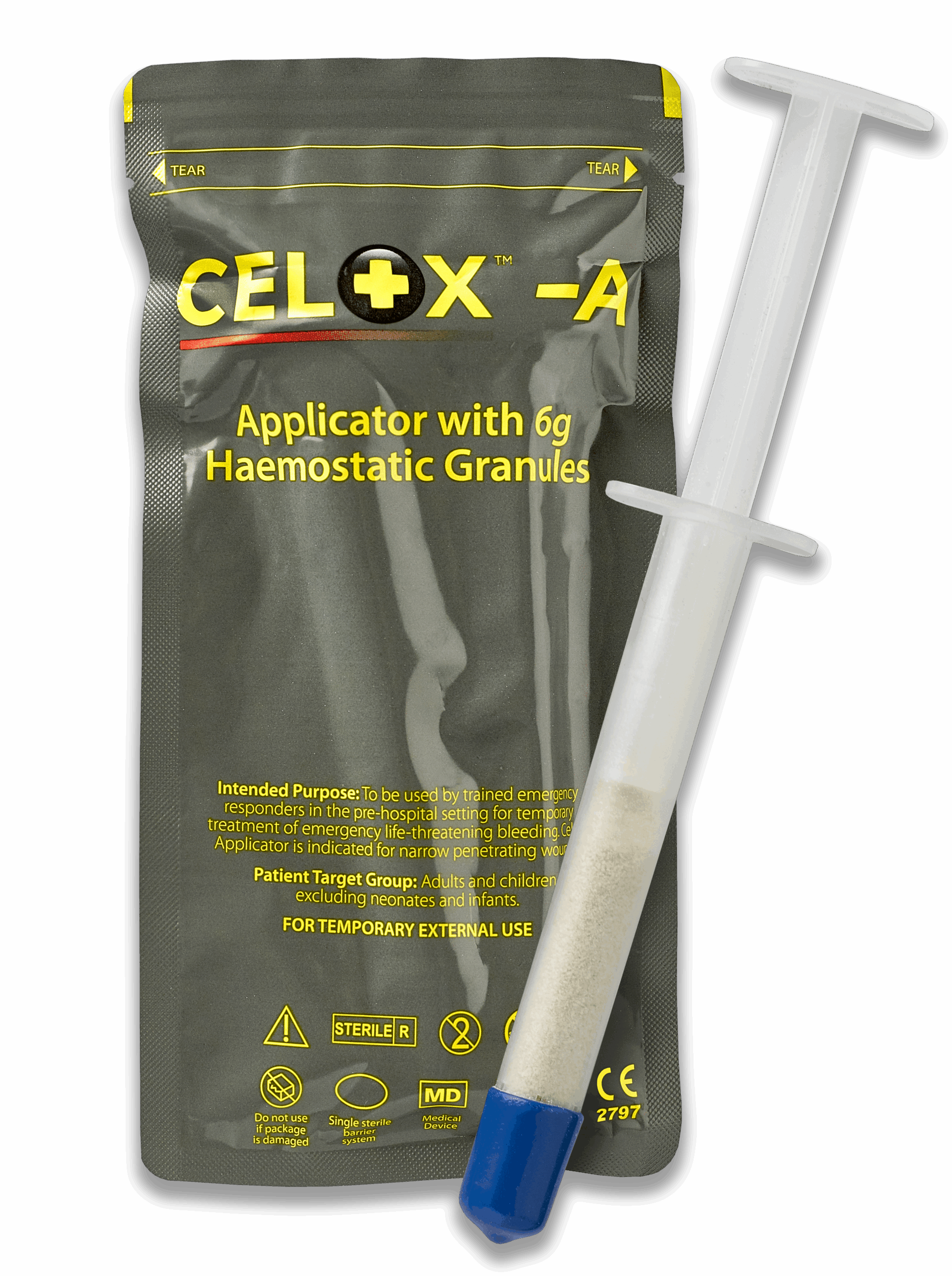
- Hemostatic gauze. Gauze material impregnated or coated with an active hemostatic agent. It is used to tightly pack a suitable wound cavity and keep the material in contact with the source of bleeding.
- Standard gauze for packing. Dense gauze can be used to mechanically fill a wound channel. Its length, width, folding style, and packaging format affect ease of use.
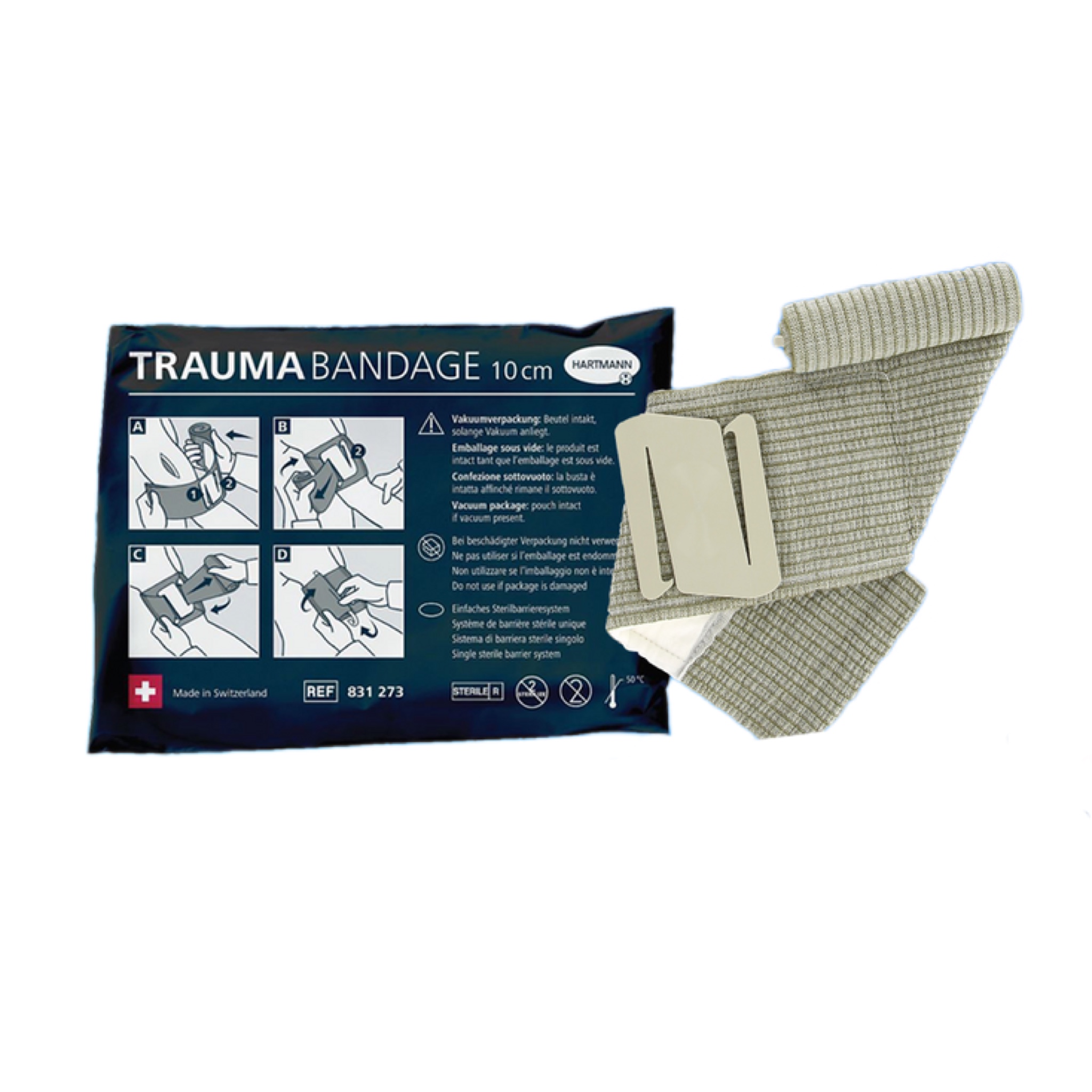
- Compression bandages. Combine an absorbent pad, elastic wrap, and components for applying and securing pressure. Some models have a pressure applicator, a retaining device, or an additional movable pad.
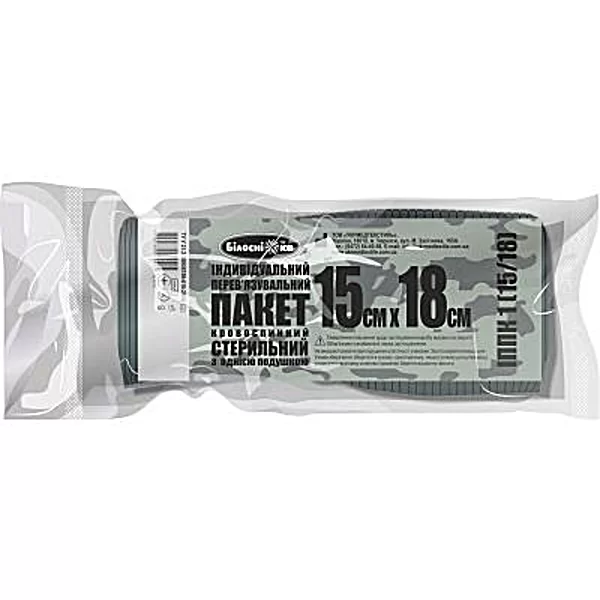
- Individual dressing packs. Contain sterile dressing material with one or more pads. They are used to cover a wound and form a dressing suited to the type of trauma.
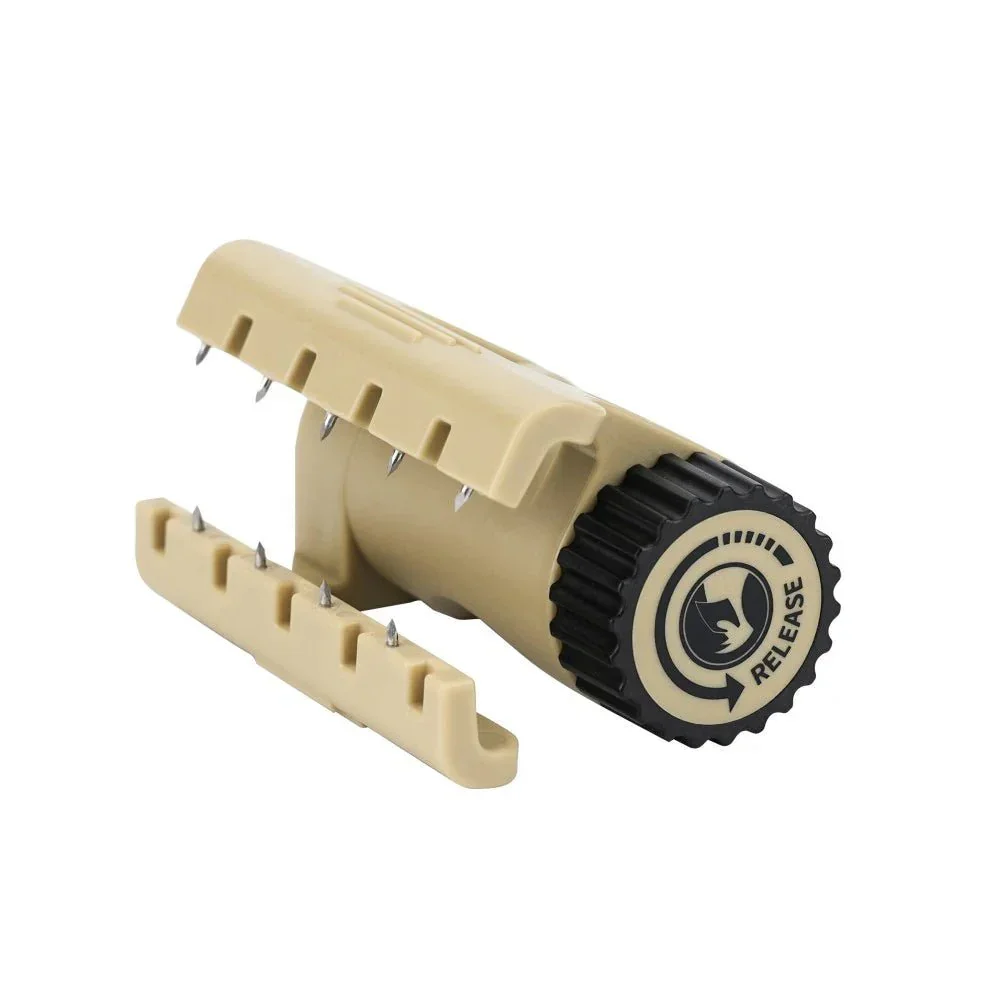
- Specialized products. This group may include devices for controlling bleeding in complex anatomical areas, ready-made kits, and supporting components for professional medical personnel.
Each group addresses a specific task. A tourniquet is not designed for the chest, abdomen, neck, or groin. A compression bandage does not replace tight packing of a deep wound when packing is indicated. Hemostatic material requires the correct insertion technique and sufficient direct pressure. Practical training helps users understand the limits of each product and the order in which to use them.
Tourniquets for Controlling Limb Bleeding
A modern tourniquet applies circumferential pressure around a limb to stop life-threatening bleeding. Its design usually includes a sturdy strap, buckle or threading system, tightening mechanism, and retainer. Windlass models increase pressure by turning a rod, which is secured in its holder after the bleeding has stopped.
TacMed offers CAT Gen7, SOFTT-W Gen 5, TMT, SAM XT, and SICH tourniquets. Options include individual products, sets with a pouch and marker, and kits with a training tourniquet. The catalog features Ukrainian and US-made models in black, green, blue, orange, and other colors.
When choosing a model, assess the strap width, strength of the windlass and retainer, buckle design, one-handed application, and the presence of a field for recording the time. The strap should tighten evenly and maintain tension. Carry the tourniquet in a ready-to-use configuration that you have practiced during training.
Use a separate product for practice. Repeated tightening can wear out a working tourniquet’s strap, hardware, and internal components. Keep the tourniquet in your first aid kit ready for use and inspect it regularly.
Color also has a practical purpose. Blue tourniquets are often used for training so they can be easily distinguished from working equipment. Orange versions are highly visible in civilian emergency kits. Choose black, green, or camouflage models to match the equipment format while keeping them accessible for quick use.
Hemostatic Gauze for Packing Wounds
Hemostatic gauze combines a gauze base with a substance that supports localized clotting. Different brands use different active agents and application technologies. Check the instructions for the specific model for the required direct-pressure time, preparation method, and other parameters.
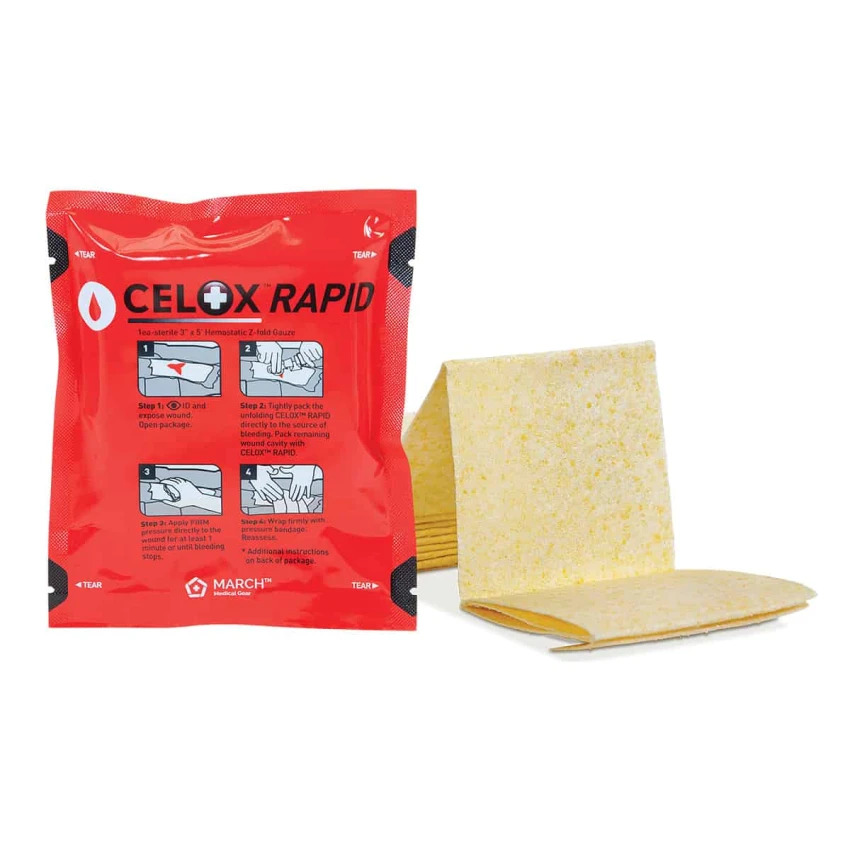
The catalog includes Celox Rapid, QuikClot Combat Gauze, the Ukrainian Hemostatic gauze, Blood Saver, and other options. Celox Rapid contains folded gauze measuring 7.6 × 150 cm and is designed for quick use when the manufacturer’s instructions are followed. QuikClot Combat Gauze contains kaolin and is used for packing followed by direct pressure. Longer gauze provides more material for filling a wound channel, but takes up more room in a first aid kit.
During packing, the material must reach the bleeding site. Laying gauze over a deep wound often fails to create the required compression. After tightly packing the wound, maintain direct pressure in accordance with your training protocol and the product instructions, then secure the material with a bandage. Joint Trauma System materials present hemostatic dressings, wound packing, and pressure bandages as related bleeding-control skills.
Hemostatic gauze remains sterile while its packaging is sealed and undamaged. Tears, punctures, separated seams, or illegible markings are reasons to replace it. Once opened, the product is for single use.
Standard Gauze and Packing Bandages
Standard gauze for packing creates mechanical pressure inside a wound cavity. Its effectiveness depends on using enough material, packing the cavity tightly, and applying direct pressure afterward. Depending on the approved kit configuration, this product can serve as a primary or backup supply.
Gauze may come as a roll, accordion fold, Z-fold, or compactly folded bandage. Z-fold gauze can be pulled from the package in successive sections, making it easier to control. Rolled gauze suits different dressing tasks, though unrolling it while wearing gloves may take more time.
A width of around 7.5 cm is common for packing gauze. Choose the length based on the potential depth of a wound and the amount of backup material in the first aid kit. Compactness matters in an individual kit, but a shorter bandage may not provide enough gauze for a large wound cavity.
Both hemostatic and standard gauze require a practiced technique. Training should use mannequins and materials intended for practice. Keep sterile kit components sealed until needed.
Compression and Trauma Dressings
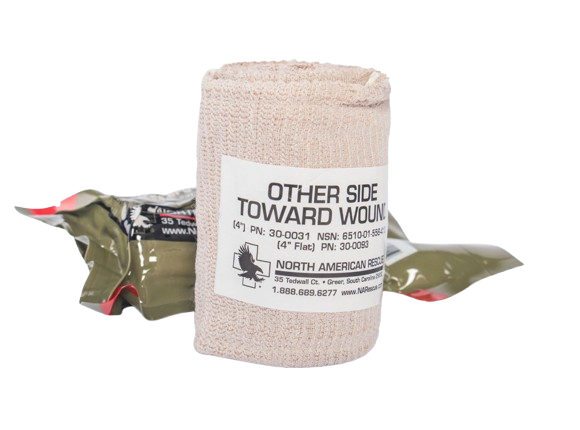
A compression bandage helps secure gauze after packing, hold a dressing pad over a wound, and apply focused pressure. Its design may include an elastic wrap, fixed or movable pad, pressure applicator, and end retainer. Some models can be adapted to a limb, head, or another accessible area.
TacMed offers trauma bandages from North American Rescue, PerSys Medical, Safeguard Medical, SAM Medical, and other manufacturers. Available models include ETD 4, PerSys 4- and 6-inch Israeli bandages, and options for large wounds and amputations. Width affects the coverage area, while the length of the elastic wrap determines whether it can be wound around the selected area.
The 4-inch format is often chosen for a compact IFAK. A 6-inch bandage has a larger pad and coverage area, so it suits larger wounds or expanded medical kits. Models for large wounds may have a wider pad and additional retaining components.
A bandage that is too tight can impair circulation below the application site. After securing it, check the condition of the limb and continue monitoring the bleeding. If blood seeps through the material, reassess and make adjustments according to your trained care sequence.
How to Choose Products for Controlling Severe Bleeding
Choose a kit according to the user’s training, the type of first aid kit, and expected conditions of use. For a personal IFAK, prioritize compactness and one-handed access. A medic’s bag can hold more gauze, bandages, and specialized products for several casualties. A vehicle or civilian first aid kit may also include a bleeding-control module assembled after appropriate training.
Before ordering, assess these factors:
- Possible bleeding location. Include a tourniquet for limbs. For junctional areas and deep wounds, pack gauze and a compression bandage.
- User training. The contents should match skills practiced in training. Use separate training materials for practice.
- Tourniquet design. Check the tightening mechanism, strap width, retainer, suitability for self-aid, and space for recording the time.
- Type of gauze. Hemostatic products differ in active agent, length, folding style, and direct-pressure time. Standard gauze provides backup material for packing and dressing.
- Bandage size. Match the pad width and elastic wrap length to the kit type and anticipated scenarios.
- Expiry date. For sterile and hemostatic products, check the date, batch number, and package seam integrity.
- Carrying conditions. Packaging should withstand storage in a pouch and remain accessible while wearing gloves. Protect components from punctures, prolonged overheating, and constant friction.
- Number of products. A single tourniquet or bandage has limited capacity when multiple people are affected. Determine the quantity according to the kit’s purpose and approved equipment standard.
After purchase, arrange the products in the configuration in which they will be carried every day. Keep the tourniquet accessible to either hand, if the equipment allows. Store gauze and a bandage together since they are often used in sequence. Keep gloves, blunt-tip medical shears, and a marker in an easy-to-reach area.
Check the completed first aid kit during a training session with the equipment you will carry. This shows whether you can open the pouch, find the required product, and retrieve it with one hand. After practice, return working components to their designated places or replace them if their packaging has been damaged.
Common Mistakes When Assembling a Bleeding-Control Module
A common mistake is buying components without practical training. Even a high-quality tourniquet or hemostatic bandage requires quick and technically correct use. Refresh your skills regularly, as complex actions are harder to perform under stress.
Another issue is using a working tourniquet in every training session. Repeated forceful tightening gradually wears out its components. Use a separate product for practice and mark it as a training tourniquet.
Incorrect placement also reduces kit readiness. A tourniquet under several layers of equipment, tightly compressed gauze, or a bandage at the bottom of a backpack all take extra time to reach. Organize the pouch according to the order in which its components are used.
A venous tourniquet requires particular attention. It helps make a vein easier to access during medical procedures and has a different purpose from a tourniquet used to control life-threatening bleeding. Distinguish the products by their design, labeling, and intended use.
Storage and Inspection of Bleeding-Control Products
Inspect tourniquets, gauze, and bandages regularly. Check a tourniquet’s strap, seams, buckle, windlass, and retainer. For sterile materials, check the expiry date, packaging integrity, and legibility of the markings.
Moisture, ultraviolet light, high temperatures, oils, and sharp edges on equipment can damage components. A tourniquet carried externally for a long time needs more frequent inspection. If needed, store it in a dedicated pouch to reduce dirt and mechanical wear.
Store hemostatic products within the temperature range specified by the manufacturer. Replace sterile packaging that has lost its seal. Restock the first aid kit after use before returning the equipment to service.
Buy Supplies for Controlling Severe Bleeding at TacMed
The TacMed online store offers tourniquets, hemostatic gauze, packing gauze, compression bandages, individual dressing packs, and ready-made bleeding-control kits. Catalog filters help you choose by product type, brand, country of manufacture, and available options.
You can also choose a field first aid kit, blunt-tip medical shears, gloves, a marker, and reinforced tape to assemble a complete set. Before purchase, check the specific model’s specifications, contents, expiry date, and suitability for your training.
Orders are delivered to Kyiv, Lviv, Odesa, Kharkiv, Dnipro, Zaporizhzhia, Vinnytsia, Poltava, Cherkasy, Zhytomyr, Chernihiv, Rivne, Lutsk, Ternopil, Ivano-Frankivsk, Uzhhorod, Chernivtsi, Khmelnytskyi, Kropyvnytskyi, Mykolaiv, Sumy, Kherson, and other cities across Ukraine. Product cards list current prices and availability.
FAQ
Which products are used to control severe bleeding?
The main products are a tourniquet, hemostatic or standard gauze for packing, and a compression bandage. The choice depends on the wound’s location, bleeding intensity, and the responder’s training.
When should a tourniquet be used?
Use a tourniquet to control life-threatening bleeding from a limb according to your trained response sequence. After applying it, check that the bleeding has stopped, secure the device, and record the time.
Can hemostatic gauze replace a tourniquet?
Hemostatic gauze is used for a different method of bleeding control. It is used to pack suitable deep wounds, including areas where a limb tourniquet cannot be applied correctly.
How does hemostatic gauze differ from standard gauze?
Hemostatic gauze contains an active agent that supports localized blood clotting. Standard gauze mechanically fills a wound cavity and creates pressure. Both require the correct packing technique.
What is a compression bandage used for?
A bandage covers the wound, secures material after packing, and maintains pressure. Choose its size and design according to the area and type of first aid kit.
How many tourniquets should a first aid kit contain?
The number depends on the user’s tasks and the equipment standard. One tourniquet has limited capacity when several people or limbs are affected, so service kits often include more than one.
Can I practice with a working tourniquet?
Use a separate training tourniquet for regular practice. Repeated forceful tightening can wear out the working product’s strap, windlass, inner band, and retainer.
How should I inspect a bleeding-control product before use?
Check the packaging, markings, expiry date, and visible structural components. A first aid kit should not contain sterile products with broken seals or tourniquets with damaged straps or hardware.