Combat Auto Kit Contents: Tactical First Aid Kit for Vehicles
Content
- Contents of the Combat Auto Kit
- What You Need to Know About the Combat Auto Kit
- Where to Place the Additional Kit
- Consider Operating Conditions
Contents of the Combat Auto Kit
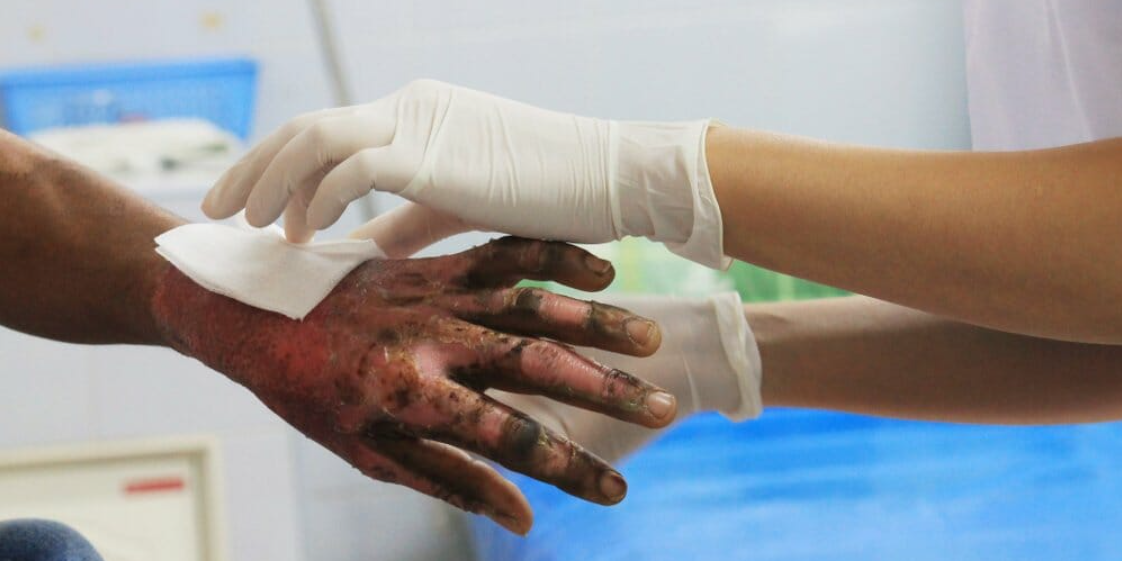
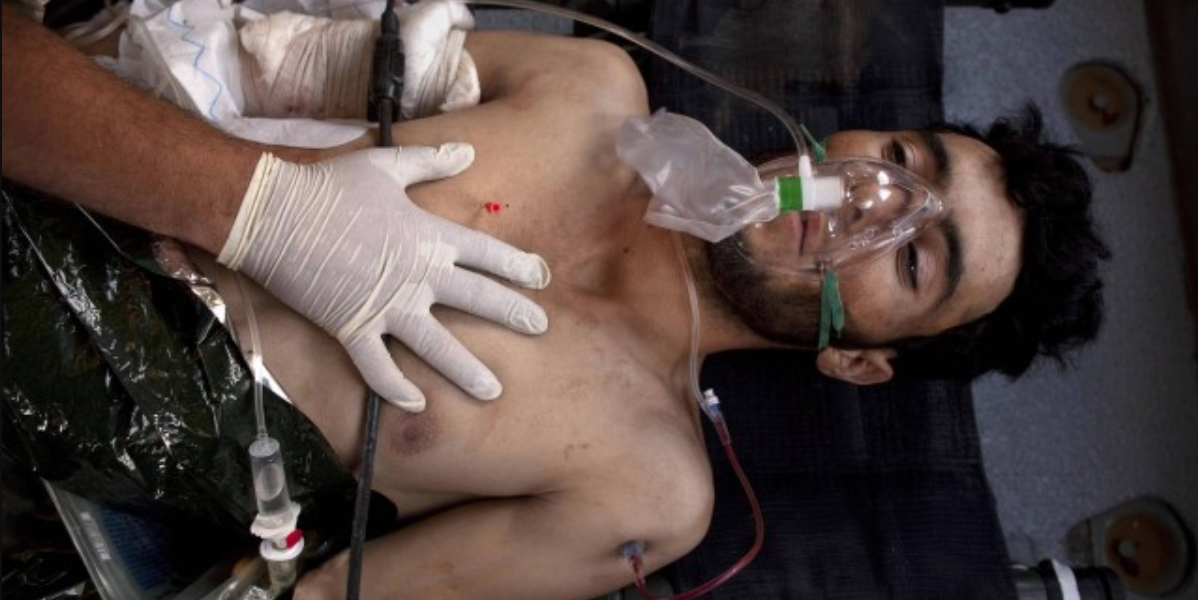
The Combat Auto Kit is a first aid kit essential for providing emergency care in high-threat environments. Compared to a standard civilian car first aid kit, the contents of this kit allow you to provide necessary assistance for severe injuries typical of combat conditions. These include gunshot wounds, shrapnel damage, massive hemorrhaging, blast wave injuries, and road accidents in frontline zones.
What You Need to Know About the Combat Auto Kit
The Combat Auto Kit is designed to buy time until evacuation and professional medical aid can be provided to all victims. It is crucial to understand that in combat conditions, quality medical care may only be available after a significant delay. Therefore, medications and other devices are necessary to promptly stabilize the casualty. The kit's contents are developed based on the principles of tactical medicine and MARCH algorithms.
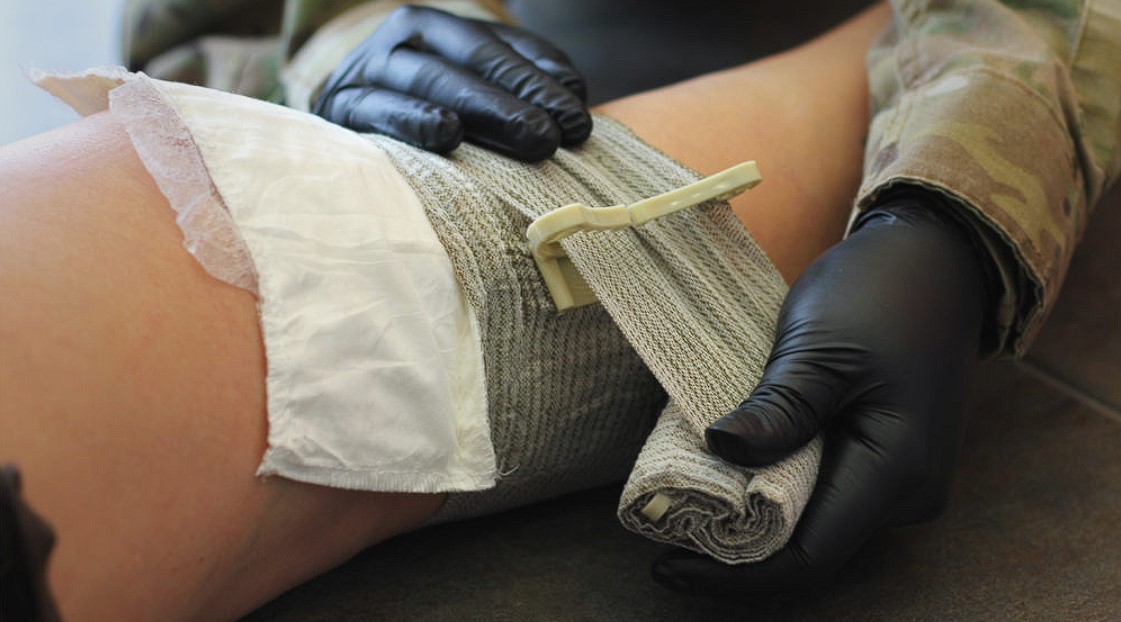
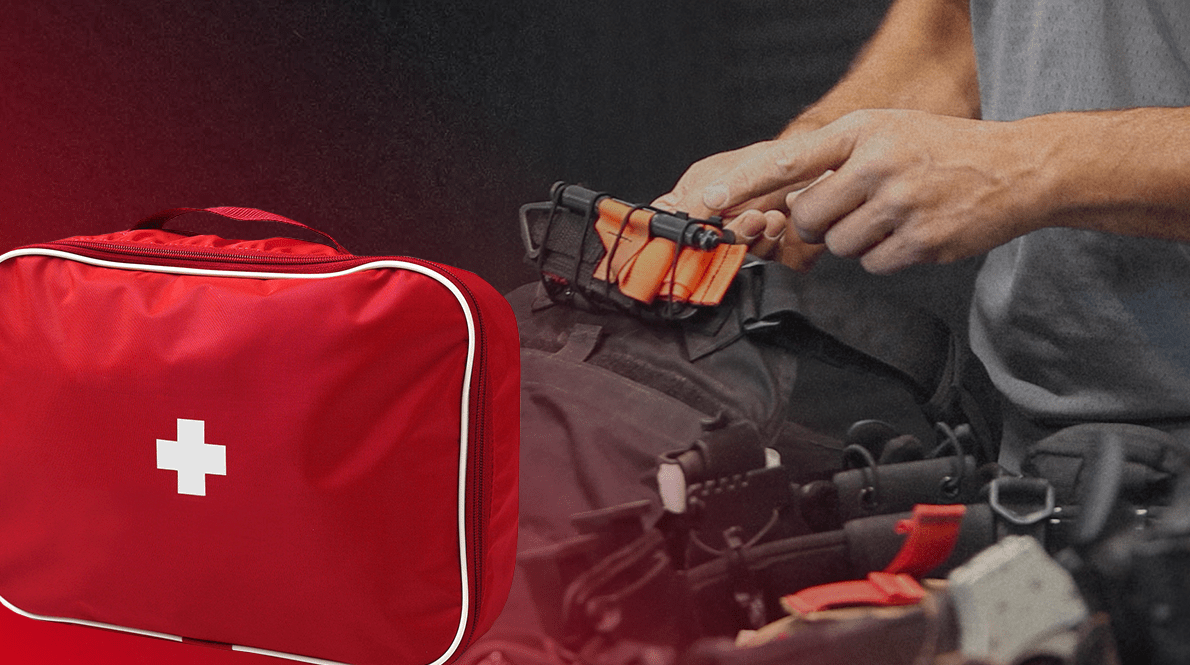
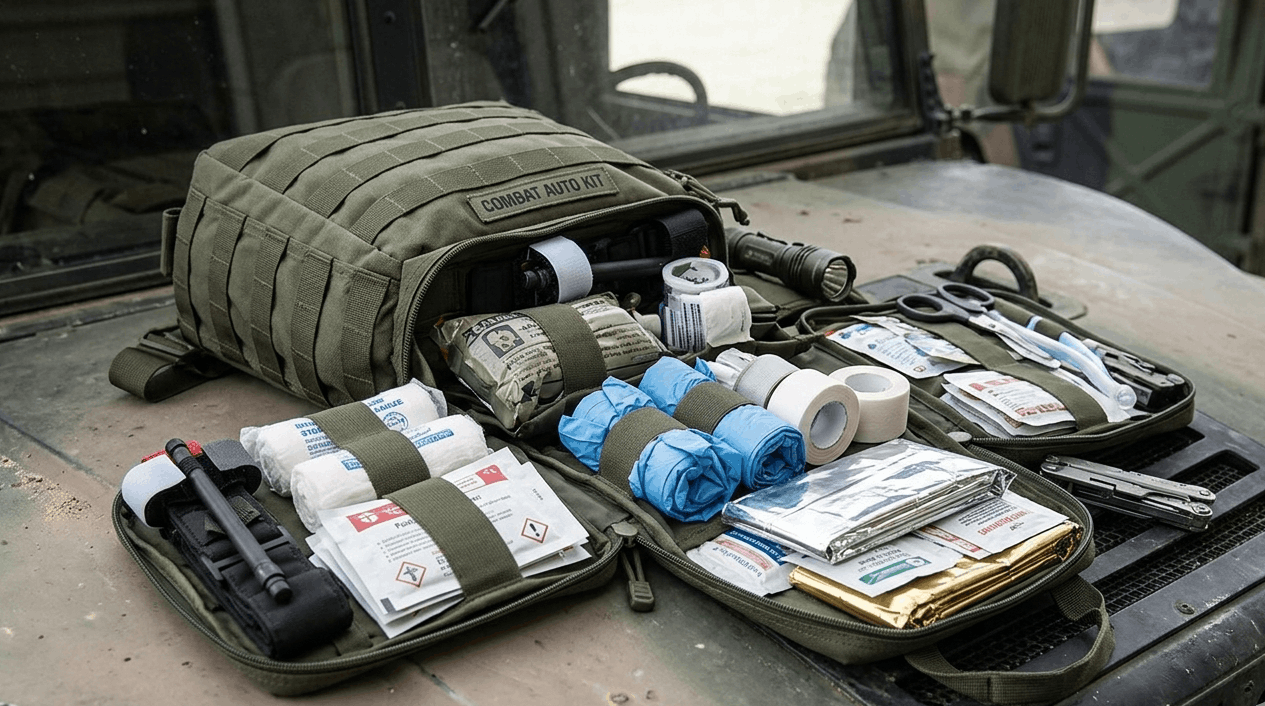
Accordingly, you should have at least one tourniquet at hand that meets all quality standards. It is vital to choose only proven models from reliable manufacturers that remain effective even during severe bleeding.
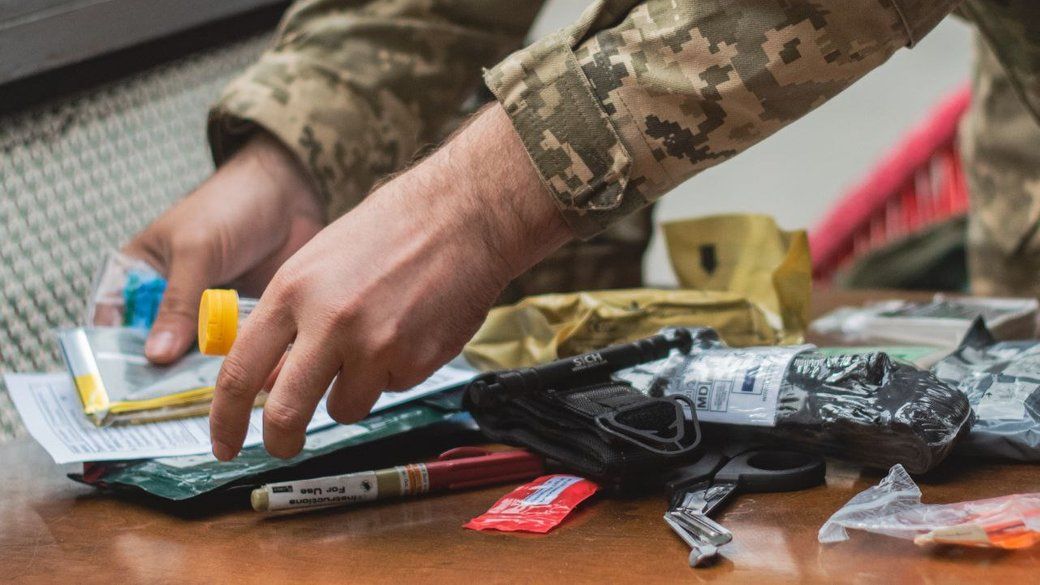
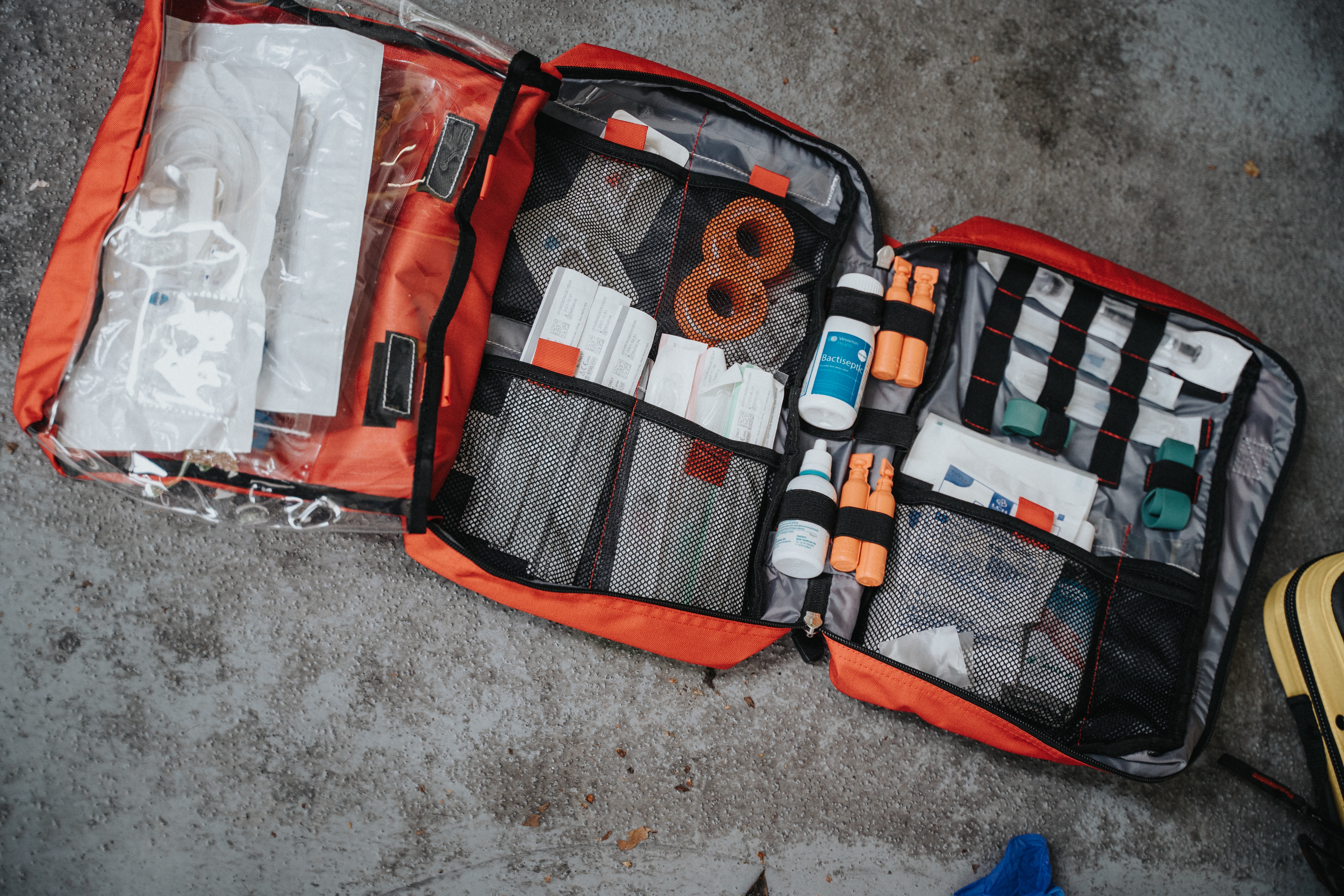
Also required are hemostatic gauze, compression dressings, Israeli bandages, occlusive chest seals for chest wounds, medical shears, gloves, and a marker to record the time the tourniquet was applied.
If you purchase an expanded configuration, additional tourniquets, bandages, and thermal insulation tools may be included. All of these will also allow you to stabilize the patient's condition until the necessary help arrives.
It is important to note that the Combat Auto Kit is not a replacement for an Individual First Aid Kit (IFAK). Rather, it is an expansion of capabilities. In combat, situations arise where a personal kit may be inaccessible. Having an additional kit in the vehicle increases the chances of survival for the crew and passengers.
Where to Place the Additional Kit
It is vital to plan ahead where the additional kit will be located. It must be securely fastened and accessible without exiting the vehicle.
The best solution is the back of a seat or the trunk, provided there is quick access. You can attach the kit using straps, or purchase specialized holders. These are not only functional but also reliable. Do not store the kit without securing it; during an explosion or sudden braking, it could end up in an unreachable location.
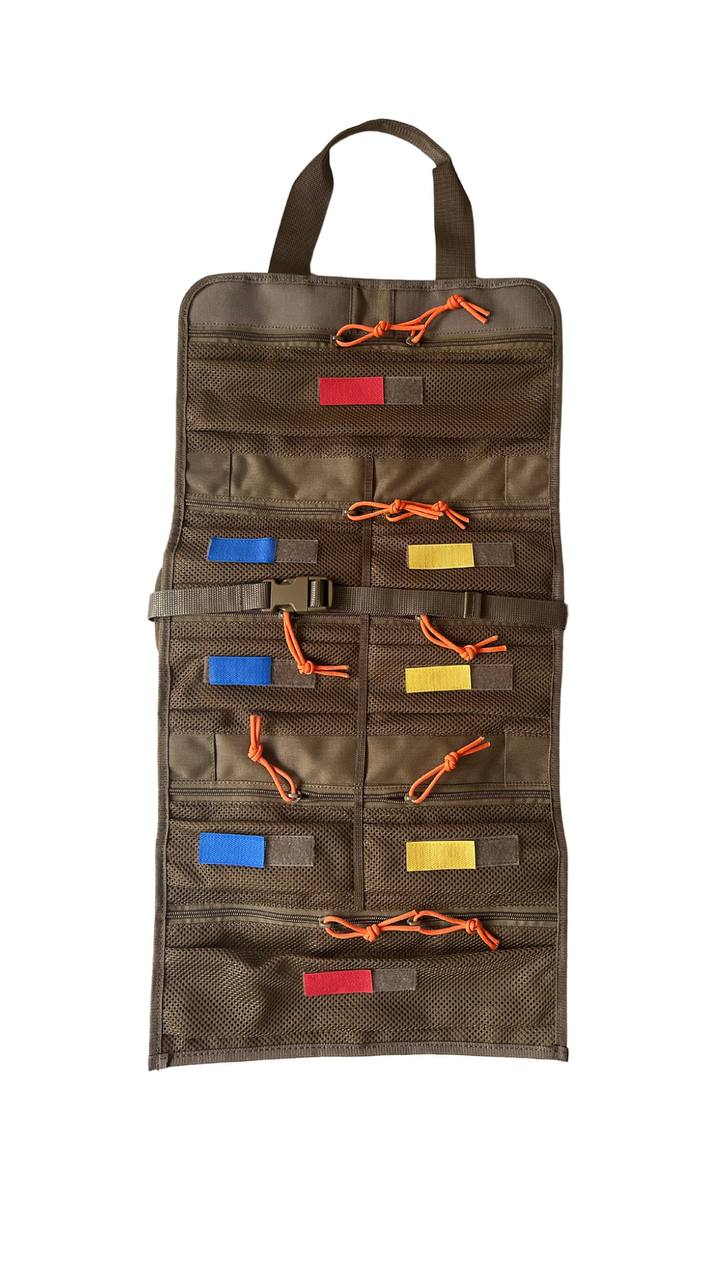
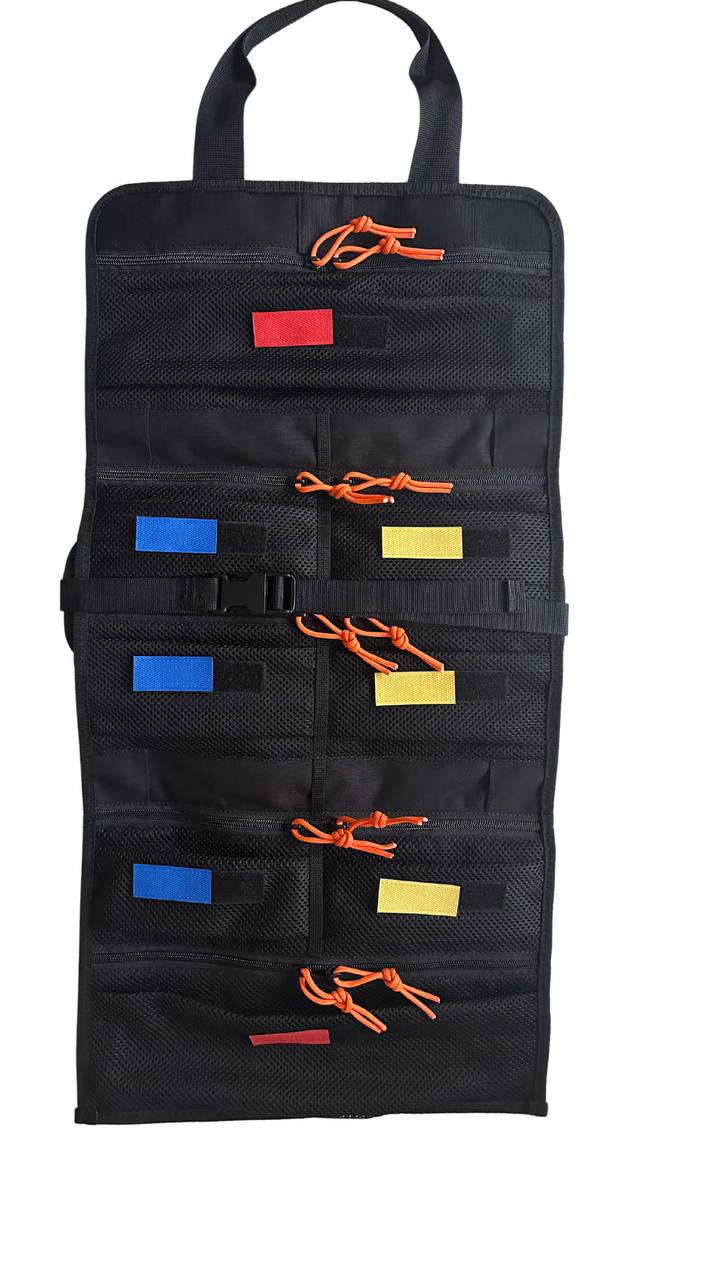
Ensure that all elements are organized logically. This will allow you to quickly find everything you need, even in a high-stress situation. Over time, your actions will become automatic.
Do not forget to regularly check expiration dates, the integrity of the packaging, and the completeness of the set. This is critical if you are using the kit in combat conditions.
The Combat Auto Kit is a vital element that can prove indispensable in emergency situations arising in combat zones. However, its effectiveness directly depends on proper outfitting, placement, and usage skills.
Consider Operating Conditions
To ensure your kit does not fail at the most critical moment, you must consider the specific operating conditions of the vehicle. If you are in a combat zone, exposure to temperature fluctuations, moisture, dust, and mechanical damage is unavoidable.
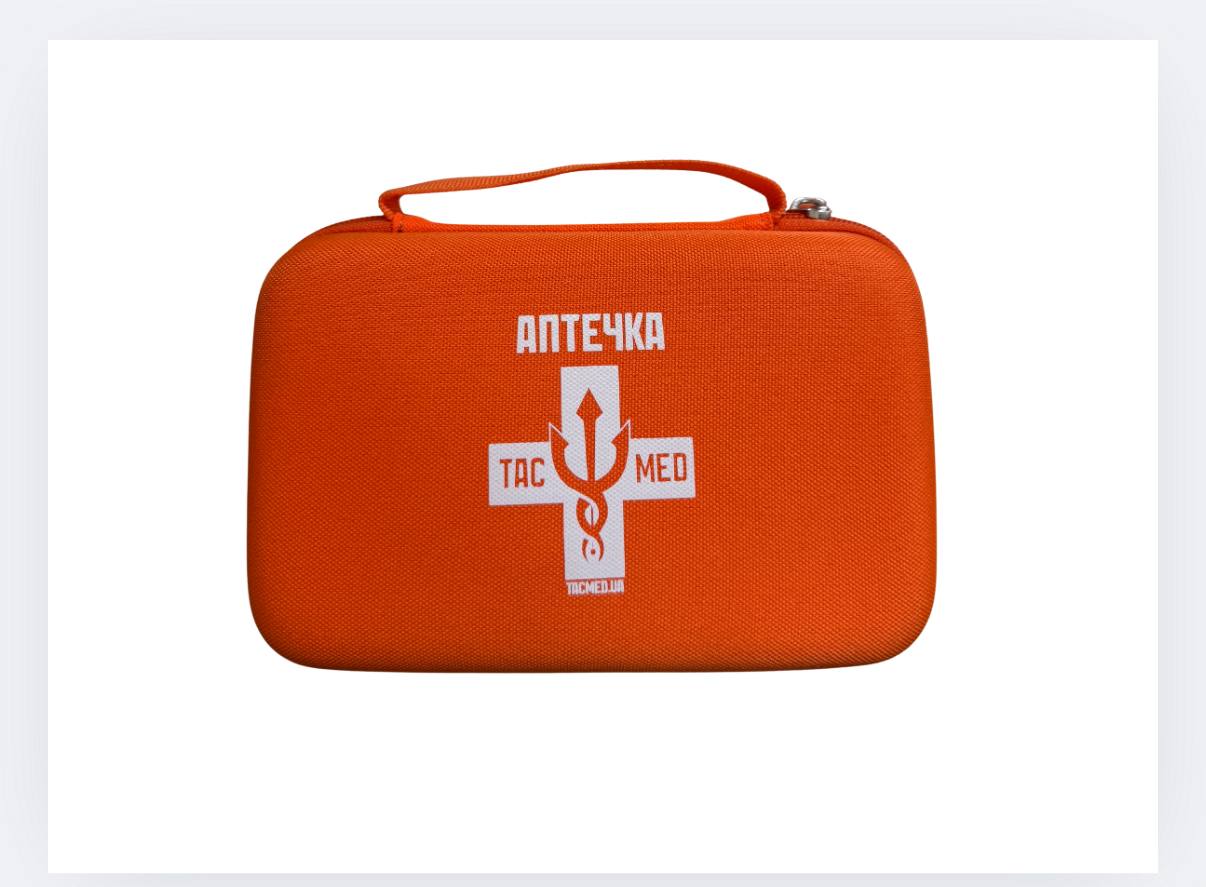
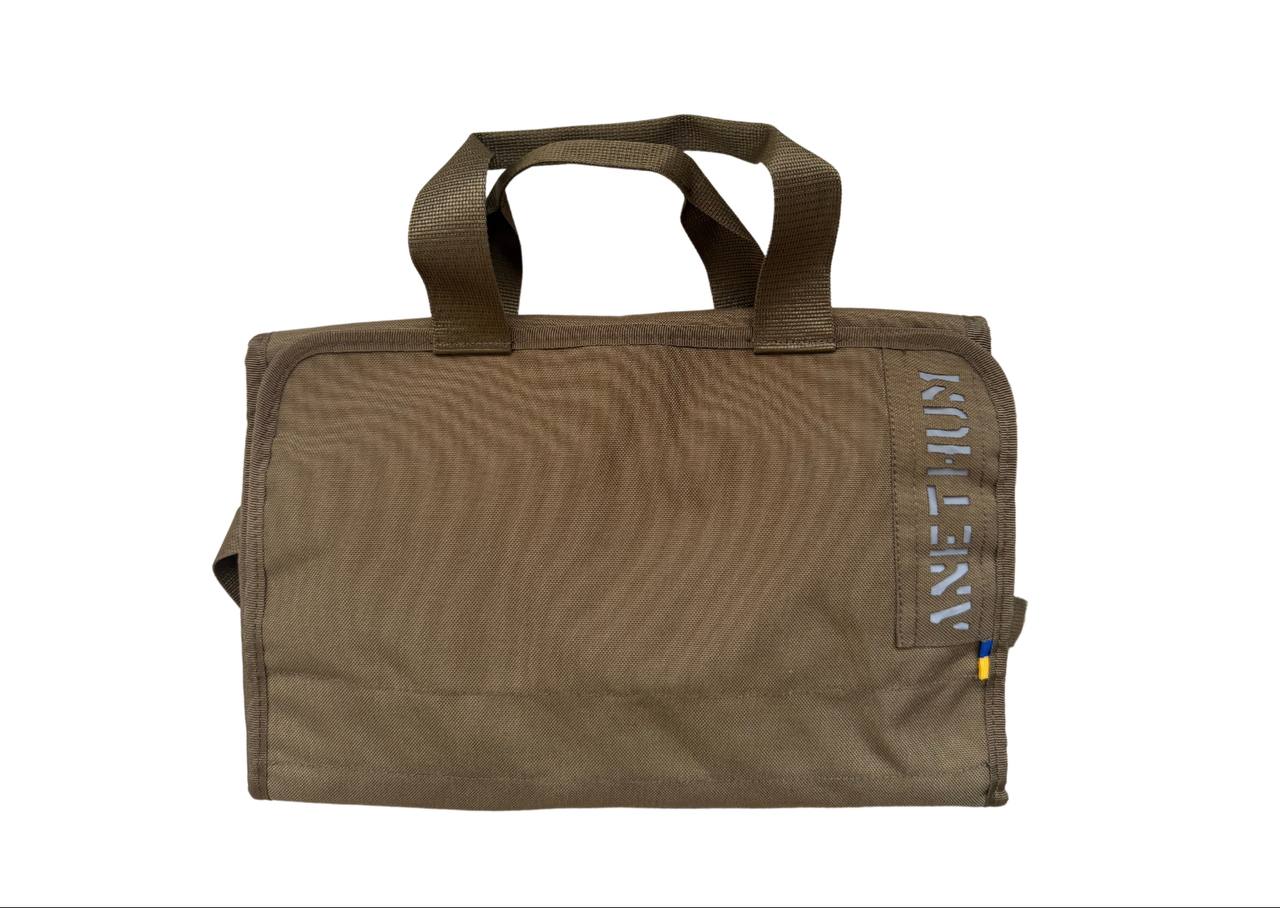
Therefore, all medical supplies should be stored in a durable, water-resistant pouch with heavy-duty hardware. It is advisable to choose a pouch with bright markings that you can quickly identify even under stress. This is extremely important if the kit needs to be used at night.
We also recommend conducting regular training drills using the Combat Auto Kit. This helps develop automatic reactions, significantly increasing the effectiveness of the aid provided.