Burns outdoors: what to do near a grill, campfire, or under the sun
Content
- Why are burns outdoors especially dangerous?
- What burns occur most often during outdoor recreation?
- Sunburns
- Burns from grills and barbecues
- Scald burns during trips
- Burns from campfires
- What should be done immediately after a burn?
- What products actually work for burns?
- Why are regular bandages not always suitable?
- What should not be done in case of burns?
- Why burn care products should be in every outdoor first aid kit?
- FAQ
The warm season traditionally increases the number of everyday injuries, and burns are one of the most common problems during outdoor recreation. A grill, campfire, camping stove, hot metal, boiling water in camping conditions, or several hours under active sun — all these scenarios regularly result in skin damage of varying severity. The specific feature of such situations is that they often occur far from normal conditions for providing assistance. A person gets injured in a forest, near a body of water, on a beach, or during a trip, where there is no access to cool water, sterile materials, or medical professionals. Another problem is the incorrect reaction of people around. Even today, in cases of burns, people continue to use oil, sour cream, alcohol, ice, or other “folk methods” that only worsen the condition of tissues. As a result, a minor injury can turn into a serious problem with prolonged healing, risk of infection, and severe pain.
That is why the recreation season is a period when proper first aid becomes especially important. The presence of modern burn care products in a travel or car first aid kit allows quickly reducing tissue temperature, minimizing damage, and significantly improving the condition of the injured person even before seeking medical assistance. The TacMed online store features burn first aid products for civilian, travel, and field conditions, where speed of response is critically important.
Why are burns outdoors especially dangerous?
In home conditions, a person usually has access to water, a first aid kit, and proper lighting. Outdoors, the situation is completely different. Even a local burn can quickly become complicated due to dirt, sand, dust, lack of sterile materials, or incorrect assistance. This is especially relevant during summer recreation, when the ambient temperature is already high. The body overheats additionally, and damaged tissues retain heat longer. Because of this, even relatively minor injuries can cause severe pain and pronounced inflammation.
The problem is also aggravated by typical human behavior during recreation. Alcohol, haste, inattention near open fire, or attempts to quickly move hot cookware significantly increase the risk of injuries. Often people get burns exactly at the moment when they:
- remove the grill grate;
- overturn a pot or kettle;
- pour liquid into the fire;
- touch a hot skewer;
- use a camping stove;
- walk barefoot near metal surfaces heated by the sun.
In some cases, literally a second of contact with hot metal is enough to receive serious skin damage.
What burns occur most often during outdoor recreation?
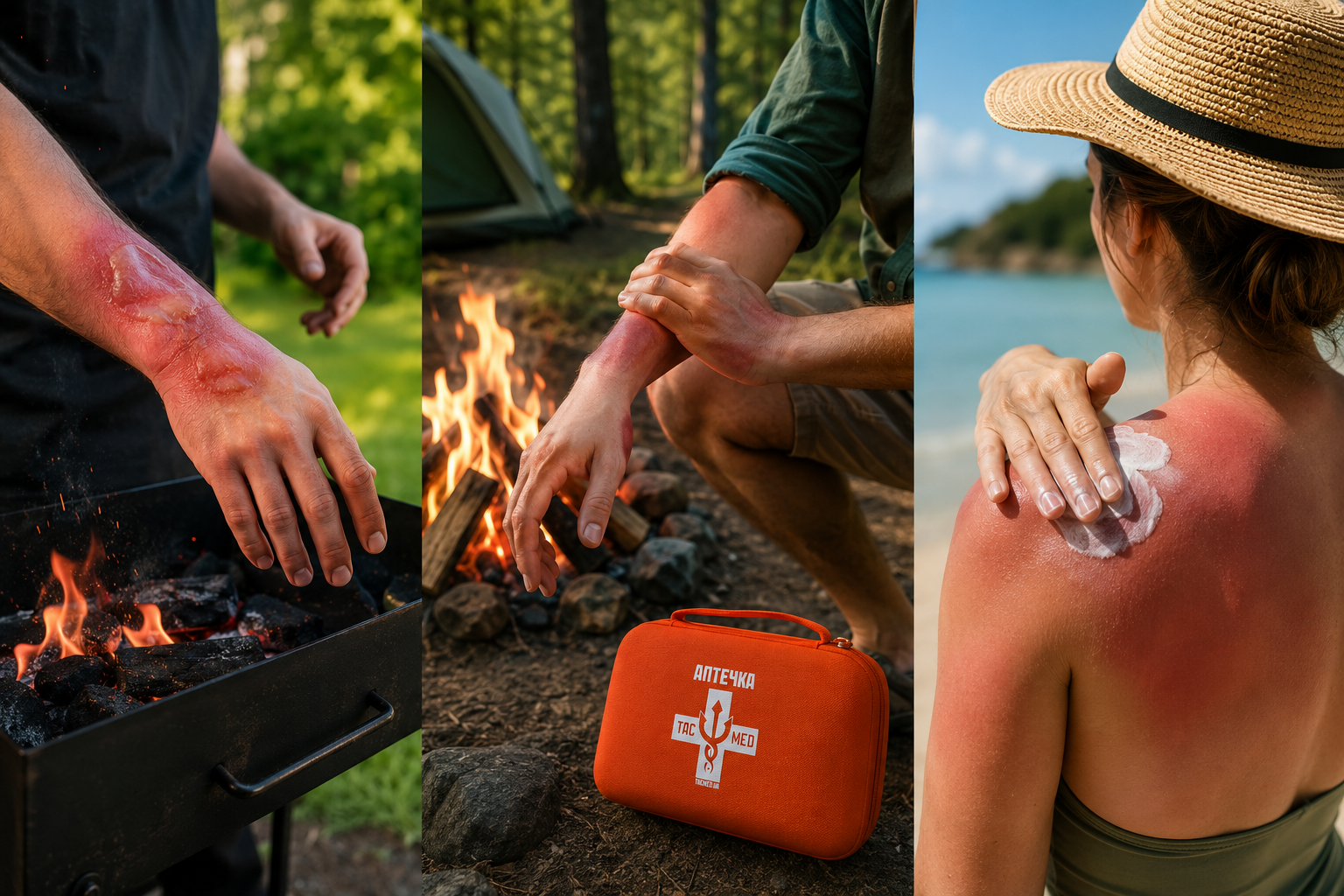
Seasonal burns have their own characteristics. Unlike household kitchen injuries, they are often specifically related to activity and field conditions.
Sunburns
One of the most common summer problems is prolonged exposure to direct sunlight. Beaches, bodies of water, and open areas without shade are especially dangerous. Water and light-colored sand additionally reflect ultraviolet radiation, due to which a person receives a significantly higher dose of exposure.
The main mistake is that sunburn is not always felt immediately. The first symptoms may appear only after several hours, when the skin is already seriously damaged. At first, redness and a feeling of heat appear, and later — pain, swelling, burning, and even blisters.
In severe cases, sunburn is accompanied by:
- increased body temperature;
- chills;
- weakness;
- headache;
That is why during recreation it is important to use SPF protection and to have products for rapid skin cooling. It is equally important to control time spent under the sun, especially during the period of maximum solar activity at midday. Additional risk is created by wind near water, due to which people often do not notice overheating of the skin and continue to stay under ultraviolet radiation for too long. In the case of severe sunburn, it is advisable to максимально limit repeated exposure to the sun for several days so as not to worsen the condition of damaged skin.
Burns from grills and barbecues
A grill is one of the main seasonal “leaders” in the number of contact burns. Heated skewers, metal grates, grill lids, and braziers are capable of heating up to very high temperatures.
Most often people get injured:
- during turning meat;
- when moving the grill;
- due to accidental contact;
- due to poorly secured gloves;
- during fire ignition.
Contact burns from hot metal are especially dangerous. They often have a small surface area, but can be quite deep. At the same time, a person often underestimates the severity of the injury due to the small size of the damage.
Scald burns during trips
Camping stoves and camping cookware create a separate category of risks. Unstable surfaces, difficult weather conditions, and limited space significantly increase the probability of accidentally spilling hot liquid.
In field conditions, such burns are dangerous because:
- hot water often gets onto large areas of skin;
- there is no quick access to proper cooling;
- people use improvised and incorrect methods of assistance;
- the risk of contamination of the wound increases.
That is why specialized hydrogel wipes and dressings are increasingly used in travel first aid kits. Additional danger is created by synthetic clothing, which after contact with boiling water retains high temperature longer and intensifies tissue damage. In trips, the problem is also complicated by limited access to clean water and the inability to quickly replace contaminated dressings. That is why compact burn care products and sterile materials are now considered a basic part of any travel first aid kit.
Burns from campfires
Open flame is one of the most dangerous causes of seasonal burns. This is especially true in situations when people use flammable liquids to ignite a fire.
Often injuries occur due to:
- sudden ignition of vapors;
- falling into the fire;
- synthetic clothing;
- careless handling of firewood;
- close proximity to open flame.
In such cases, injuries can be significantly more serious than with a standard contact burn. High flame temperature is capable of quickly affecting not only surface layers of the skin but also deeper tissues. Additional danger is created by clothing made from synthetic materials, which can melt and stick to the skin, complicating the injury. During recreation near a campfire, it is important to control distance to the fire, avoid the use of flammable liquids, and have first aid tools readily available.
What should be done immediately after a burn?
The first minutes after injury directly affect the further condition of tissues. Even after stopping contact with the heat source, damage continues to develop. That is why the main task is to cool the tissues as quickly as possible and stop overheating.
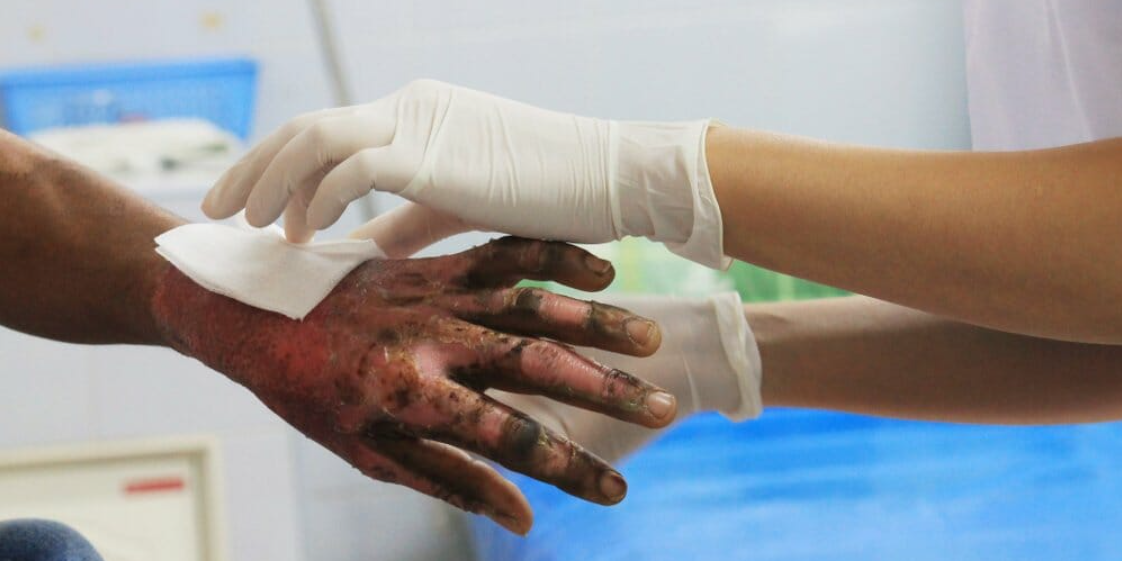
First of all, it is necessary to stop the action of the temperature source. If it is hot metal — remove the object. If it is sunburn — move the person into shade. In the case of scald burns, it is necessary to remove wet hot clothing if it has not stuck to the skin.
After that, the affected area should be cooled with cool water. It is important to use exactly cool water, and not ice or icy water. Excessively aggressive cooling may cause vascular spasm and worsen tissue damage.
Next, it is important to protect the damaged surface from the external environment. Outdoors, this is especially relevant due to dust, dirt, and bacteria.
In the first minutes after a burn, it is necessary to:
- stop contact with the heat source;
- cool the affected area;
- do not apply ice;
- do not use oil or greasy creams;
- do not apply alcohol or aggressive antiseptics;
- cover the surface with a sterile dressing;
- use a hydrogel burn wipe or dressing.
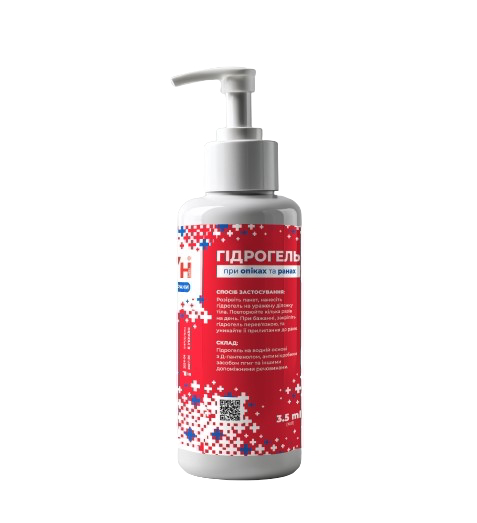
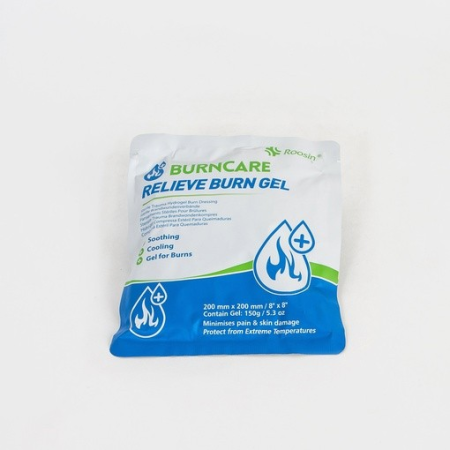
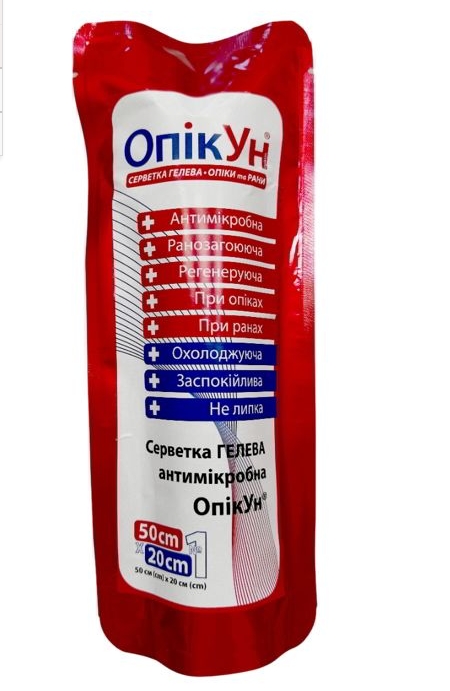
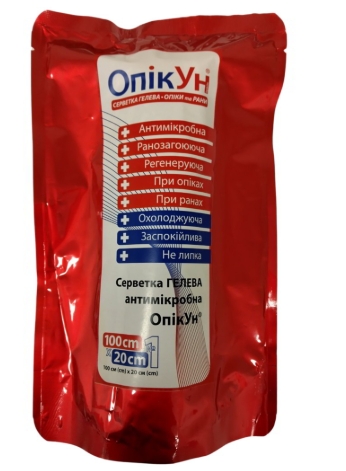
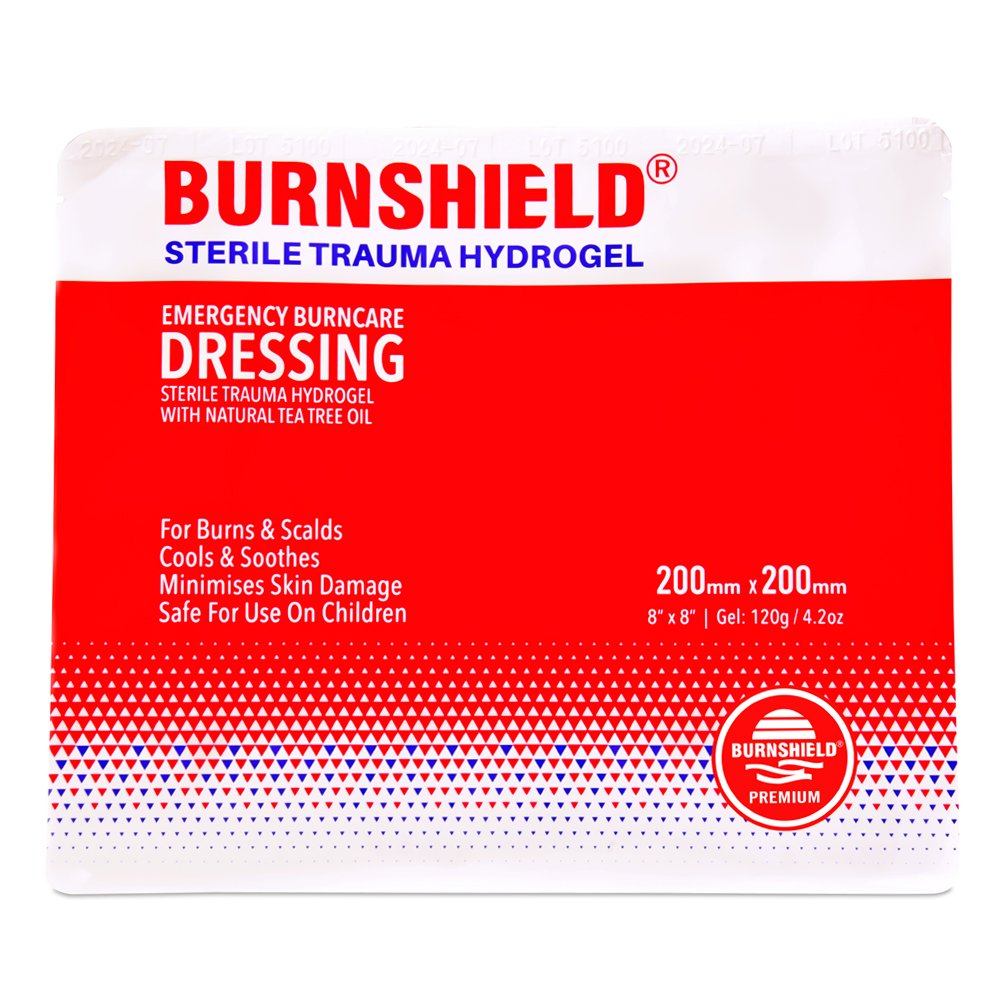
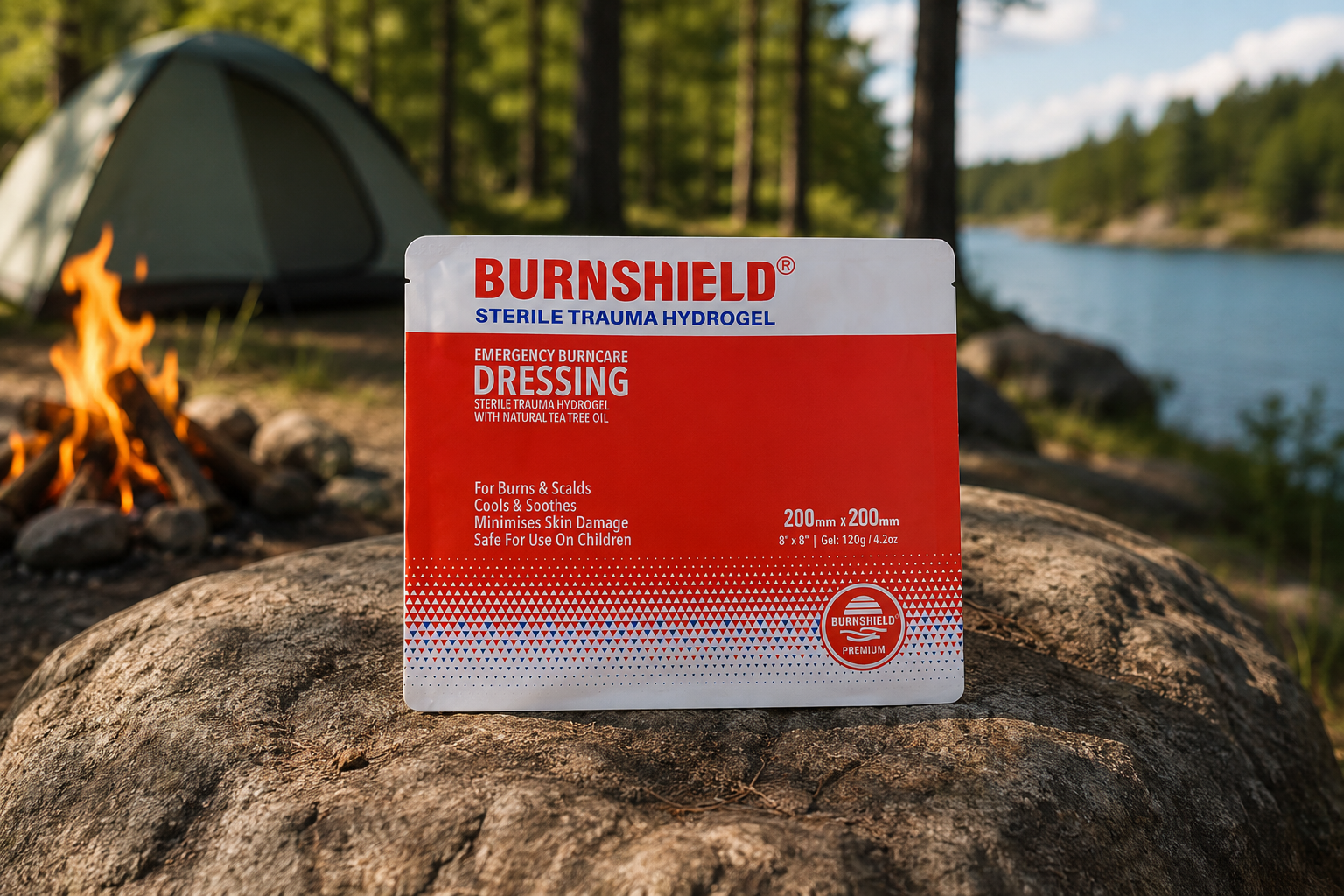
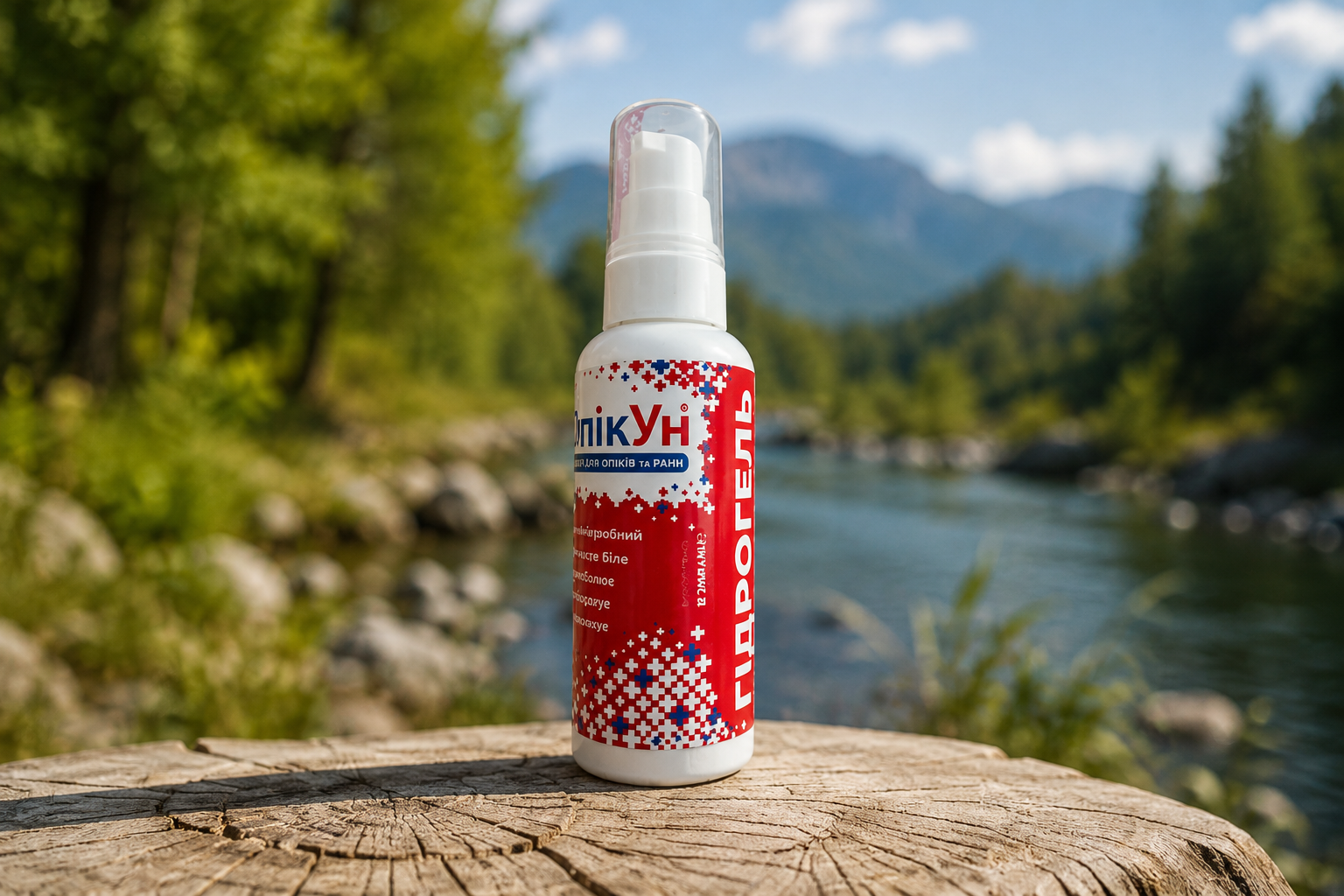
For such situations, the catalog of the TacMed online store features Burnshield burn dressings of various formats and antimicrobial wipes “OpikUn”. The advantage of hydrogel products is that they simultaneously cool tissues, reduce pain, and help maintain the proper environment for healing.
What products actually work for burns?
Modern medicine has long moved away from the concept of “drying out” burns. On the contrary, today one of the key principles is considered to be maintaining a controlled moist environment and protecting damaged tissues.
That is why the most effective solutions are considered to be:
- hydrogel dressings;
- cooling wipes;
- non-adherent sterile coverings;
- compact burn care kits.
One of the most well-known solutions in this category is “OpikUn”. Such products are actively used in civilian medicine, tactical and field conditions. Their main advantage is speed of application and the ability to quickly cool the damaged surface without additional trauma.
For example, antimicrobial hydrogel for burns and wounds “OpikUn” is often used in travel first aid kits, in vehicles, in camping equipment, in production environments, and in field medical kits.
The hydrogel structure helps to:
- reduce tissue temperature;
- alleviate pain;
- reduce the risk of drying out;
- minimize contact with dirt and bacteria.
Another important advantage is that such dressings do not adhere to the wound. This is especially important during dressing changes or transportation of the injured person.
Why are regular bandages not always suitable?
Many people still use regular bandages or cotton for burns. In field conditions, this seems like the simplest solution, but in practice this approach has many problems.
A regular bandage:
- does not cool tissues;
- may adhere to the surface;
- does not create an optimal environment;
- becomes contaminated quickly;
- does not reduce pain.
That is why modern first aid kits are increasingly equipped with specialized burn care products, rather than only basic dressing materials.
This is especially relevant for travel and civilian first aid kits, vehicle kits, tactical medicine, family first aid kits, and field conditions. In the TacMed store catalog, you can find both compact solutions for short trips and full sets for long outdoor stays.
What should not be done in case of burns?
Incorrect assistance is one of the main causes of complications after burns. Most popular “home methods” not only do not help, but directly cause harm. Oil and greasy products create a film that retains heat inside tissues. Because of this, damage may become deeper even after stopping contact with a hot surface. Sour cream and dairy products have no medical justification. Moreover, they create a favorable environment for bacteria. Alcohol and aggressive antiseptics additionally irritate the damaged surface. They can be especially dangerous in cases of large affected areas.
It is also important to mention ice. People often try to “freeze” the burn area as quickly as possible, but overly rapid cooling may cause local disruption of blood circulation and worsen the condition of tissues.
It is also prohibited to:
- puncture blisters;
- tear off adhered clothing;
- use dirty fabrics;
- apply unknown ointments in field conditions.
Burns always require a fast but careful response. In most cases, it is the first minutes after injury that determine how deep the damage will be and how long recovery will take. That is why it is much more important to have basic knowledge and a properly equipped first aid kit than to rely on random “folk methods.”
Why burn care products should be in every outdoor first aid kit?
Most seasonal burns occur in places where people do not expect a serious injury. That is why in many cases the first aid kit turns out to be either incomplete or does not contain proper burn care products at all. At the same time, even a compact hydrogel wipe can significantly affect the further condition of tissues. It is the first minutes after a burn that determine how severe the damage will be.
It is especially important to have burn care products:
- in a car;
- at a picnic;
- during hiking;
- while fishing;
- during camping;
- in a family first aid kit;
- in tactical equipment.
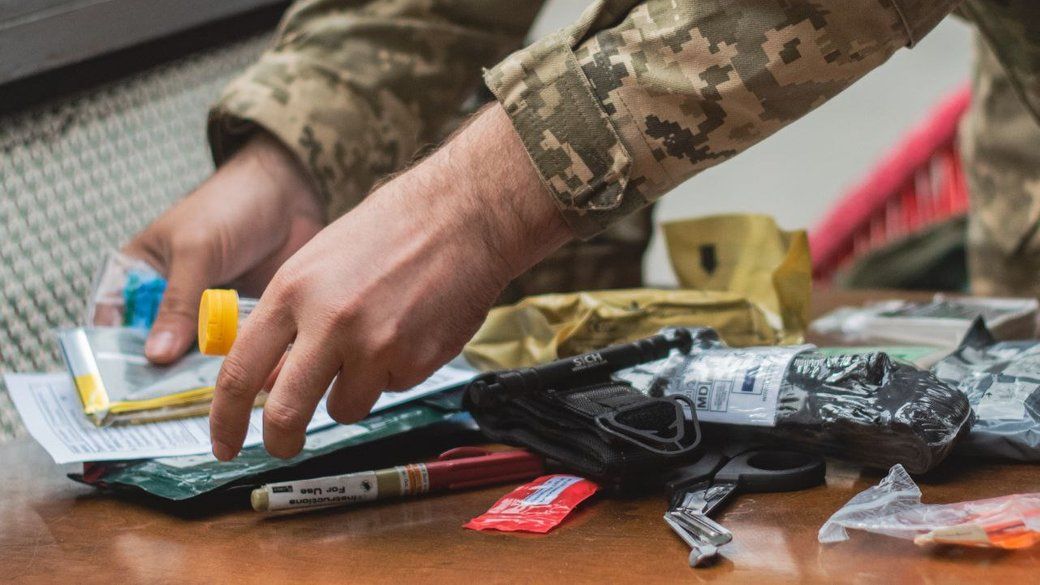
For field scenarios, ready-made tactical first aid kits from TacMed are well suited, where solutions for working with different types of injuries in difficult conditions are already provided.
Modern burn care products take up minimal space but allow quickly stabilizing the situation before receiving professional assistance.
Burns remain one of the most common seasonal injuries during outdoor recreation. A grill, campfire, boiling water, camping stoves, and active sun create dozens of scenarios where even a short moment of carelessness may result in serious skin damage.
The main problem lies not only in the injury itself, but also in incorrect first aid. Oil, alcohol, ice, and other “folk methods” often only worsen the condition of tissues and complicate further healing.
That is why the modern approach to burn care is based on rapid cooling, protection of the wound surface, and the use of specialized hydrogel products. In the TacMed online store, you can select modern burn care products for a car, camping, hiking, field conditions, and everyday outdoor use.
FAQ
What should be done in case of a grill burn?
It is necessary to immediately stop contact with the hot surface and cool the affected area with cool water for 10–20 minutes. After that, it is advisable to use a sterile burn dressing or a hydrogel product that will help reduce pain and protect the skin from contamination.
Can ice be applied to a burn?
No. Ice or very cold water may cause additional tissue damage due to sudden vasospasm. For cooling, it is better to use cool water or specialized hydrogel burn care products.
Why should a burn not be treated with oil or sour cream?
Greasy products retain heat inside tissues and may deepen the damage. In addition, sour cream, oil, and other household products are not sterile and increase the risk of infection.
What products are best for an outdoor first aid kit?
For outdoor recreation, compact hydrogel wipes, Burnshield burn dressings, sterile non-adherent coverings, and ready-made travel first aid kits with basic first aid supplies are optimal.
What should be done in case of sunburn?
It is necessary to move into shade, cool the skin, drink enough water, and avoid repeated exposure to the sun. If severe pain, blisters, or worsening condition appear, it is necessary to consult a doctor.
Can blisters be punctured after a burn?
No. Blisters perform a protective function and reduce the risk of infection. Self-puncturing may lead to bacteria entering the wound and complicate healing.
Why are hydrogel dressings needed for burns?
Hydrogel dressings help cool tissues, reduce pain, and maintain a moist environment that promotes proper healing. In addition, they do not adhere to the wound and are suitable for use in field and travel conditions.