TCCC Patient Care Card: What, When, and Why to Document
Content
- What Is a TCCC Patient Care Card?
- When Should the Card Be Started?
- What Information Must Be Recorded?
- Why Is the Tourniquet Application Time Critical?
- Which Procedures Must Be Documented?
- How Does the Patient Care Card Help During Evacuation?
- Where Should the Card Be Stored in Field Conditions?
- Common Mistakes
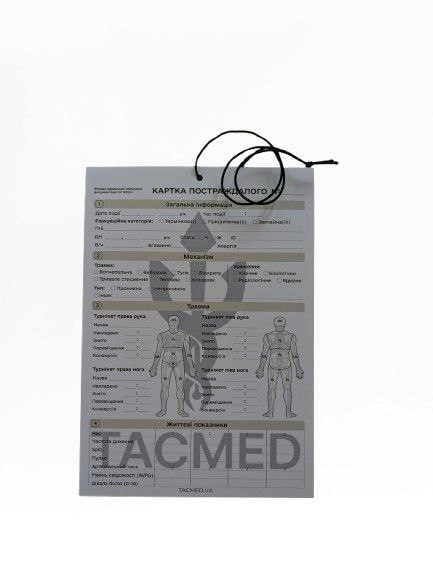
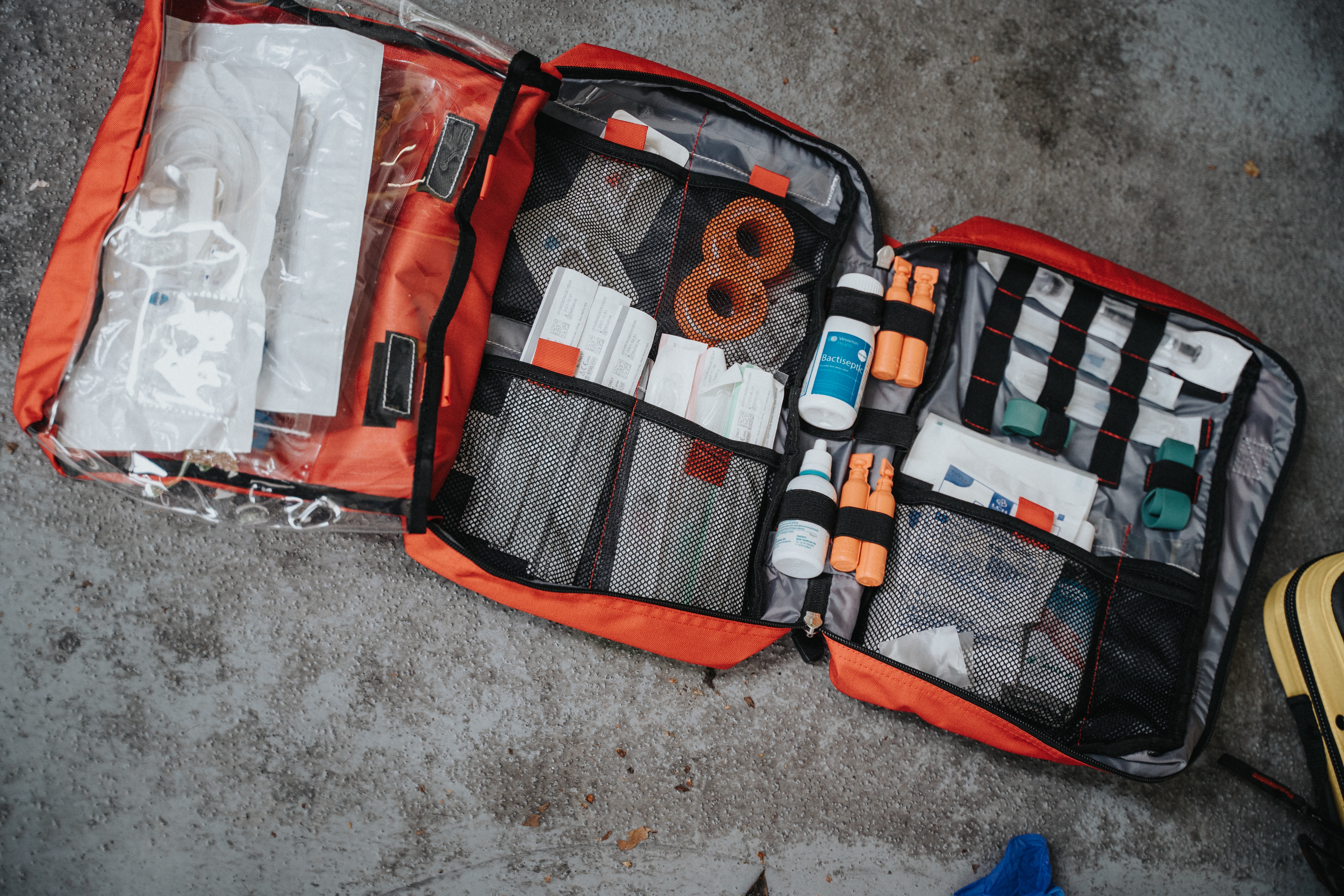
In TCCC, correctly following the MARCH algorithm and transferring complete patient information to the next stage of medical evacuation have a decisive impact. Even a properly applied tourniquet or timely administered medication may fail to deliver the expected result if medical personnel do not know when these measures were performed or how the patient’s condition changed. For this purpose, TCCC uses the patient care card, DD Form 1380. It accompanies the patient from initial care through admission to a medical facility and maintains continuity of treatment throughout every evacuation stage. Documenting care is a mandatory part of TCCC procedures.
What Is a TCCC Patient Care Card?
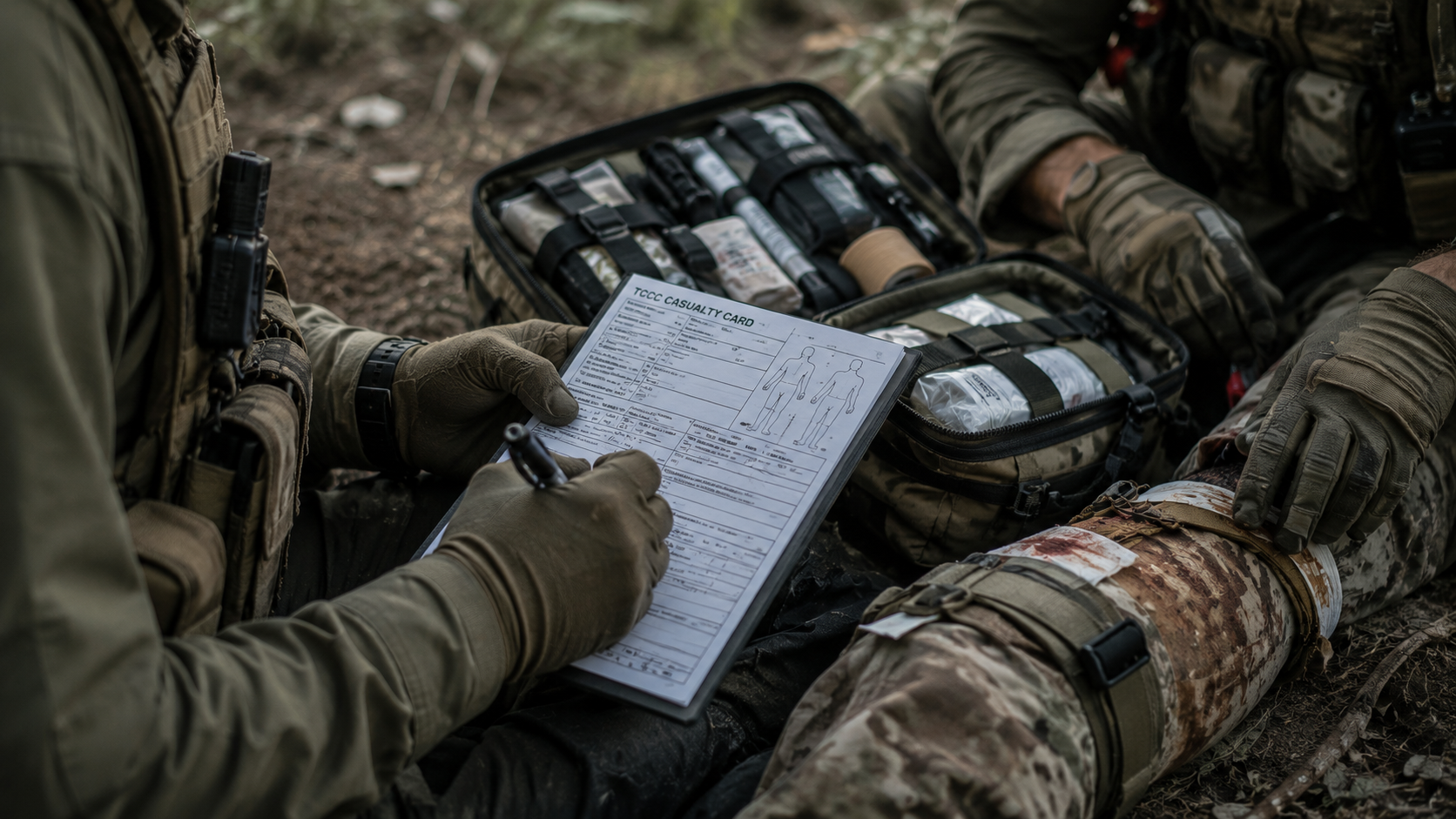
The TCCC patient care card records essential information about the trauma, the patient’s condition, and the medical procedures performed. Its structure allows a medical professional to quickly record only the details that directly affect further treatment.
The card includes:
- cause of trauma;
- location of affected areas;
- initial assessment results;
- vital signs;
- procedures performed;
- medications administered;
- time of each critical procedure.
The document becomes part of the patient’s medical record and is used by every subsequent medical team. In addition to its clinical value, this documentation helps assess the effectiveness of care and improve prehospital medical protocols.
When Should the Card Be Started?
In high-pressure field conditions, saving the patient’s life remains the priority. Documentation must not delay essential procedures.
The most suitable time to begin completing the card is during the Field Care stage, when:
- severe bleeding has been controlled;
- the airway has been secured;
- breathing has been assessed and managed;
- the patient is relatively stable;
- a few minutes are available for documentation.
If the situation prevents immediate documentation, the information should be recorded as soon as conditions stabilize. A partially completed card provides considerably more value than having no card at all.
What Information Must Be Recorded?
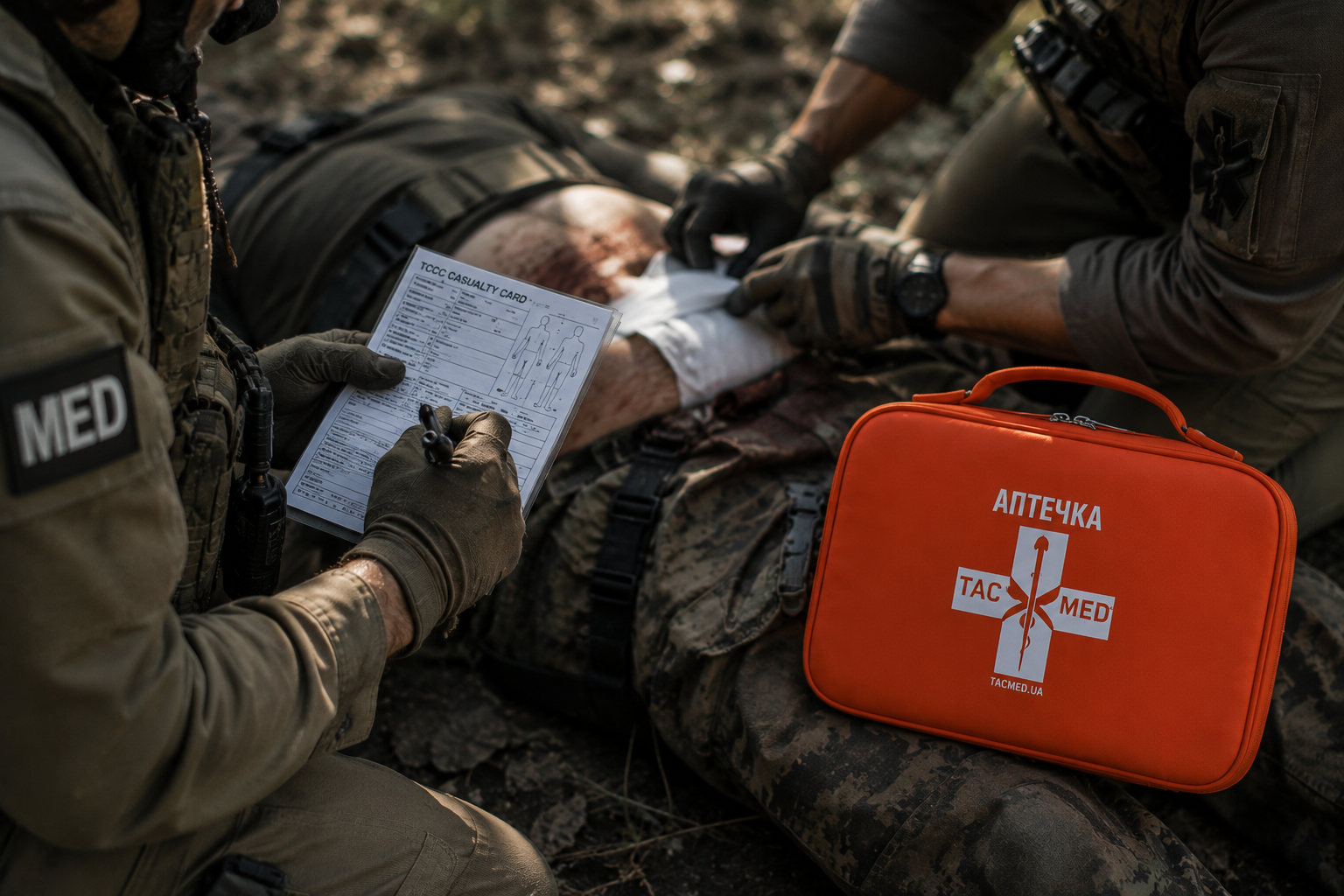
The patient care card contains only information with practical value for the next stage of treatment.
The following details must be recorded:
- date and time of the incident, if known;
- cause of trauma;
- location of affected areas;
- initial assessment results;
- level of consciousness;
- pulse rate;
- respiratory rate;
- arterial pressure, when possible;
- oxygen saturation;
- pain intensity;
- all procedures performed;
- all medications administered;
- time of each procedure.
If the patient’s condition changes during evacuation, new entries must be added to the card. This allows medical personnel to review the progression before beginning another assessment.
Why Is the Tourniquet Application Time Critical?
One of the most significant entries on the patient care card concerns the time when a tourniquet was applied. This information determines further treatment decisions and helps physicians assess risks to the affected limb.
TCCC guidelines require documentation of:
- initial tourniquet application time;
- reapplication, if performed;
- tourniquet conversion time;
- final removal time.
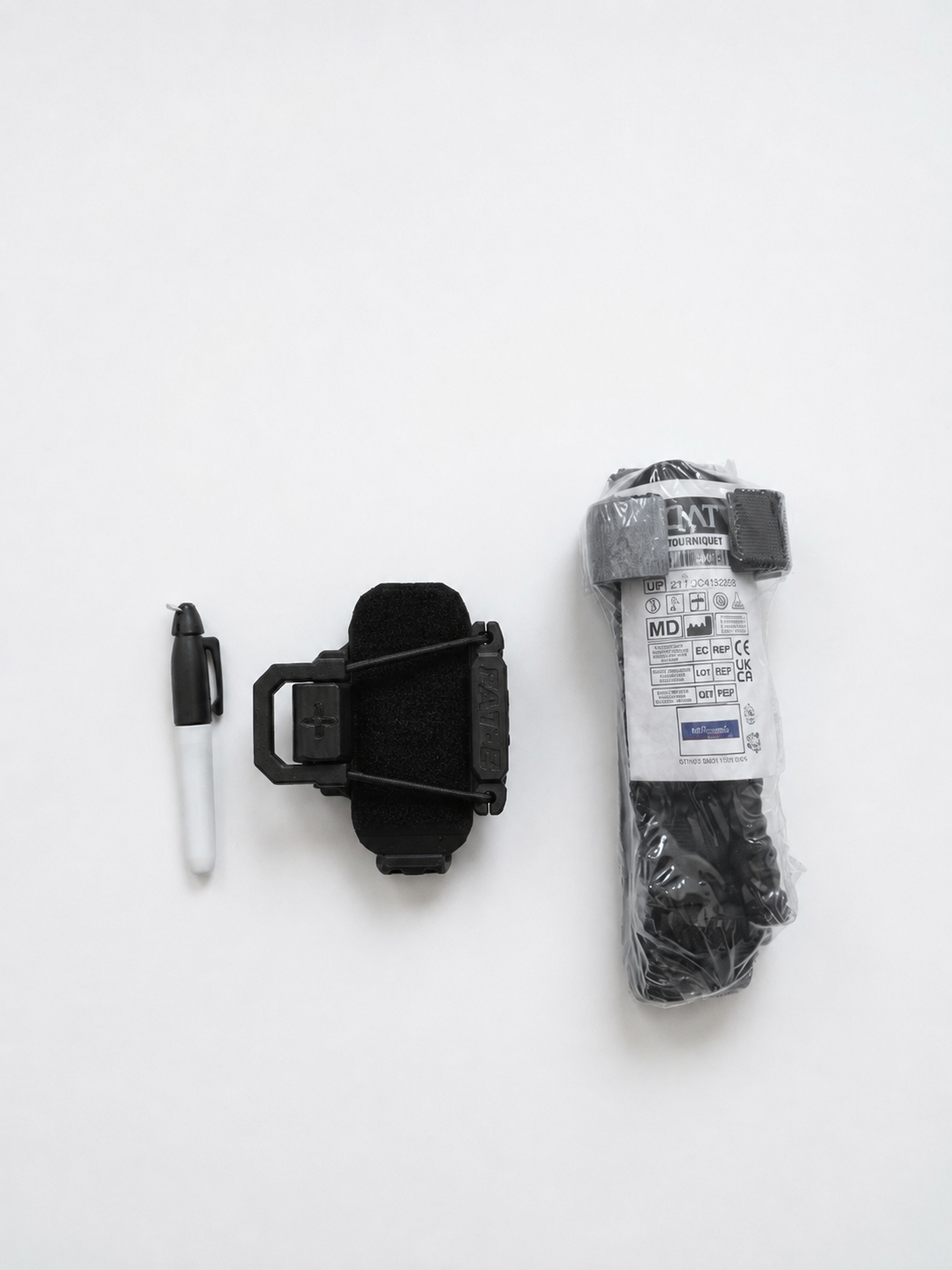
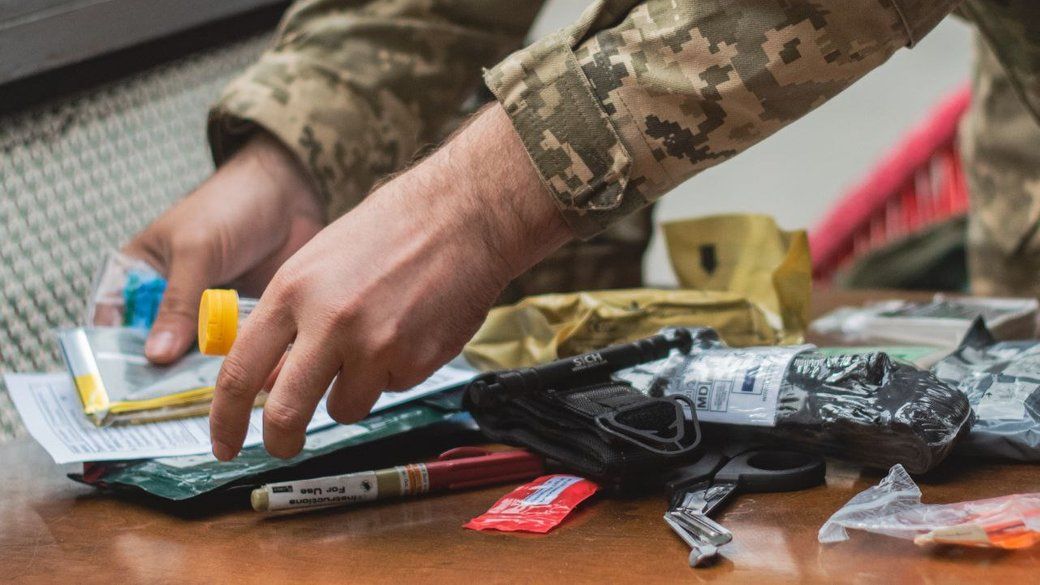
- In addition to recording the time on the card, it is recommended to mark it directly on the tourniquet with a permanent marker. This approach reduces the risk of information loss during evacuation.
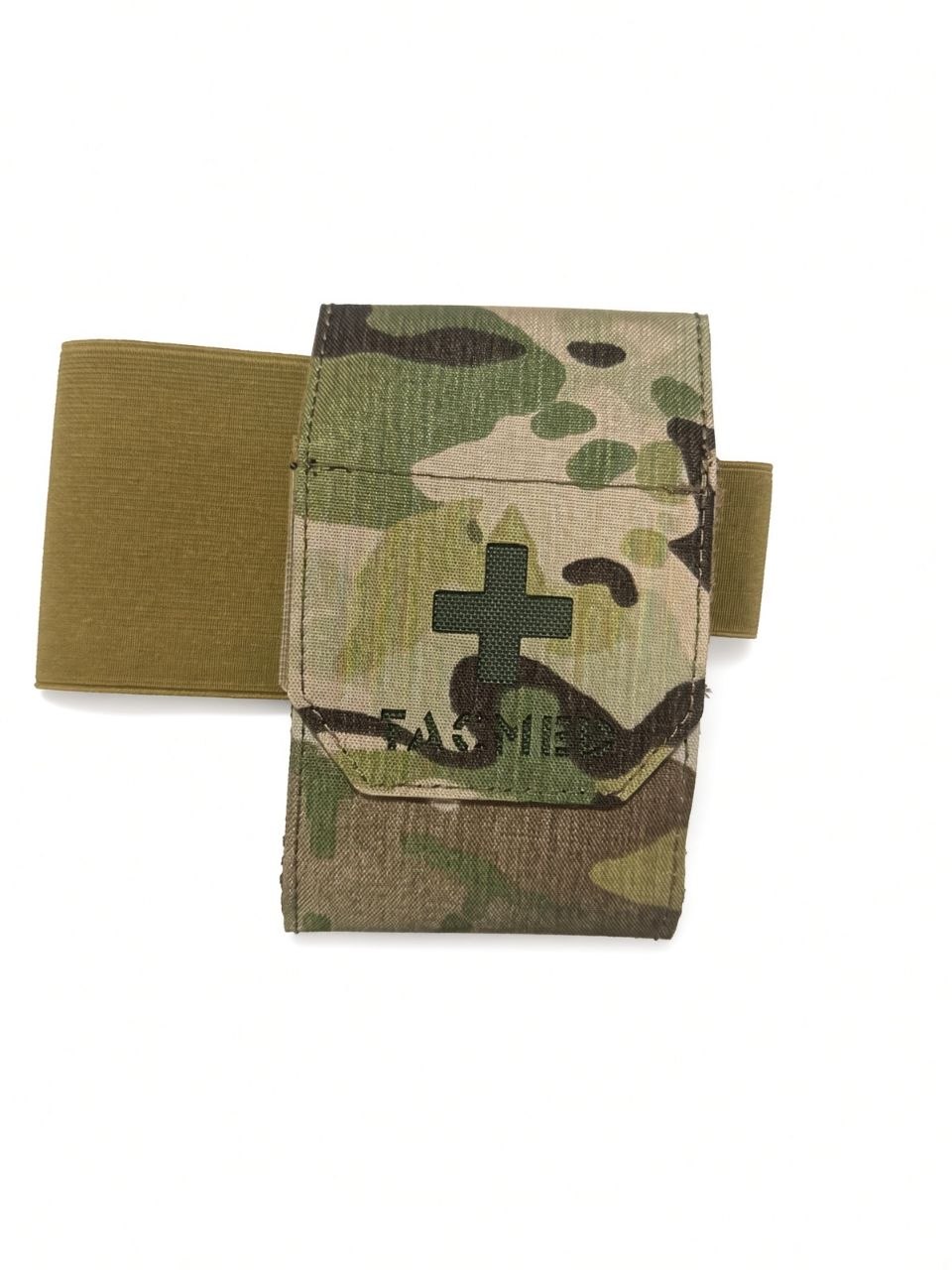
For this reason, a current first-aid kit should include a certified tourniquet and a permanent marker. The TacMed catalog offers current tourniquets used in accordance with TCCC guidelines, along with components for equipping individual first-aid kits.
Which Procedures Must Be Documented?
Every medical procedure may affect subsequent treatment and must therefore be recorded.
The card includes information about:
- tourniquet application;
- use of hemostatic products;
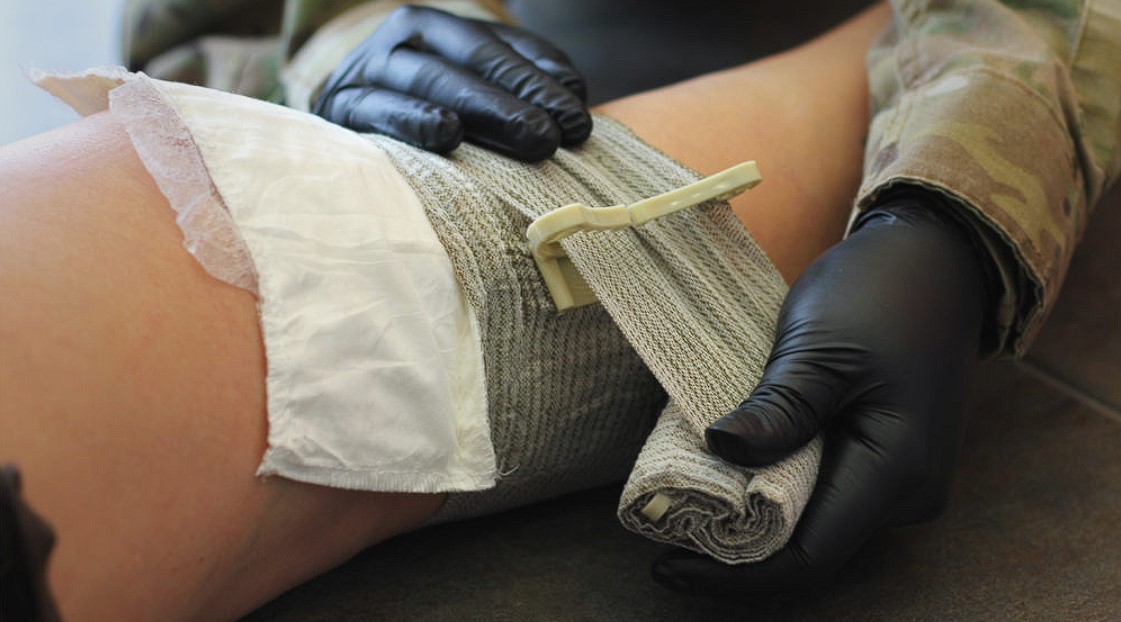
- compression bandages;
- airway management;
- chest decompression;
- administration of tranexamic acid (TXA);
- administration of pain medication;
- infusion therapy;
- transfusions;
- other completed procedures.
The exact time should be recorded for every procedure. This allows the medical team to assess the sequence of care and make decisions based on reliable information.
How Does the Patient Care Card Help During Evacuation?
A patient often passes through several stages of medical evacuation. Care may be provided by a field medic, an evacuation transport crew, a stabilization point, and a hospital. When information is communicated only verbally, some essential details are almost inevitably lost. The patient care card prevents this.
The next medical team can immediately see:
- type of trauma;
- changes in vital signs;
- procedures performed;
- medications administered;
- tourniquet application times;
- other critical information.
Once completed, the card is attached to the patient in a clearly visible place and accompanies them to the next level of medical care.
Where Should the Card Be Stored in Field Conditions?
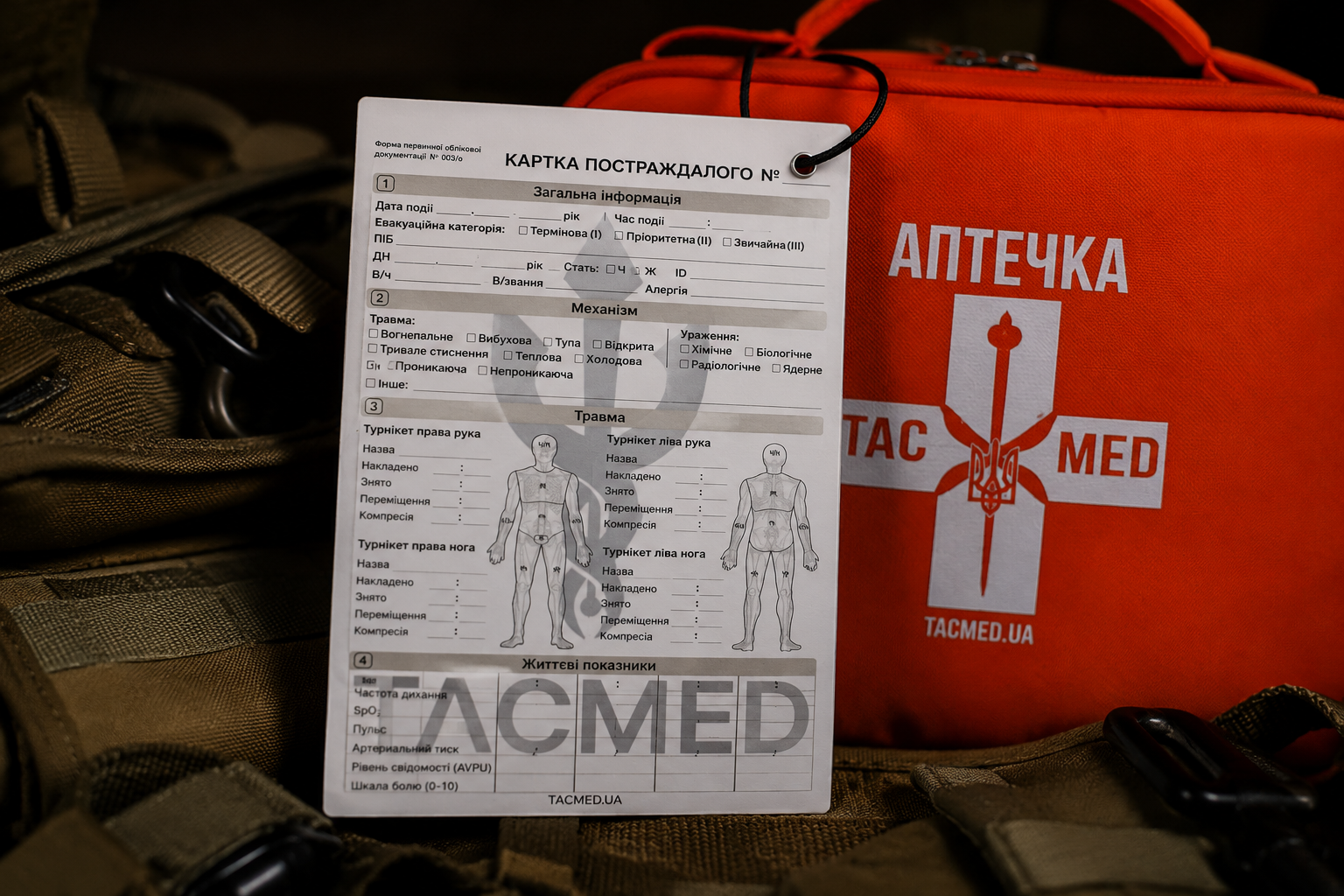
Documentation must remain accessible even during intensive evacuation. For this reason, the patient care card is often stored in:
- medical pouches;
- dedicated transparent pockets;
- first-aid kit organizers;
- evacuation bags.
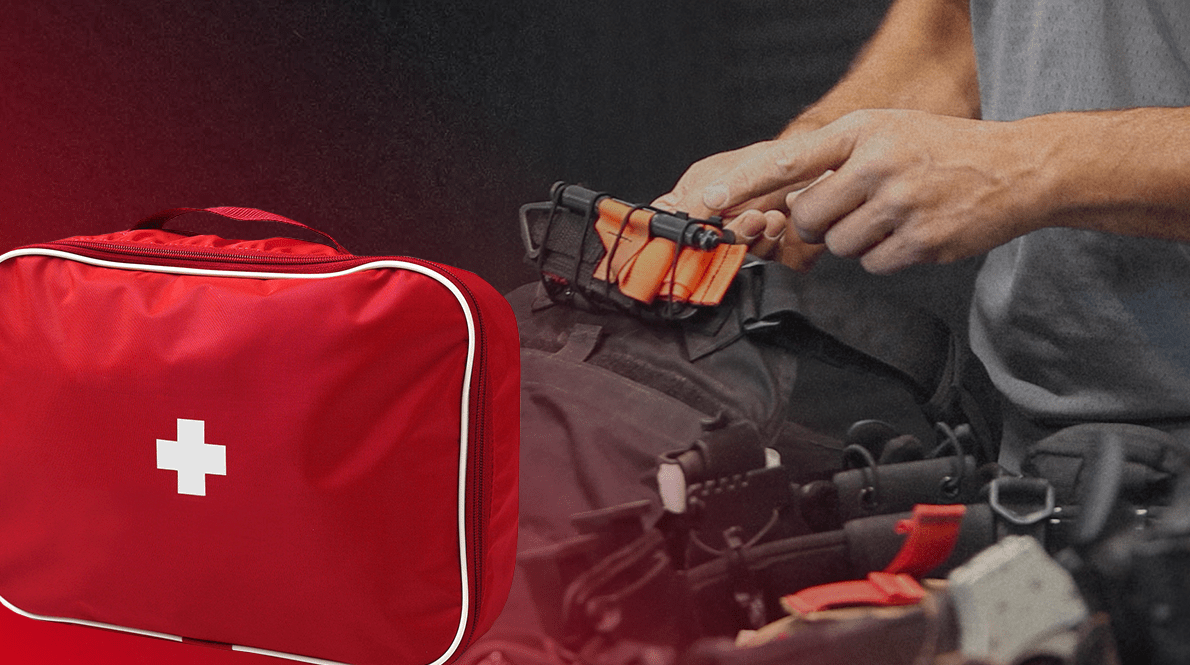
This placement protects the document from loss and allows any medical professional continuing care to locate it quickly. The TacMed store catalog includes medical pouches, organizers, professional bags, and first-aid kits that help arrange medical equipment and provide quick access to every component, including documentation.
Common Mistakes
Even experienced responders and field medics may make documentation errors. Under stress, time pressure, poor lighting, or urgent evacuation conditions, some information may remain unrecorded. These details have practical value during the next stage of medical care because they allow medical personnel to reconstruct the sequence of procedures and assess changes in the patient’s condition.
The most common mistakes include:
- Missing tourniquet application time. Medical personnel cannot accurately determine how long the limb remained under the tourniquet. This complicates the assessment of ischemic tissue damage and further treatment decisions.
- Unrecorded medications. The next medical team may not know which medication the patient received, the dose, or the time of administration. This creates a risk of repeated administration, exceeding the permitted dose, or adverse medication interactions.
- Illegible handwriting. A medication name, dosage, vital sign, or procedure time may be misread. Medical personnel may then spend additional time seeking clarification or work with incomplete information.
- Missing procedure times. Establishing the sequence of medical procedures and evaluating their effectiveness becomes more difficult. For example, a change in the patient’s condition cannot be accurately correlated with a completed procedure.
- Missing vital signs. A lack of pulse, respiratory rate, arterial pressure, oxygen saturation, or consciousness-level data complicates assessment of the patient’s progression. Medical personnel lose the ability to compare readings across different evacuation stages.
- Transferring the patient without the card. The receiving team must collect information about the trauma and completed procedures again. Some details may already be impossible to reconstruct reliably.
- Loss of documentation during evacuation. The recorded care history from the time of the incident is lost along with the card. Information about tourniquets, administered medications, allergies, infusions, and changes in vital signs may be especially critical.
Each of these mistakes creates an information gap between stages of care. The next medical team may spend additional time reconstructing information, repeat completed procedures, or make decisions using incomplete records. The patient care card should therefore accompany the patient and contain key information about timing, procedures, medications, and vital signs.
The TCCC patient care card is one of the key components of the TCCC system. It maintains continuity of medical care, transfers critical information between evacuation stages, and allows physicians to assess the patient’s condition more quickly.
Accurate documentation of tourniquet application time, completed procedures, administered medications, and changes in vital signs carries the same practical significance as correctly following the MARCH algorithm. A current first-aid kit should therefore contain tourniquets, hemostatic products, dressings, and the supplies required for documentation. The TacMed online store offers ready-made first-aid kits, medical pouches, tourniquets, hemostatic products, markers, and other equipment that meets current prehospital care principles.
FAQ
Who Completes the TCCC Patient Care Card?
The card is completed by the person providing care at the scene. It may then be updated by all subsequent medical personnel during evacuation.
When Should the Tourniquet Application Time Be Recorded?
It should be recorded immediately after application. The time should also be marked directly on the tourniquet with a permanent marker.
Which Medications Should Be Recorded on the Card?
All administered medications must be documented with their administration times, including TXA, analgesics, antibiotics, transfusion products, and other medications.
Should the Card Be Completed If the Trauma Appears Minor?
Yes. Documentation ensures complete information transfer regardless of trauma severity and helps subsequent medical teams assess the patient’s condition accurately.