Medical bandages and braces: reliable solutions for dressing and first aid
Medical bandages are a basic dressing material used for wound care, fixation, and compression in injuries. Bandages for dressing are one of the key elements of any first aid kit. They are used in most situations related to damage of the skin, soft tissues, or joints. Modern bandages for first aid differ in material, function, and level of sterility. The TacMed category features bandages and braces used in civilian and tactical medicine. You can order them at an affordable price with delivery across Ukraine.
What is a medical bandage and what is it used for?
A medical bandage is a dressing material used for wound treatment, fixation of dressings, and creation of compression. Its main task is to protect the damaged area, stop bleeding, and ensure stabilization of tissues. That is why wound dressing bandages are included in first aid standards.
Bandages are most often made from cotton or gauze, as these materials allow air circulation and do not irritate the skin. There are also elastic bandages with added synthetic fibers, which are used for compression and joint fixation. Sterile bandages are used for direct contact with a wound, while non-sterile ones are used for external fixation of dressings. An important feature is the ability of the material to absorb fluid and maintain its shape during wrapping. A properly selected bandage ensures reliable fixation, does not impair circulation, and does not cause additional tissue damage.
Bandages are used in various situations:
- for cuts and wounds;
- for injuries and bruises;
- for fixation of dressings;
- for creating compression.
It is important to understand that a bandage is a universal tool used both independently and together with other means. That is why medical bandages are widely represented in first aid kits of different levels in Ukraine.
What types of bandages are there?
The range of bandages is quite wide, and each type has its own purpose. The choice depends on the task: dressing, fixation, or compression. It is the correct selection of bandage type that ensures effectiveness of assistance.
The category includes the main types:
- sterile bandages — used for treatment of open wounds;
- elastic bandages — used for fixation and joint support;
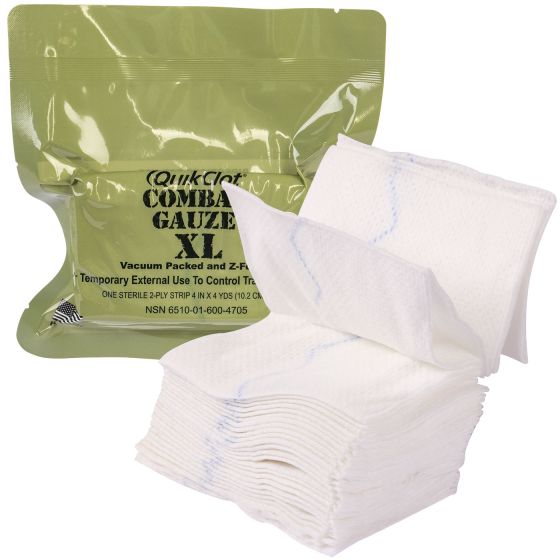
- gauze bandages — universal for basic dressing;
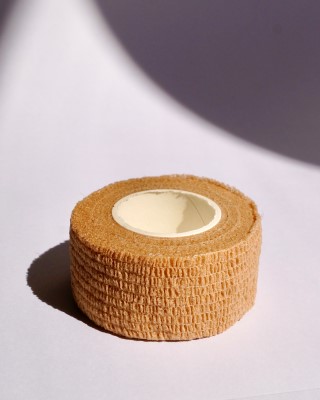
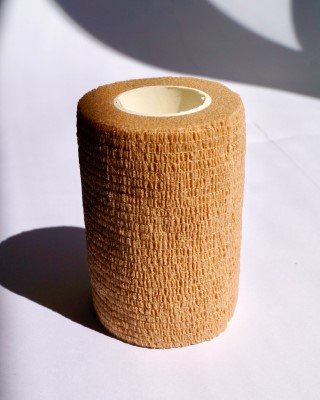
- cohesive bandages — self-fixing, do not require additional fastening;
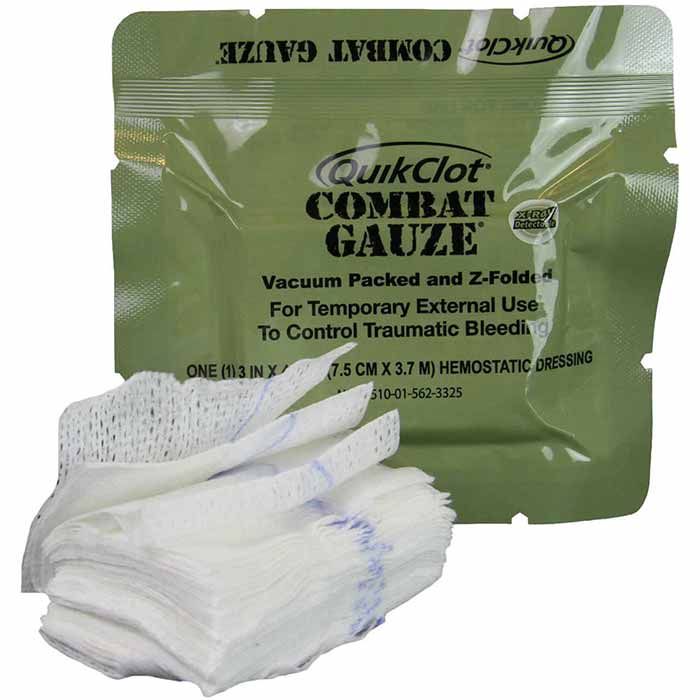
- compression bandages — create pressure to control bleeding.
Each of these options performs its own function. For example, sterile wound bandages provide protection against infection, while elastic ones support tissues after injuries. Therefore, it is optimal to have several types in a first aid kit.
How does a bandage differ from a brace?
Bandages and braces are often used together but perform different functions and have different designs. Understanding this difference allows acting faster and more accurately in first aid conditions, especially when every second matters. In critical situations, the correct choice between these tools affects comfort and effectiveness of bleeding control or stabilization of injury. That is why they should not be considered interchangeable solutions.
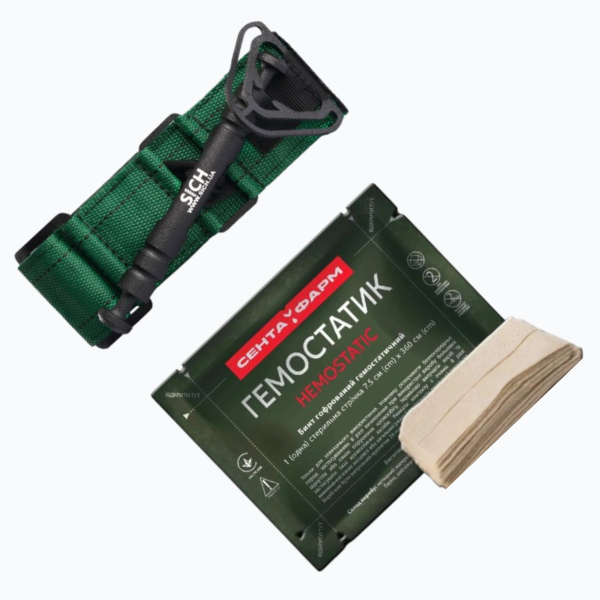
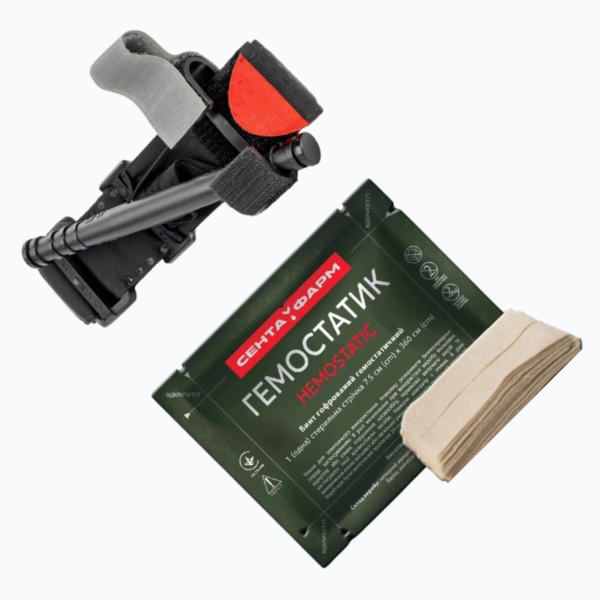
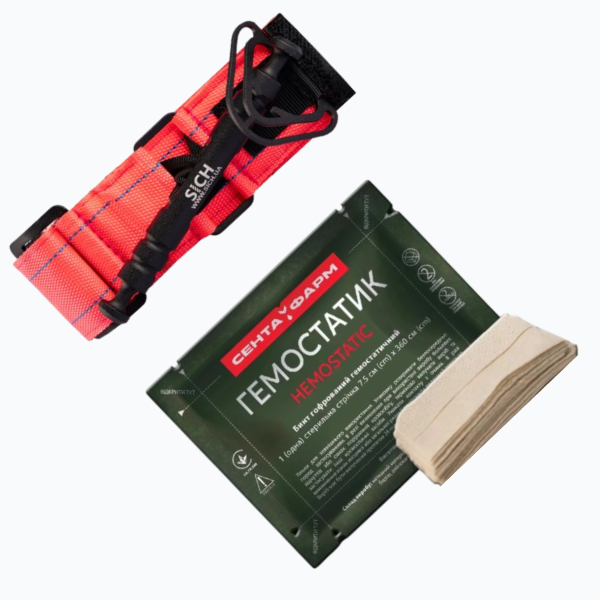
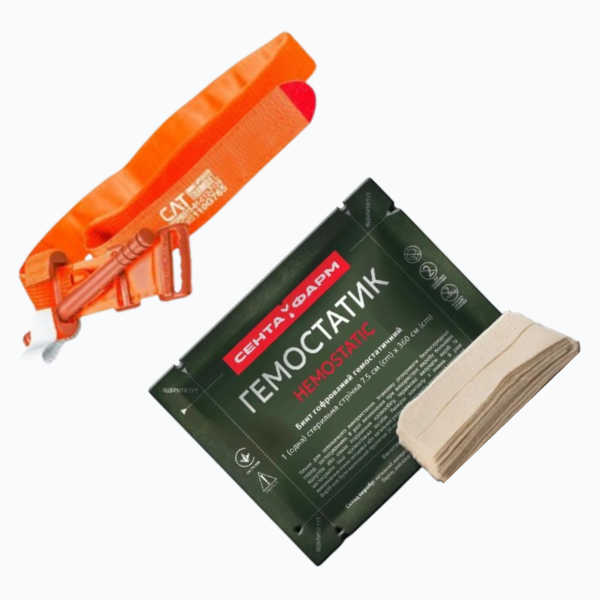
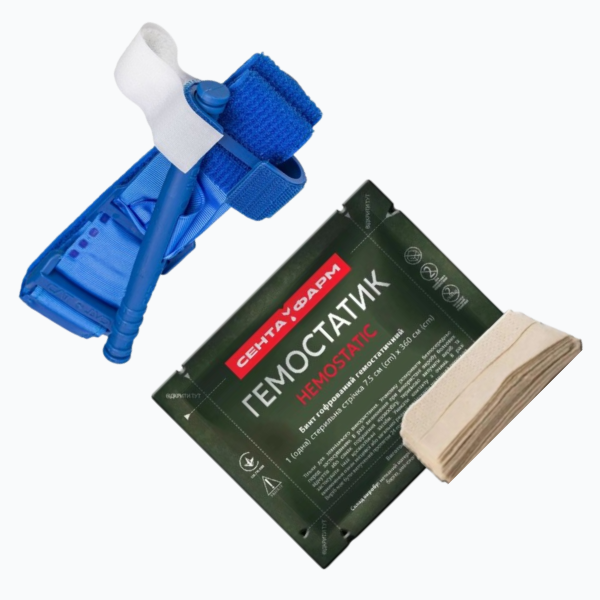
A bandage is a basic dressing material in the form of a strip, used for fixation of dressings, wound protection, and creation of light or moderate compression. It requires proper application skills, since the level of pressure and reliability of fixation depend on technique. A brace is a ready-made functional product that may include an absorbent pad, an elastic base, and elements for creating controlled pressure. It is designed to ensure quick and predictable application even without deep training.
Main differences:
- bandage — for dressing, fixation, and forming a dressing;
- brace — for creating controlled compression and stabilization;
- bandages require technique and more time;
- braces have a ready-made structure and are applied faster;
- bandages are more versatile in different situations;
- braces are more effective in cases where pressure and speed are critical.
In first aid practice, these tools do not compete but complement each other. A bandage allows adapting a dressing to a specific situation, while a brace makes it possible to quickly achieve the desired result in limited time conditions. That is why they should be considered as a single system of dressing materials, where each tool has its own clear role.
How to choose a bandage for a first aid kit?
The choice of a bandage depends on tasks and conditions of use. Despite simplicity, the quality of dressing material is very important. An incorrectly selected bandage can complicate dressing or fail to provide the required effect.
When choosing, pay attention to:
- type of bandage. Sterile, elastic, cohesive, or gauze — the choice depends on the task;
- For wound dressing, fixation, or compression — each option has its function;
- Bandages must be durable, hypoallergenic, and safe for skin;
- Sterile bandages must be used for open wounds;
- Important for fixation and tissue support in injuries;
- ease of use. The bandage should be easy to apply and not unwind during use;
- It is recommended to buy bandages for a first aid kit from trusted suppliers представлені in the catalog — TACMED, North American Rescue, Sam Medical, Senta Pharm, Celox, QuikClot, Hemcon, Bilosnizhka, IGAR, Blood Saver;
- storage conditions. It is important that the bandage does not lose its properties over time.
As for cost, it should not be decisive. High-quality dressing materials are the foundation of effective assistance, so focus on reliability and functionality.
How to apply a bandage correctly?
Proper application of a bandage is a basic skill on which the effectiveness of the entire dressing depends. Even high-quality material does not provide results if technique is нарушена or basic principles are ignored. In first aid, this is especially critical, because incorrect fixation can increase bleeding, cause swelling, or impair circulation.
A bandage is applied gradually, with even tension, to ensure stable fixation without excessive pressure. It is important to start from the lower part of the injured area and move upward, overlapping each previous turn by approximately one-third or half of the width. This approach allows evenly distributing the load and preventing slipping of the dressing. At the same time, the bandage should fit tightly to the skin or dressing but not cause numbness, bluish discoloration, or coldness in the limb.
Basic rules:
- apply the bandage evenly, without sharp tension;
- do not compress tissues excessively or impair circulation;
- overlap each turn for stable fixation;
- securely fix the end of the bandage;
- regularly monitor the condition of the skin and sensitivity;
- change the dressing in a timely manner if necessary.
After application, it is important to assess the result: check skin color, temperature, and sensitivity below the dressing site. If pain, tingling, or swelling occurs, the dressing should be loosened. Properly applied dressing protects damaged tissues from external factors and helps control the condition of the injured person until professional medical assistance is received.
We recommend buying bandages at an affordable price in the TacMed online store
In the TacMed online store, you can buy medical bandages for first aid, wound dressing, and first aid kit assembly. The catalog features bandages and braces that meet modern standards and are suitable for different usage scenarios. We offer affordable prices and frequent promotions with significant discounts. We offer ordering with delivery across Ukraine: Kyiv, Kharkiv, Dnipro, Odesa, Lviv, and other cities. This allows quickly assembling a first aid kit and being ready for any situations.
FAQ
1. What are medical bandages and what are they for?
Medical bandages are dressing materials used for closing wounds, fixing dressings, and protecting damaged tissues. They help reduce the risk of infection and stabilize the condition of the injured person. Depending on the type, bandages can perform different functions: from simple dressing to joint fixation. That is why they are a basic element of any first aid kit.
2. Which bandage is better to buy for dressing?
For wound dressing, it is recommended to use sterile bandages that provide protection against infection. For fixation or joint support — elastic bandages that create the necessary pressure and hold the dressing. A universal solution is to have several types of bandages in a first aid kit. This allows effective response to different situations.
3. What is the difference between bandages and braces?
Bandages are universal dressing materials that require proper application and sometimes additional fixation. Braces are ready-made solutions with compression function and quick application. Bandages are more flexible in use but require more time and skills. That is why in first aid practice they are often used together.
4. How to apply a bandage to a wound correctly?
Before application, the wound should be treated with an antiseptic and covered with a sterile wipe. The bandage is applied evenly, with moderate tension, without excessive pressure. It is important not to impair circulation and ensure stable fixation of the dressing. After application, the condition of the tissues must be monitored and, if necessary, the bandage should be loosened.
5. Which bandages are needed for a first aid kit?
The basic set should include sterile bandages for wound dressing and elastic bandages for fixation. Additionally, cohesive bandages that self-fix without fasteners can be used. Such a set allows covering most household and emergency situations. This is considered the standard of a modern first aid kit.
6. Are bandages needed in a home first aid kit?
Yes, bandages are a mandatory element of any home first aid kit. They are used for cuts, injuries, bruises, and other damage. Their presence allows quickly providing first aid before consulting a doctor. This is a basic level of safety for every family.